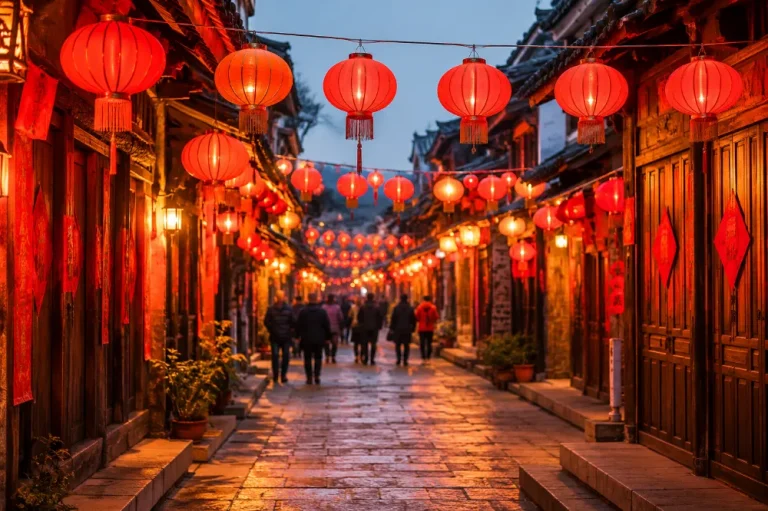
Let me start with a confession: Before I moved to Guangdong, I thought I knew China. I’d done Beijing’s hutongs, Shanghai’s bund, and even hiked in Yunnan. But Guangdong? I wasn’t ready. The first time I landed in Guangzhou in July, the humidity slapped me like a wet blanket. My glasses fogged up. An auntie pulled me into a tiny teahouse and poured tieguanyin from a clay pot that looked older than my grandmother. That’s when I got it. Guangdong doesn’t show off — it steeps into you. This guide is the one I wish I’d had. No robot lists. Just real places, honest mistakes, and the best damn food you’ll ever eat below the Yangtze.
Spanning from the Pearl River Delta up to misty northern mountains, Guangdong is China’s manufacturing engine but also a cultural treasure chest: birthplace of Cantonese (Yue) language, Cantonese opera, and — crucially — dim sum. But don’t call it “Canton” unless you’re talking about the old colonial era. Locals will raise an eyebrow. This guide covers everything: from megacity neon (Guangzhou, Shenzhen) to ancient Chaoshan where tea is a religion and beef hotpot is a ritual. Plus honest tips on transport, phrase survival, and how to avoid looking like a lost backpacker.
Guangzhou: The Heartbeat of Lingnan
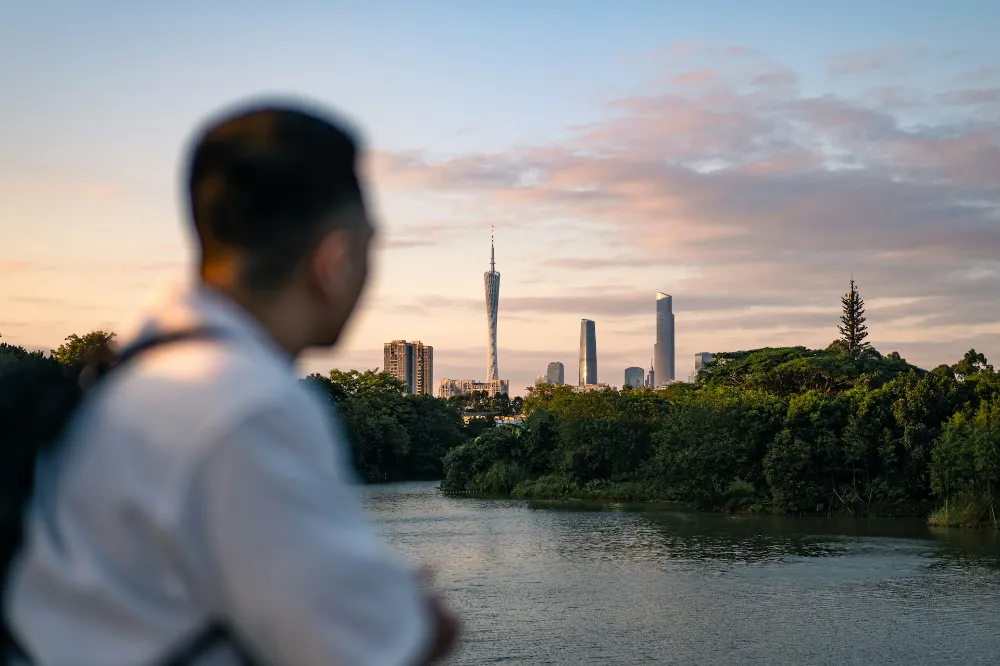
Forget the shiny skyscrapers for a minute. Guangzhou (or “Gwong Jau” in Cantonese) is layers of history: the Maritime Silk Road, revolution sites, and now a sprawling metropolis of 18 million people. But what you’ll remember are the mornings. Wake up early – 7:30 AM early – and join the retirees in Yuexiu Park. They practice tai chi with swords, sing revolutionary opera, and dance like nobody’s watching. Grab a rice roll (cheung fan) from a hole-in-the-wall vendor near Beijing Road. Those glass panels under your feet? Actual Song Dynasty roads. No ticket, no rope, just history under your soles.
Shamian Island — a colonial-era sandbag island — feels like stepping into a faded European postcard. Western consulates and churches hide behind banyan trees. Walk the promenade at golden hour, and you’ll get why Guangzhou was once called “the Paris of the East”. But don’t stay too long; the real action is Shangxiajiu Pedestrian Street. It’s chaos, but beautiful chaos: neon signs in traditional script, dried seafood shops next to bubble tea chains, and old ladies selling sui mei (roast goose) from steaming carts. Eat the goose. It’s crispy-skinned, juicy inside, and costs less than a Starbucks sandwich.
Don’t sleep on Canton Tower. Yes, it’s touristy, but the 360-degree view at sunset is legit. However, skip the expensive revolving restaurant downstairs. Instead, cross the Pearl River on a ferry for 2 RMB – the city lights reflection is pure magic. For dim sum, avoid chains like “Dian Dou De” (though it’s fine). Try Panxi Restaurant in Liwan district; it’s old-school, crowded, and waiters push carts. Point at whatever looks good. Steamed pork ribs with black beans, har gow (shrimp dumplings), and egg tarts with a flaky crust – heaven. Pro tip: go before noon on weekdays to avoid 90-min queues.
Shenzhen: From Fishing Village to Cyberpunk Frontier
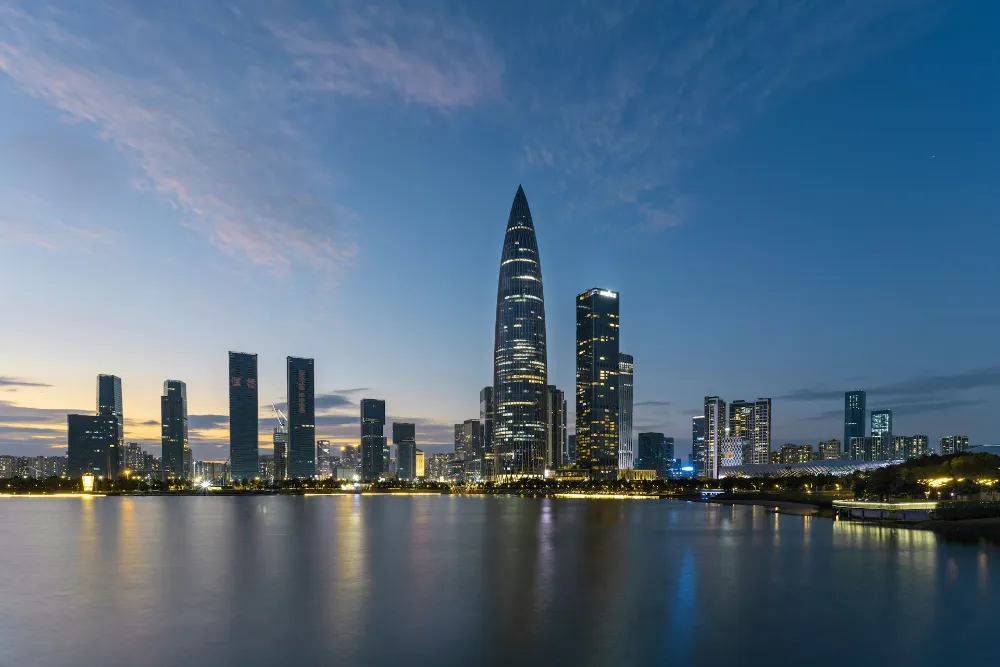
Hard to believe that 40 years ago, Shenzhen was just a cluster of fishing huts. Now it’s a glass-and-steel behemoth where you can see futuristic architecture, world-class art, and a melting pot of mainlanders, Hong Kongers, and tech nomads. But is it “authentic Guangdong”? I asked a taxi driver this once. He laughed and said, “We make our own authenticity.”
OCT Loft (OCT-LOFT) is the creative soul: warehouses turned indie galleries, cafes that roast their own beans, and boutiques selling Cantonese-inspired design. It’s like Brooklyn but with better air conditioning. Check what’s on at B10 Live House – maybe experimental folk or Cantonese indie bands. For a dose of dizzying modern, head to Ping An Finance Center‘s observation deck – but skip the pricey ticket and instead go to the Cloud 116 lounge on the 116th floor (buy a coffee for 80 RMB and you’ve got the same view).
People come to Shenzhen for theme parks, honestly, but Splendid China • Folk Culture Villages is surprisingly well done — miniature Great Wall and Tibetan palaces, plus live shows with acrobats. For nature escape, take a half-day to Dapeng Fortress, a 600-year-old walled village by the sea. The old lanes sell hai xian (seafood) right from the fishing boats, grilled and doused with garlic and chili. Cheap and unforgettable. And don’t leave without walking through Huaqiangbei electronics market – even if you hate gadgets, the sensory overload is an experience. Vendors yell, drones fly, and you can buy a phone case shaped like a durian.
Foshan & The Spirit of Kung Fu
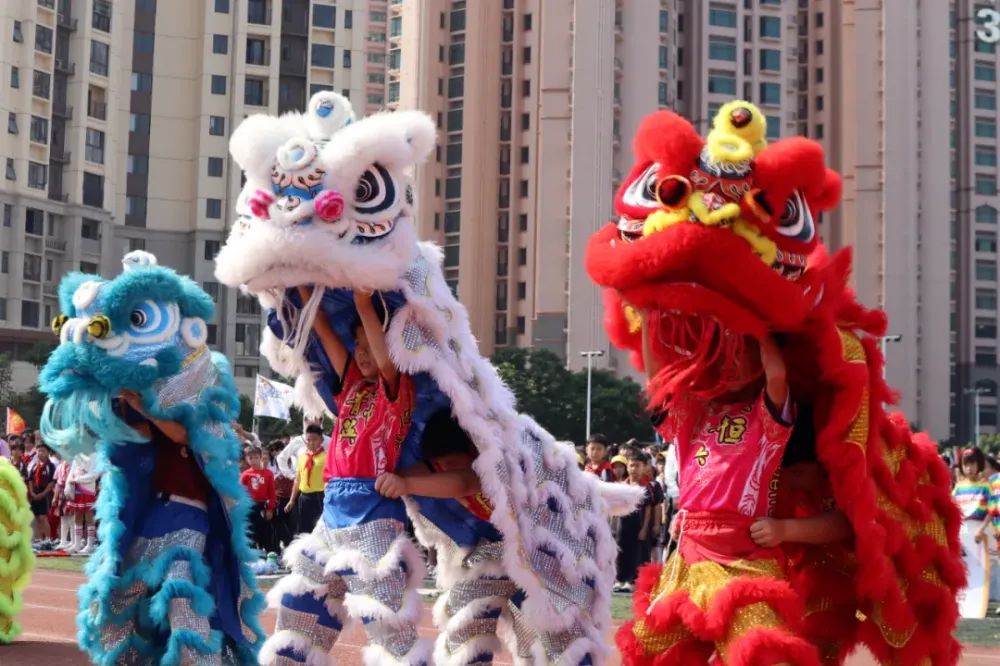
Thirty minutes from Guangzhou by metro (line Guangfo), Foshan feels like Guangdong’s quieter, older sibling. This is where Cantonese opera was born and where Ip Man taught Wing Chun. The Ancestral Temple houses a Wing Chun museum with actual wooden dummies used by grandmasters. There’s a small courtyard where old men practice gung fu every morning at 8 AM – they’ll teach you a basic block if you just smile and bow. My attempt was clumsy, but the 70-year-old master just patted my shoulder and said “Good spirit.”
Shiwan pottery village is a hidden delight. Clay artists have fired ceramics here for 5000 years. You can make a tiny teapot for 100 RMB, glaze it, and they’ll fire it and mail it to you (takes 3 weeks – my wonky teapot sits proudly on my shelf). For food, shunde cuisine – Foshan’s district – is famous nationwide: raw fish salad (yusheng), double-layered milk (sweet and silky), and pork knuckle with ginger. Find a casual place called Huang Dan Ji (黄但记) in Chencun – their rice noodle rolls are so thin you can read a newspaper through them.
Chaoshan (Shantou & Chaozhou): Where Tea is Sacred & Beef Is Art
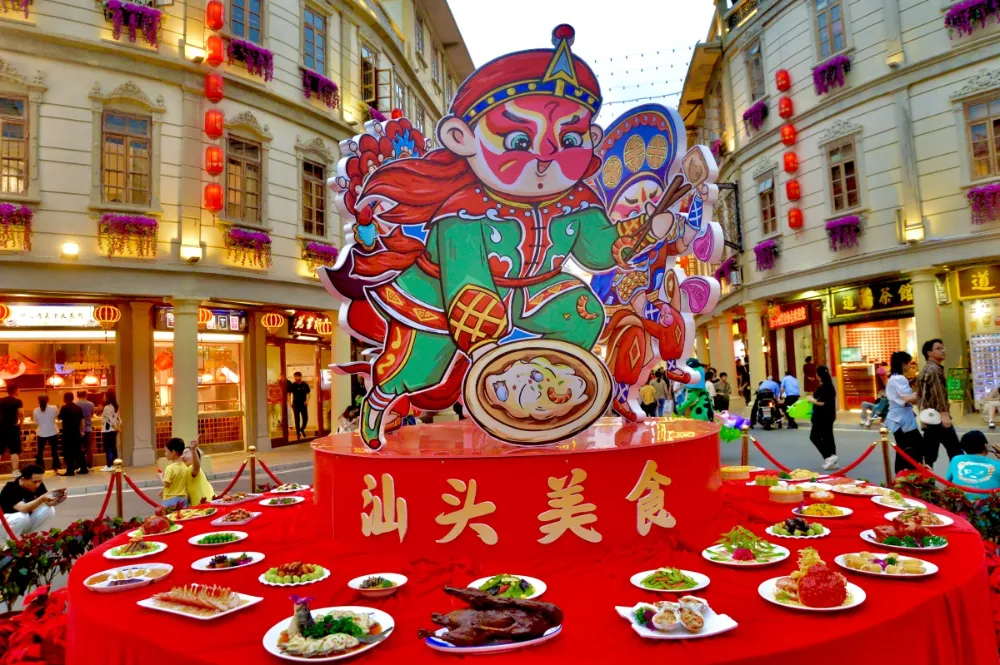
If Guangdong had a secret club, Chaoshan would be the VIP lounge. The language here is Teochew (not mutually intelligible with Mandarin), and the pride runs deep. Chaozhou Ancient Town is a maze of narrow alleys, arched bridges, and more ancestral temples than coffee shops. The star attraction? Kaiyuan Temple, built in the Tang dynasty, with ancient stone pillars carved with Sanskrit. But the real reason you come here is beef. Chaoshan hotpot (beef hotpot) is a spiritual experience. Slices of cow — from the tongue to the tenderloin to the rare cut called “五花趾” (five-flower tendon) — are swished in a clear broth for exactly 8 seconds.
Go to Hai Ji Beef Hotpot in Shantou (no English sign, just look for the line of locals at 5 PM). Order the handmade beef balls that spring back when you drop them on the table – they’re legendary. Another must-try: rice noodle rolls with oysters (蠔烙) at Laozihao Oyster Omelet stall on Xihao Road. Crispy edges, briny oysters, fish sauce on the side — 12 RMB and it’s a heart attack of happiness. For tea lovers, gongfu cha is a ritual here. Sit at any tea shop, the owner will pour tiny cups from a yixing pot, and you’re expected to tap two fingers on the table to say thanks. Don’t rush the tea master; it’s rude.
Natural Escapes: Danxia Mountain & Dinghu Mountain
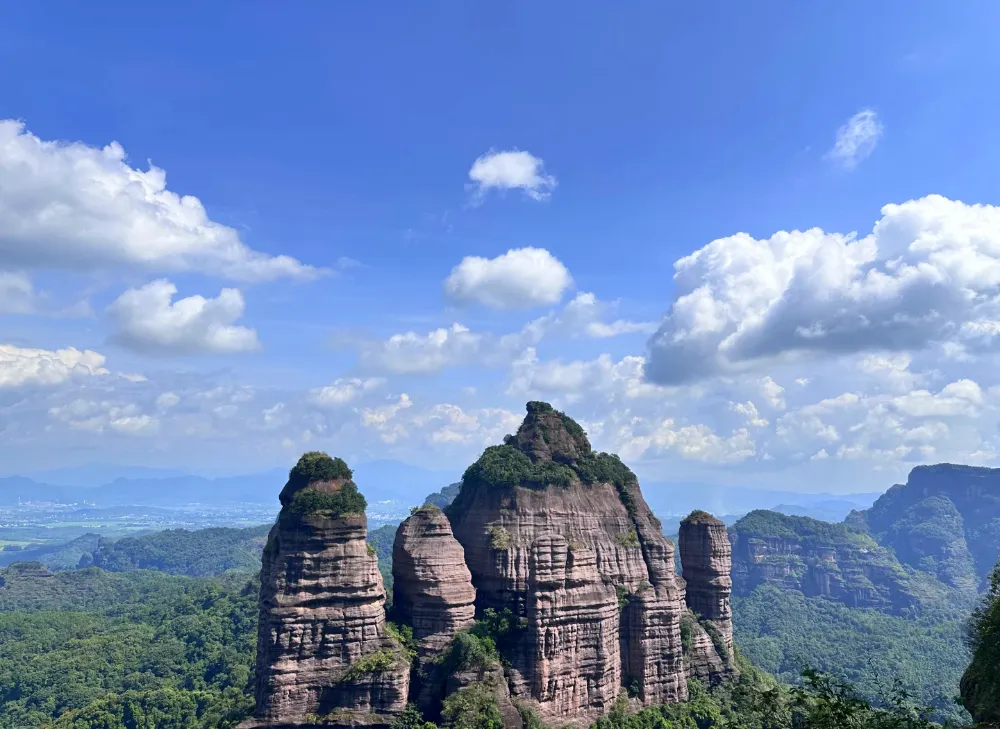
After too many days in the humid city, your lungs will crave fresh air. Take a 1-hour high-speed train from Guangzhou to Shaoguan for Mount Danxia (Danxia Shan) – a UNESCO Global Geopark. Those rainbow-coloured rock formations look like someone painted the mountains with sunrise. The famous “Yang Yuan Stone” (er… resembling male anatomy) gets giggles from tour groups, but the hiking is legit. Go for the Jiulong (Nine Dragons) Waterfall trail – it’s a 4-hour moderate loop through bamboo forests. Avoid weekends unless you like selfie-stick armies.
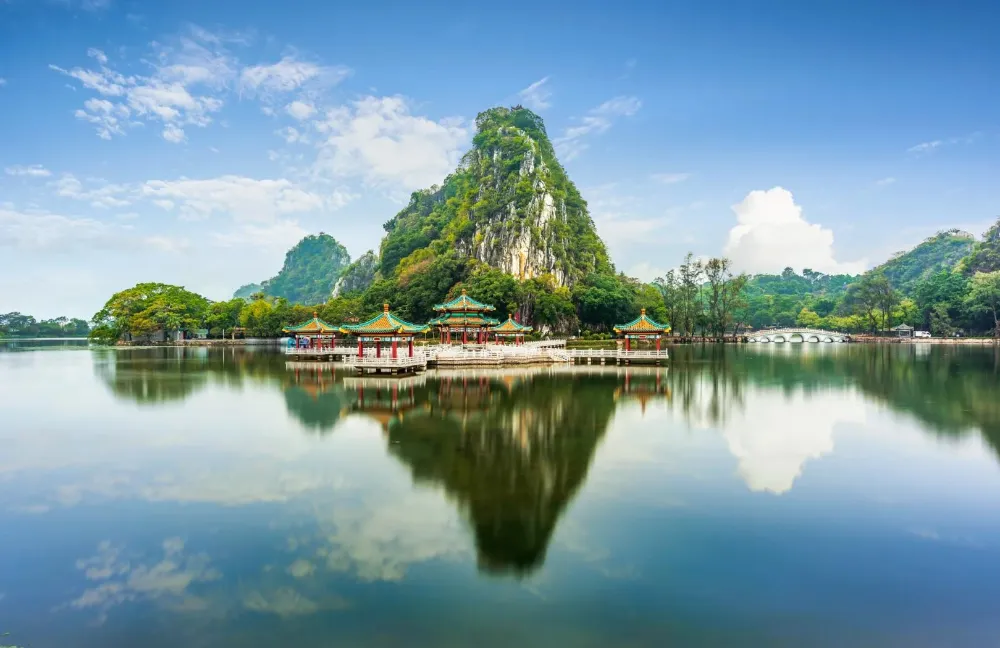
Closer to Guangzhou, Dinghu Mountain in Zhaoqing is a biosphere reserve with waterfalls, ancient temples, and the best air quality in the Pearl River Delta. I spent a morning at Qingyun Temple, where monks were chanting amidst mist so thick you’d think it was a painting. The vegetarian noodles at the temple canteen are shockingly good – mushrooms, tofu skin, and a broth that tastes like forest rain. Cost: 15 RMB. Bring mosquito repellent; the little bloodsuckers are aggressive.
The Diaolou of Kaiping: East Meets West in Stone
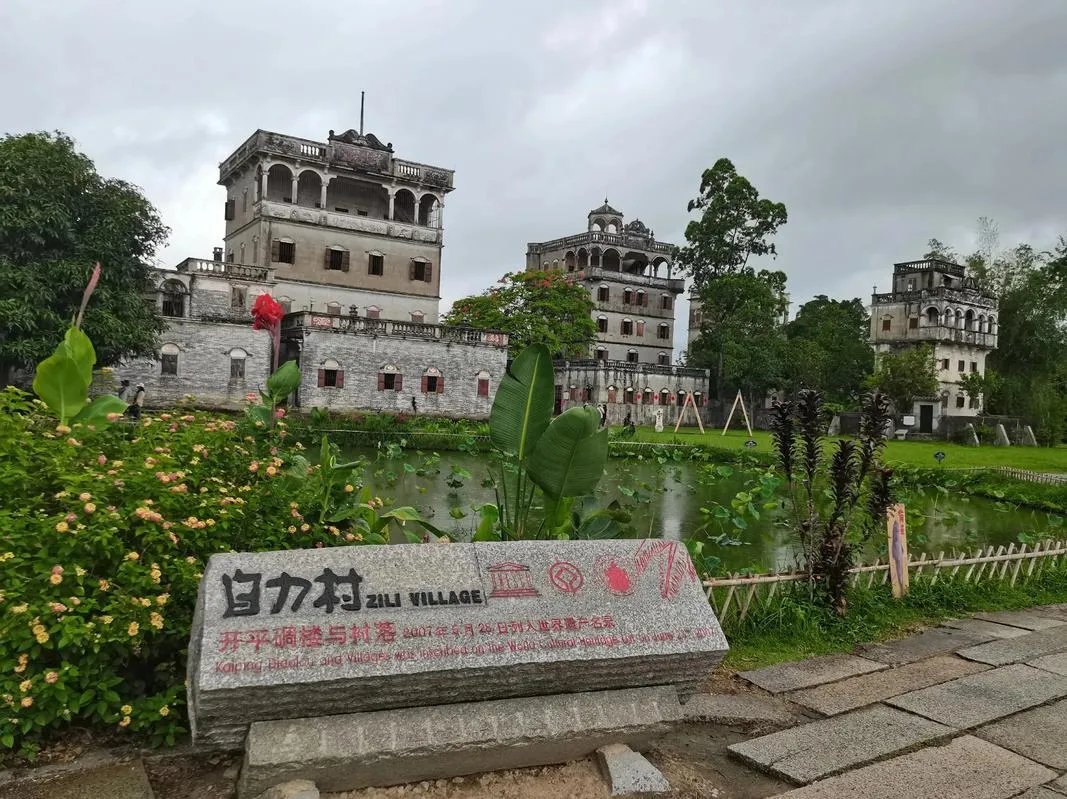
Two hours southwest of Guangzhou, you’ll find one of China’s most bizarre architectural wonders: Kaiping Diaolou – multi-story fortified towers built by overseas Chinese who returned from America and Canada in the early 1900s. They mixed Gothic columns with Roman arches and Chinese roof tiles. It’s like a Catalan castle landed in Guangdong rice paddies. The most scenic cluster is Zili Village. Rent a bicycle for 20 RMB and wander between the towers – some are abandoned, vines crawling through stained-glass windows. Ming Shi Lou allows you to climb to the top; from there you see an endless green quilt of fields dotted with these weird, wonderful towers. Bring water and a hat – almost zero shade.
The Gospel of Cantonese Food: Beyond Dim Sum
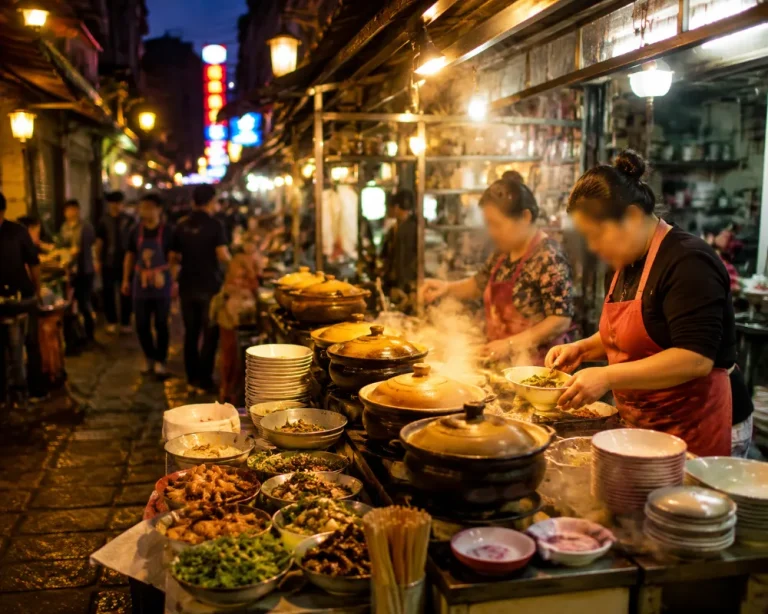
Many people think Guangdong food = dim sum. Wrong. Dim sum is just the morning snack. Real Cantonese cooking is about wok hei (that smoky breath of a hot wok), freshness, and balance. Find a dai pai dong (open-air street stall) in Guangzhou at midnight – order stir-fried ong choy (water spinach) with fermented tofu, crispy roast pork belly (siu yuk), and a claypot of rice with lap cheong (cured sausage). The skin of the pork belly should crackle like a campfire. Do not skip white cut chicken – it sounds boring, but the ginger-scallion oil dip is transformative.
In the city of Shunde (UNESCO City of Gastronomy), try 炸牛奶 (fried milk) — cubes of solidified sweet milk wrapped in a thin crust, deep-fried to golden gooeyness. Seriously, it works. And for brave eaters: snake soup in Guangzhou’s She Mei restaurant on Xianlie Road. Tastes like herby chicken stew, not scary at all. Finish every meal with a five-flavor tea or herbal jelly (guilinggao) – bitter as hell but locals swear it cools the “heatiness” from all that frying. My tip: drown it in honey syrup.
Getting Around: Bullet Trains, Metro & Buses
Guangdong’s transport is world-class. The high-speed rail connects Guangzhou South to Shenzhen (30 mins), to Chaoshan (2.5 hours), to Kaiping (1 hour). Book tickets on Trip.com or the official railway app (requires Chinese ID? better use agents at station if you’re foreigner — bring passport). Inside cities: Guangzhou and Shenzhen metro systems have English signs and announcements. Tap to pay with a UnionPay card or buy a single ticket with cash (exact change advised). Don’t even think about renting a car in downtown – traffic is infernal and parking is a myth. Didi (Chinese Uber) is cheap: a 20-minute ride in Guangzhou costs about 25 RMB. Have your destination written in Chinese characters, many drivers speak zero English.
Where to Sleep: From Nanfang Hostels to Riverside Boutiques
For budget solo travelers, Lazy Gaga Hostel in Guangzhou’s Haizhu district – don’t be fooled by the silly name, it’s clean, social, and the owner makes killer congee for guests. Private rooms around 180 RMB/night. Mid-range: Banyan Tree Guangzhou is splurge-worthy if you want a riverside view, but equally cool is Wonnegut Hotel in Dongshankou – set in a restored 1920s mansion with vintage tiles and a courtyard café. In Chaozhou, I recommend Old Town Inn – a traditional qilou (arcade house) with wooden balconies, run by a Teochew grandmother who makes rice dumplings for breakfast. Book ahead during national holidays (October, May), rooms vanish like hotcakes.
Suggested Itineraries (3, 5 & 7 Days)
3 days – Classic Pearl River Delta: Day 1 Guangzhou (Shamian, Beijing Road, evening Pearl River cruise). Day 2 Foshan day trip (Ancestral Temple + Shiwan pottery). Day 3 Shenzhen (OCT Loft + Dapeng Fortress). 5 days – Foodie Heaven: Days 1-2 Guangzhou (dim sum, roast meat, night market at Haizhu Square), Day 3 train to Chaoshan (beef hotpot & tea ceremony), Day 4 Shantou (old town + oyster pancakes), Day 5 back to Guangzhou for claypot rice and last-minute tea shopping. 7 days – Deep Guangdong: Add Kaiping Diaolou (1 day) and Danxia Mountain (2 days – stay overnight at the village guesthouse for sunset viewing).
Culture & “Do Nots” That Matter
Guangdong people are generally warm and direct, but a few taboos: don’t stick your chopsticks upright in a bowl of rice – it resembles incense sticks for the dead. If someone pours you tea, tap the table with two fingers (light knock) as thanks. When offered a gift, accept with both hands, not one. And please, avoid talking about politics or Hong Kong unless locals bring it up – it’s a sensitive topic. Also, learn some Cantonese greetings: “Nei hou” (hello), “M goi” (thanks – for services), “Do jeh” (thanks – for gifts). They’ll appreciate the effort even if your tones are terrible.
When to Go: Dodging Typhoons & Steam Baths
Most travelers think October to December is best – and they’re right. Temperatures are 18-25°C, humidity drops, and skies are clear. Avoid May to August like the plague: rain, typhoons, and 90% humidity that turns your shirt into a wet rag. That said, if you come during Chinese New Year (Jan/Feb), you’ll see the famous flower markets in Guangzhou – massive displays of orchids, kumquats, and cherry blossoms. It’s crowded but magical. Summer has its own charm: mango shaved ice on every corner, and afternoon thunderstorms that cool the streets for exactly one hour.
Realistic Budget for a Week
Backpacker style (hostels + street food + public transport): $30-40 USD/day. Mid-range (nice Airbnb + casual restaurants + Didi rides): $65-90/day. High-end (5-star hotel + fine dining + private tours): $180+/day. Street food meals: 15-35 RMB. Metro fare: 2-12 RMB per trip. High-speed train GZ to Shantou: about 200 RMB second class. Most museums are free or under 30 RMB. Unexpected cost: coffee – a flat white in a trendy cafe can cost 40 RMB, same as a whole hotpot meal in a local joint. Choose wisely.
What to Pack (Besides the Usual)
Insect repellent with DEET. An umbrella or foldable raincoat (June-September showers are sudden). Toilet paper and hand sanitizer – many public restrooms don’t supply paper. Power bank – you’ll use maps and translation apps constantly. A reusable water bottle (tap water not drinkable, but hotels and malls have water dispensers). And one nice outfit – locals dress sharply, even for street food. Shorts are fine in summer, but avoid super revealing clothes in rural areas out of respect. Most important: patience. Some lines, some lost-in-translation moments, some haggling – it’s all part of the journey.
Guangdong isn’t a postcard destination. It’s a place where ancient teahouses share walls with iPhone repair stalls, where grandmas slaughter chickens in back alleys while teenagers live-stream douyin dances. It took me two trips to stop being frustrated and start being curious. Now I go back every year for the beef hotpot, the smoky scent of jasmine tea, and the noise – glorious, chaotic, living noise. Pack light, bring an open stomach, and let the Pearl River humidity pull you in. You might just stay longer than you planned.