
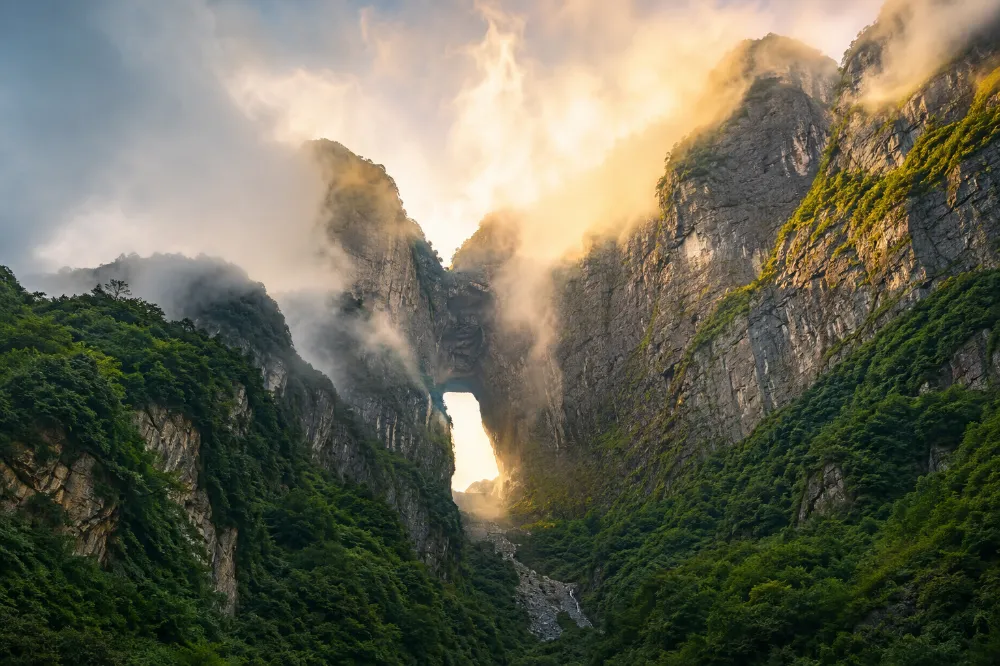
Tianmen Mountain sits right beside Zhangjiajie city, close enough that you can see the massive natural arch cut through the cliff face from street level downtown. That arch, Tianmen Cave (Heaven’s Gate), is what gives the mountain its name: tiān mén means “Heaven’s Gate” in Mandarin. The opening stands 131.5 meters high and 57 meters wide, visible from kilometers away, and reaching it means either climbing 999 stone steps or riding escalators carved through the cliff itself.
This Tianmen Mountain guide cuts through the route confusion, explains what the glass skywalks are actually like, and gives you the practical details, including an important 2026 cableway update, to help you plan a visit without surprises.
- Chinese: 天门山 Tiānmén Shān — ‘Heaven’s Gate Mountain’
- Location: Lower Station of Tianmen Mountain Cableway (天门山索道下站), a 20-minute walk from Zhangjiajie Central Bus Station and High-Speed Railway Station
- Height: 1,518.6 meters (4,983 ft)
- Operating Hours: 08:00–19:00 (park entry closes at 16:00; evening lights on from 17:00–18:30)
- Admission: CNY 258–288 (same price for Lines A, B, and C; children under 1.2m free; discounts for students and seniors over 60 with valid ID)
- Daily Visitor Cap: 35,000 people; timed entry slots required
Important 2026 Update: Cableway Upper Section Closed for Renovation
The upper section of the main Tianmen Mountain Cableway, between the mid-station and the summit upper station, has been closed for major renovation since November 6, 2025. No confirmed reopening date has been announced as of mid-2026.
This means visitors on Lines A and B currently transfer to eco-buses at the mid-station rather than riding all the way to the top by cable car. The information below reflects the current operating setup. Check official park channels or Trip.com before your visit for the latest status.
Route Comparison: Which Line Should You Choose
Tianmen Mountain divides its visitors into three routes that run in opposite directions, preventing bottlenecks. Here’s how each one works under current conditions:
| Route | Journey Order | Best For |
|---|---|---|
| Line A | Cable car (lower to mid-station) → Eco-bus up 99 Bends → Tianmen Cave Square → 999 Steps or escalator → Tianmen Cave → Escalator to summit → Explore summit → Return to Tianmen Cave → Express Cableway down → Shuttle back downtown | Travelers who want the cable car experience first, with the 99 Bends on the ascent |
| Line B (recommended) | Shuttle to Mountain Gate → Express Cableway up → Walk 500m to Tianmen Cave Square → 999 Steps or escalator → Tianmen Cave → Escalator to summit → Explore summit → Return to cave → Eco-bus down 99 Bends → Cable car (mid to lower station) → Downtown | Most visitors; shorter downhill queues, 99 Bends descent feels more dramatic |
| Line C | Shuttle to Mountain Gate → Express Cableway up → Tianmen Cave → Summit → Return same way via Express Cableway → Shuttle back downtown | Travelers prone to carsickness who want to skip the 99 Bends road entirely |
Line B is the option most local guides currently recommend. The downhill queue for the cable car tends to be shorter than the uphill queue on Line A, and descending the 99 Bends by eco-bus, watching the switchbacks unfurl below you, is a more dramatic experience than ascending them.
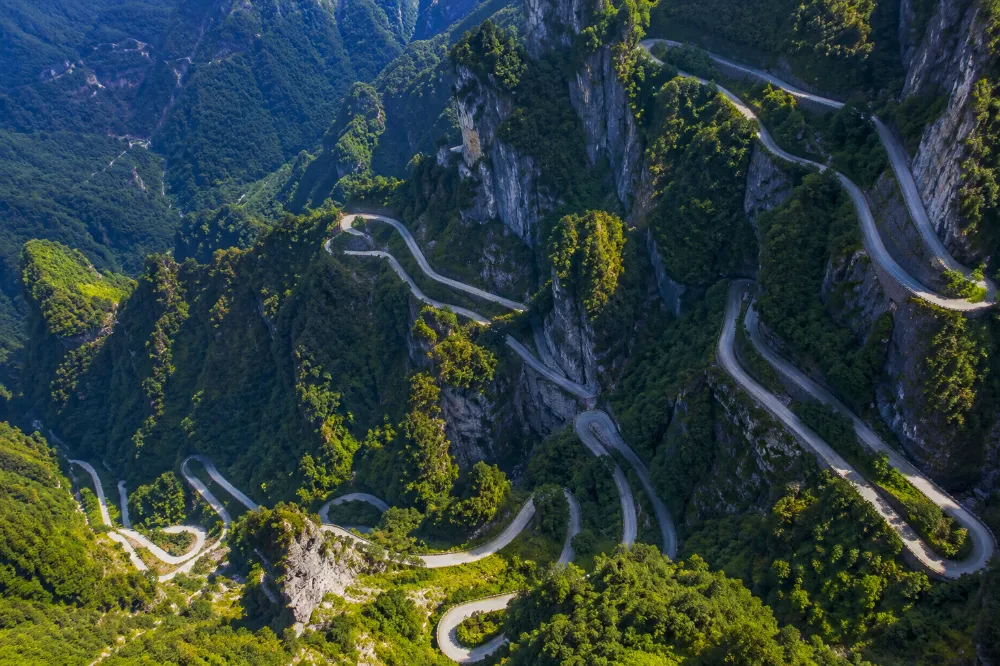
Line C avoids the 99 Bends entirely, which makes it the right call if you get carsick easily on winding mountain roads. The trade-off is that you miss one of the mountain’s most visually distinctive features, and the scenery from the Express Cableway both ways is more limited.
From the square to Tianmen Cave: The 999 Steps take 15–25 minutes and are steep. The tunnel escalator costs CNY 32 to ride up (the descent is free). Most visitors take the escalator up and walk at least part of the way down.
Getting to Tianmen Mountain
- From Zhangjiajie High-Speed Railway Station (张家界站): 20-minute walk, or take a taxi for about CNY 10–15
- From Zhangjiajie West Station: Taxi approximately 10 minutes, CNY 15
- By city bus: Routes 4, 6, or 10 stop near the lower cable car station
- From Wulingyuan (National Forest Park area): Coach from Wulingyuan Bus Station, 1–1.5 hours, CNY 13; or taxi 35–45 minutes, CNY 80–110
Note that Tianmen Mountain is a completely separate park from Zhangjiajie National Forest Park in Wulingyuan. They are 35 kilometers apart and cannot be sensibly combined in a single day. Plan one full day for each.
Exploring the Summit: West Line vs East Line
Once you reach the summit plateau (approximately 2 square kilometers), you choose between two walking routes before descending to Tianmen Cave.
West Line: 1.5 Hours, 2.8km — Recommended for Most Visitors
The West Line is mostly flat and the more popular option. Its highlights include the Guigu Cliffside Path, two sections of wooden walkway carved into vertical cliff faces at 1,400 meters altitude, a Suspension Bridge connecting two peaks, and the Western Glass Bottom Cliffside Path, which was the mountain’s first glass skywalk.
This route works well for seniors, families with young children, and anyone who wants the major highlights without excessive stair climbing.
East Line: 2.5 Hours, 3.7km — For Active Hikers Who Want Fewer Crowds
The East Line is longer, involves more stairs, and sees noticeably fewer visitors, making it the better option during peak season if crowd avoidance is a priority. Its features include the Wood-Stone Romance rock formation, the Dove Tree Garden (white blooms in April–May), and the Eastern Glass Bottom Cliffside Path, which on clear days offers a direct view of tourists climbing the 999 Steps toward Tianmen Cave.
Travel Tip
At the junction of the East and West Lines near Tianmen Mountain Temple, the open-air Forest Observation Cable Car runs to Yunmeng Xianding (云梦仙顶, 1,518m), the mountain’s highest viewpoint. The ride costs approximately CNY 25. On clear days the panoramic view of Zhangjiajie city far below is one of the most unusual perspectives available on the mountain. Skip it on heavily overcast days when visibility is low.
The Panlong Cliff Glass Walkway is also along this section. It offers a sweeping view of the 99 Bends Road but requires backtracking after viewing. Skip it if time is limited.
The Glass Skywalks: What They’re Actually Like
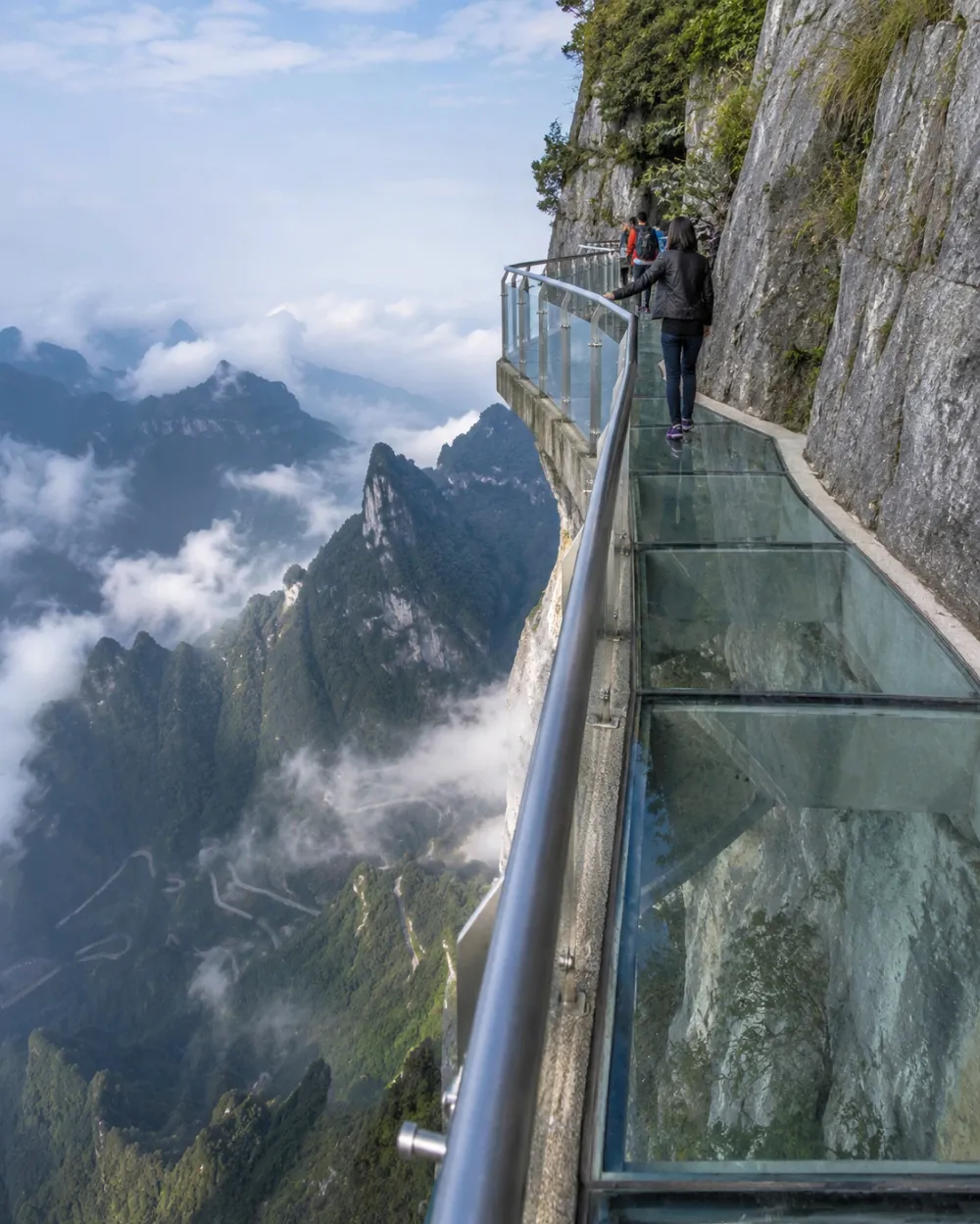
Tianmen Mountain has multiple glass-floor walkway sections built directly into cliff faces at approximately 1,400 meters elevation. These are not suspended glass bridges over gorges. They’re cantilevered glass panels bolted to vertical rock, with the valley floor 600–1,000 meters below and open air on three sides.
The glass is thick tempered panels, regularly inspected, and has an excellent safety record. The variable is personal comfort with what your eyes are reporting.
- Western Glass Bottom Cliffside Path (West Line): Most popular, busiest during peak season
- Eastern Glass Bottom Cliffside Path (East Line): Fewer crowds, good views toward Tianmen Cave
- Panlong Cliff Glass Walkway: Least crowded of the three, best for photography without other visitors in frame
Stone alternative paths run parallel to every glass section. Visitors who want to skip the glass can reach all summit areas and Tianmen Cave without setting foot on any glass panel.
Shoe covers are required on glass sections and are available on-site for CNY 5 per section. The skywalks close during heavy rain, ice, and snow. Check the morning forecast if conditions are uncertain.
Tianmen Cave: What to Actually Expect
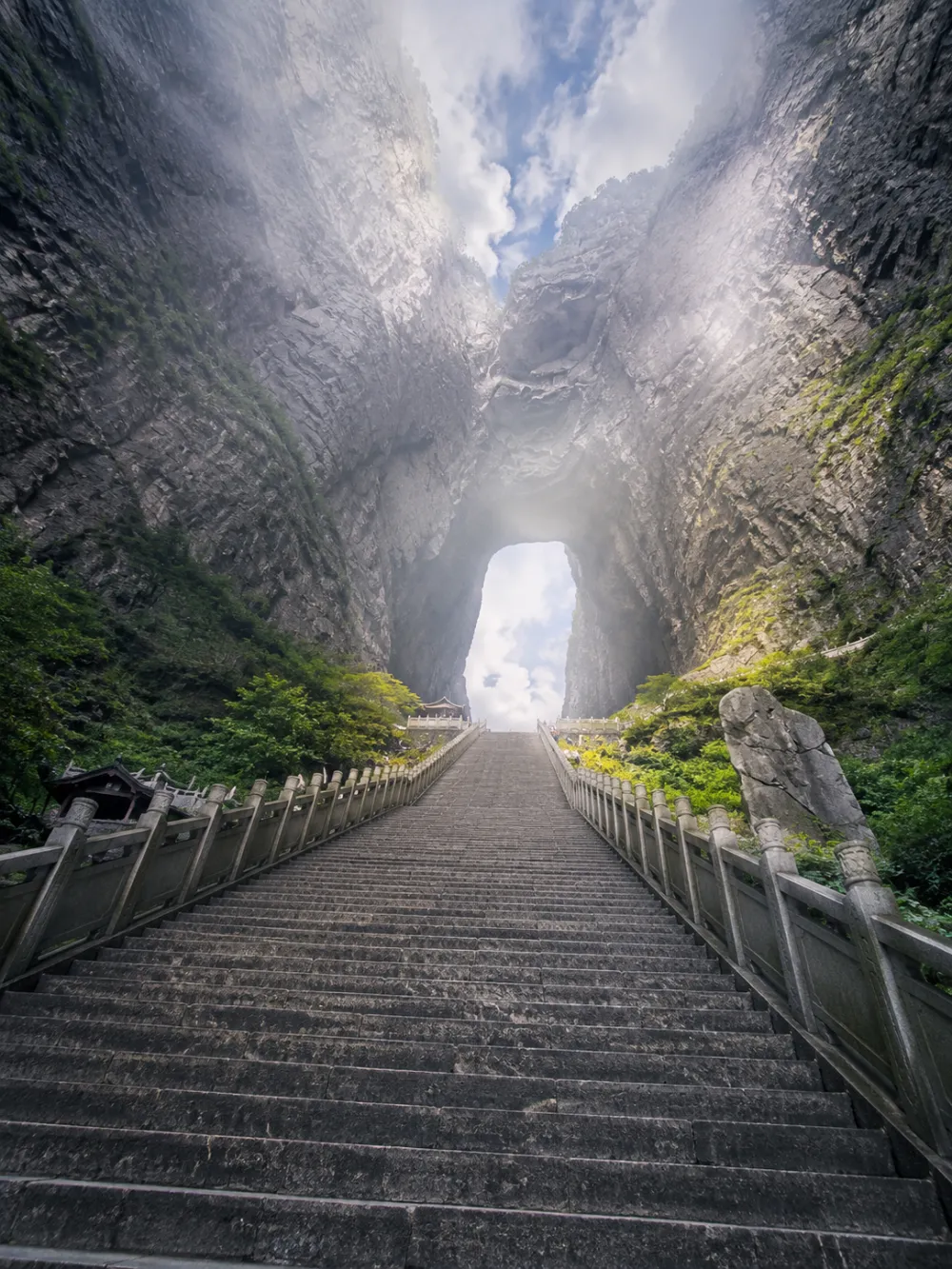
The cave arch stands 131.5 meters high, 57 meters wide, and 60 meters deep at approximately 1,300 meters elevation. From inside the arch looking down through the opening toward the valley, the visual effect is one the mountain is genuinely famous for, and one that photographs rarely capture the scale of accurately.
Light conditions affect the experience meaningfully. Looking inward from the entrance square, soft or overcast light produces the most evenly exposed photographs. Looking outward from inside the cave toward the valley, late morning light illuminates the depth of the view best. Harsh midday sun often blows out the sky behind the opening while leaving the cave interior dark.
Travel Tip
Shooting upward from partway up the 999 Steps with the cave arch framing the sky above is a composition worth attempting even on a phone camera. The arch fills more of the upper frame as you climb, and the changing angle gives multiple distinct shots on the same ascent.
Tickets and Booking
The combined ticket (currently CNY 258–288) covers the main Tianmen Mountain Cableway for applicable sections, shuttle buses, and the Tianmen Cave Express Cableway. All three lines carry the same price.
Optional extras not included in the base ticket:
- Tunnel escalator (999 Steps upward section): CNY 32
- Forest Observation Cable Car to summit viewpoint: CNY 25
- Glass walkway shoe cover rental: CNY 5 per section
- VIP queue-skip pass (available at ticket window only, not online): CNY 100–150
The park has a daily visitor cap of 35,000 and operates timed entry slots from 07:00 to 16:00. The most popular morning windows (07:00–10:00) sell out days in advance between March and November, and during national holidays (Spring Festival, May Day, National Day) can sell out a week ahead. Book online through official channels or Trip.com.
Payment at the ticket window accepts RMB cash, Alipay, WeChat Pay, and international cards.
Travel Tip
If you’re visiting during peak season (July–August, October Golden Week), arriving by 07:30 to queue for the first cable car of the day avoids waits of two hours or more. Alternatively, the VIP queue-skip pass at CNY 100–150 is a reasonable purchase if you have a fixed departure time and cannot afford a two-hour delay.
Best Times to Visit Tianmen Mountain
| Season | Conditions | Crowds | Notes |
|---|---|---|---|
| Spring (Mar–May) | Flowers and new greenery; morning fog common | Moderate | Dove Tree blooms April–May; avoid Labor Day holiday (early May) |
| Summer (Jun–Aug) | Summit stays cool (22–28°C); heavy rain in June; sea of clouds possible | Peak (domestic tourism) | Arrive by 07:30 to beat queues; June rains can close glass walkways |
| Autumn (Sep–Oct) | Clearest days of the year; rich foliage colors; stable weather | High, especially Golden Week | Best overall visibility; avoid October 1–7 Golden Week if possible |
| Winter (Nov–Feb) | Possible snow; glass walkways may close; dramatic misty scenery | Low | Best value; check weather carefully; some sections close on icy days |
November is often the overlooked sweet spot: autumn foliage is still visible, crowds drop sharply after Golden Week ends, and prices are lower than peak season. Weekday visits in early spring and late autumn allow last-minute booking.
What to Pack and Wear
Travel Tips
- Layers: The summit runs 5–10°C cooler than the city below. Bring a windproof jacket even in summer; it gets noticeably cold on the glass walkways with open air on three sides
- Shoes: Comfortable non-slip walking shoes are essential. The summit involves at least 3km of walking; the East Line includes significant stair sections. Avoid sandals or dress shoes
- Sun protection: UV exposure is intense at 1,400+ meters even on cloudy days. Sunscreen and a hat are not optional
- Rain protection: A compact rain jacket is more useful than an umbrella at the exposed, windy summit. Mountain weather shifts quickly
- Power bank: Keep your phone in an inside jacket pocket when not shooting to preserve battery in cool temperatures
- Water and snacks: Food on the mountain is available but expensive. Bringing your own water and snacks reduces costs and time spent queuing at summit food stalls
How Tianmen Mountain Fits Into a Zhangjiajie Itinerary
Tianmen Mountain is a completely different park from Zhangjiajie National Forest Park (the Avatar Mountains in Wulingyuan, 35km north). Most visitors who have 2–3 days in Zhangjiajie dedicate one full day to Tianmen Mountain and one or two days to the National Forest Park separately.
A half-day visit to Tianmen is technically possible but feels rushed for most people. Seven to nine hours from the downtown lower station and back is a realistic full-day timeline. Build in at least one buffer day in your itinerary for weather-related delays or closures, particularly during shoulder season.
Zhangjiajie is most conveniently reached by flying to Changsha Huanghua Airport and taking a high-speed train (approximately 1.5 hours) to Zhangjiajie West, or by flying directly to Zhangjiajie Hehua Airport from several Chinese cities.
Photography Strategy: When and Where to Shoot
Tianmen Mountain is one of the most photogenic destinations in Hunan, but different parts of the mountain work better at different times of day and in different weather conditions. Knowing which shots work when saves a lot of disappointment.
Glass Skywalks
Shoot before 10:00 AM when morning light comes in from the east, giving the cliff faces dimensionality and illuminating the valley below at an angle. After mid-morning, heat haze builds over the lower valley and the light flattens. On days with light cloud cover, the diffused light actually works well for glass walkway shots because it removes the harsh shadow lines that direct sun creates through the glass panels.
Tianmen Cave
Looking inward from the entrance square, the cave photographs better in soft, overcast light than in harsh sun. The interior dark and bright opening sky create an exposure problem in strong midday light. Looking outward from inside the cave, late morning tends to produce the most illuminated view of the valley depth below.
The composition most worth attempting: stand partway up the 999 Steps and shoot upward with the cave arch framing the sky above. The arch fills more of the upper frame as you climb, so try this at multiple points on the ascent. A smartphone on burst mode handles the slightly moving perspective well.
99 Bends Road
Shoot from the bus window on the descent (Line B) rather than the ascent. Looking back and down at the cascading switchbacks below you gives the full visual effect of the road’s scale. Use burst mode to compensate for the bus motion, and position yourself on the side of the bus that faces outward toward the valley rather than the cliff wall.
Summit Temple and Sea of Clouds
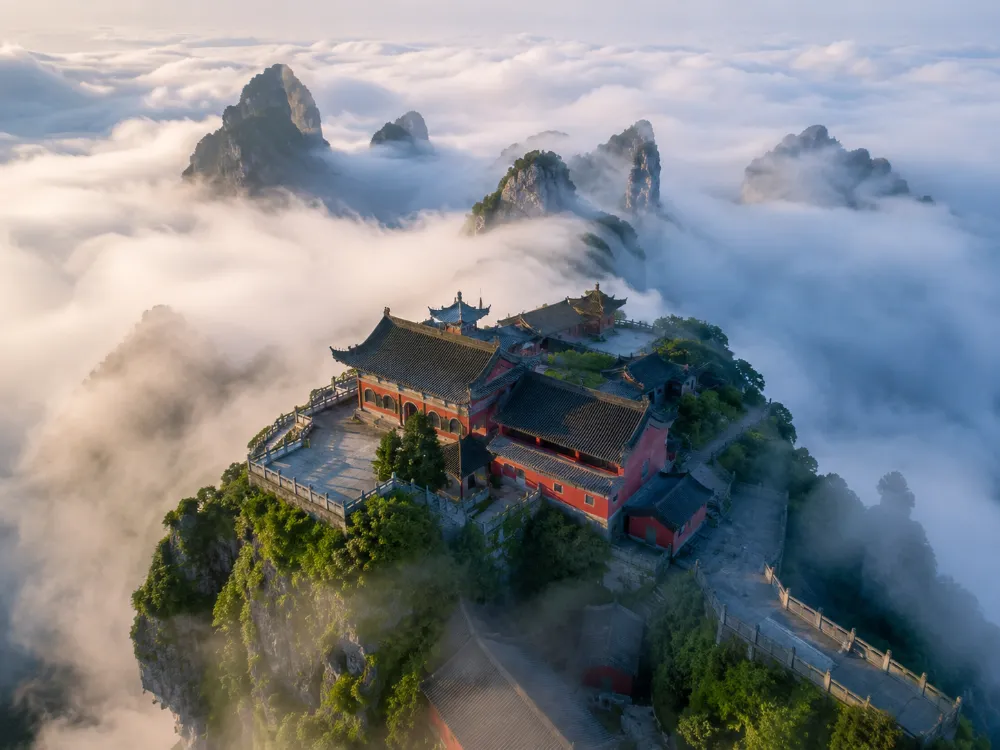
The Tianmen Mountain Temple with red walls against a sea of clouds is one of the mountain’s most iconic shots, but it requires patience. Cloud formations shift constantly at this elevation, and a view that’s fully obscured can clear in twenty minutes. Early morning arrivals in spring and summer have the highest probability of catching cloud inversions where the valley below fills with mist while the summit stays clear.
Travel Tip
Avoid putting your phone in your pocket between shots on the glass skywalks. Cold air at 1,400 meters drains battery faster than most visitors expect. Keep your phone inside a jacket pocket, not an outer pocket, and bring a power bank stored warm inside your jacket rather than in a bag where it will also lose charge in the cold.
Frequently Asked Questions
Is Tianmen Mountain the same as Zhangjiajie National Forest Park?
No. They are two completely separate parks, 35 kilometers apart. Zhangjiajie National Forest Park in Wulingyuan contains the Avatar sandstone pillar formations. Tianmen Mountain is a single dramatic peak beside the city, with a different ticket, different transportation, and different scenery entirely.
Is the Tianmen Mountain cable car currently working?
The lower section (downtown to mid-station) is operating. The upper section (mid-station to summit) has been closed for renovation since November 2025, with no confirmed reopening date as of mid-2026. Lines A and B currently transfer to eco-buses at the mid-station. Check official sources before visiting.
Are the glass skywalks safe?
Yes. The panels are thick tempered glass, regularly inspected, with a strong safety record. Stone alternative paths run alongside every glass section for visitors who want to skip them. Skywalks close during heavy rain, ice, and snow.
How far in advance should I book tickets?
3–5 days ahead during peak season (March–November) and national holidays. Off-season weekday visits in early spring or late autumn can sometimes be booked 1–2 days ahead, but earlier is always safer given the daily visitor cap of 35,000.
Which route is recommended: Line A, B, or C?
Line B is currently recommended for most visitors. It offers shorter downhill queues and a more dramatic experience of the 99 Bends road on the descent. Line C is best for visitors who get carsick easily. Line A provides the full cable car experience on the ascent but currently has a mid-station transfer to eco-bus due to the renovation.