Packing up the kids and flying halfway across the world sounds daunting until you actually do it — and then you wonder why you waited so long. China has a way of turning skeptical teenagers into wide-eyed history buffs and turning toddlers into pointing, giggling panda fans within about ten minutes of arrival. It’s one of the few places on earth where a single trip can cover ancient dynasties, futuristic skylines, giant pandas, bullet trains, and some of the best dumplings your family will ever eat, all without needing three separate countries to do it.
That said, a family China tour is not the same beast as a solo backpacking trip or a couples’ getaway. You’re juggling nap schedules, picky eaters, jet lag, language barriers, and the occasional meltdown in the middle of the Forbidden City. The good news is that millions of families have done this before you, and the logistics — while they look intimidating from the outside — are very manageable once you know what to expect.
This guide walks through everything you need to plan a smooth, memorable family trip to China: the best destinations for kids and teens, when to go, a sample itinerary you can adapt, practical tips on food and health and transport, and how to pick a tour operator that actually understands what traveling with children involves. Whether you’re leaning toward a fully guided package tour or a semi-independent trip with a local guide in each city, the goal here is the same — fewer headaches for you, more genuine wonder for your kids. By the time you finish reading, you should have a realistic sense of what a family-friendly pace actually looks like, which cities deserve priority for your specific kids’ ages and interests, and what questions to ask before handing over a deposit to any tour company.
Why China Is a Fantastic Destination for Family Travel
Parents often assume China is “too big” or “too complicated” for a family trip, and reach for Europe or Southeast Asia instead. In reality, China has quietly become one of the most family-friendly long-haul destinations available, for a handful of concrete reasons.
It’s safe. Violent crime against tourists is rare, streets are well lit, and cities like Beijing, Shanghai, and Chengdu are used to hosting large numbers of foreign visitors, including families with strollers and small children in tow.
The infrastructure is excellent. China’s high-speed rail network connects major cities at speeds over 300 km/h, which means you can turn what used to be an eight-hour overnight train into a comfortable two-hour ride with snacks and a bathroom break. Airports and train stations have clear signage in English, and ride-hailing apps work well for getting around once you’re in a city.
There’s something for every age. Toddlers respond to color, motion, and animals — pandas cover that. School-age kids get hooked on stories: terracotta soldiers guarding an emperor’s tomb, a wall so long it took centuries to build, a forbidden city no ordinary person could enter. Teenagers, especially ones with any interest in history, art, tech, or food, tend to come away genuinely impressed rather than bored.
The food scene is far more varied than most families expect. Beyond the stereotype of one uniform “Chinese food,” each region has its own cuisine, and most restaurants — even casual ones — can produce something mild, plain, and kid-friendly on request. Steamed rice, plain noodles, and dumplings are available almost everywhere.
Put simply, a family China tour gives you dramatic scenery, deep history, and modern convenience all in the same trip — a combination that’s genuinely hard to find elsewhere.
Best Time of Year for a Family Trip to China
Timing matters more in China than in a lot of destinations, mainly because of two factors: weather extremes and domestic travel crowds.
Spring (April to early June) is arguably the sweet spot for most families. Temperatures are mild across the main tourist circuit — Beijing, Xi’an, Shanghai — and the parks and gardens are in bloom. It’s comfortable for kids to be outside for long stretches without overheating or freezing.
Autumn (September to early November) runs a close second. The summer humidity has broken, the air quality in northern China tends to improve compared to the summer months, and the fall foliage around the Great Wall sections near Beijing is genuinely stunning.
Summer (July to August) is peak season for a reason — it lines up with school holidays in most countries — but it also brings intense heat and humidity in cities like Xi’an and Shanghai, plus heavier crowds at every major site. If summer is your only option, plan indoor activities or early-morning site visits to dodge both the heat and the tour-bus rush.
Winter (December to February) is the quietest and cheapest time to visit, with shorter lines at major attractions. Beijing gets genuinely cold, so it’s better suited to families who don’t mind bundling up, but Chengdu and southern cities like Guilin stay relatively mild.
One date to actively avoid, if you can help it: Chinese New Year (typically late January to mid-February) and the first week of October, known as Golden Week. Both are periods of massive domestic travel, when trains sell out, hotel prices spike, and popular attractions are shoulder-to-shoulder crowded — not ideal conditions for small children. For a month-by-month breakdown of temperatures and rainfall across the country, our guide to the best time to visit China goes into more detail than we have room for here.
Top Family-Friendly Destinations in China
China is enormous, and no family needs — or wants — to try to see all of it in one trip. Most successful family itineraries focus on three to five cities that balance history, culture, and pure kid-appeal. Here are the destinations that consistently work best with children.
Beijing: History Kids Can Actually Picture
Beijing is the natural starting point for most family China tours, and for good reason — it packs three of the country’s biggest icons into one metropolitan area.
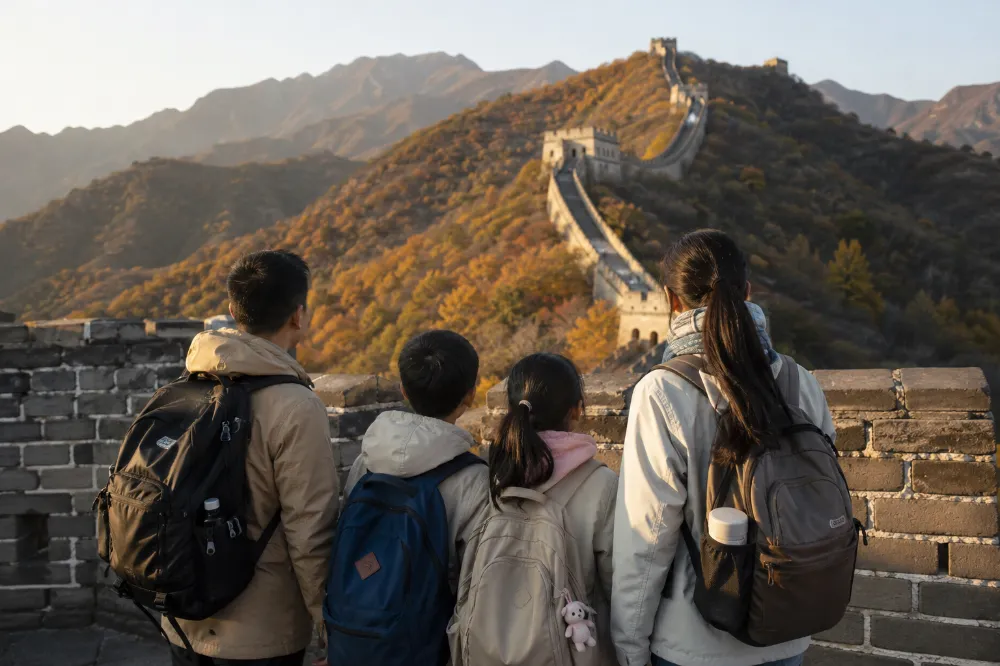
The Great Wall is the obvious headline attraction, but not all sections suit families equally. Mutianyu is generally the best choice for kids: it’s less steep than Badaling, has a cable car and a toboggan slide down the mountain (a genuine highlight for most children), and tends to be less crowded on weekdays.
The Forbidden City works surprisingly well for kids aged six and up if you frame it as a story rather than a lecture — “no one except the emperor’s family and servants could enter for 500 years” tends to land better than architectural dates. Renting an audio guide with a kids’ track, where available, helps a lot.
The Summer Palace, with its enormous lake, marble boat, and long covered walkway painted with thousands of tiny scenes, gives kids room to run around after a morning of more formal sightseeing — a good pacing tool for parents managing energy levels.
Xi’an: Where the Terracotta Army Steals the Show
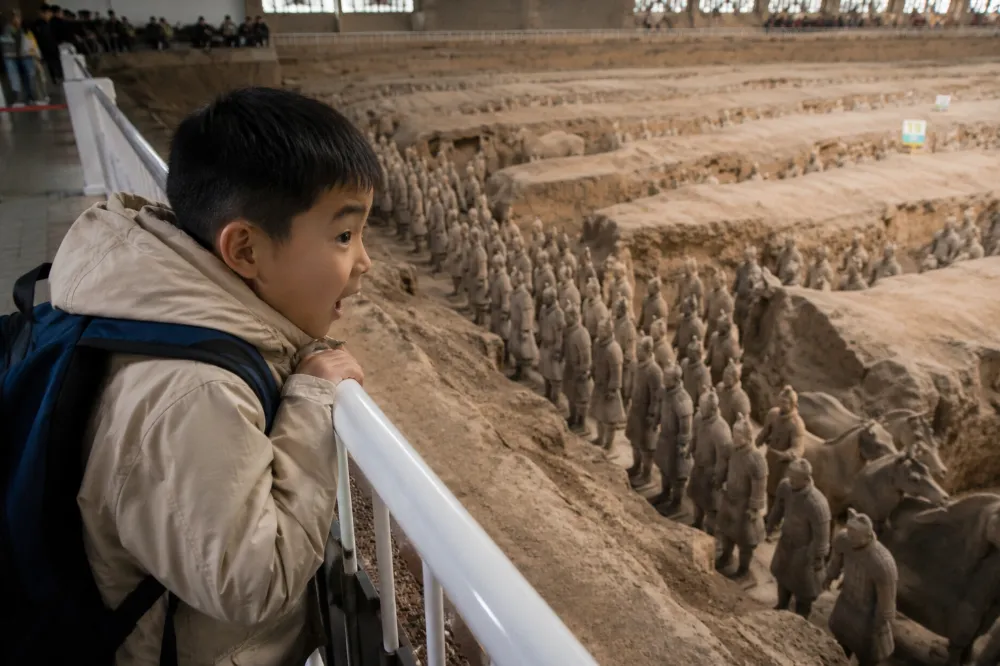
If there’s one single site that consistently gets the biggest reaction from kids on a China trip, it’s the Terracotta Warriors in Xi’an. Thousands of life-sized clay soldiers, each with a different face, buried underground for over two thousand years to guard an emperor in the afterlife — it’s the kind of real-world story that sounds made up. Most children need no convincing to be fascinated by it.
Xi’an’s ancient city wall is another family favorite, mostly because you can rent bicycles or a tandem bike and ride along the top of it as a family — a rare chance for kids to be physically active while sightseeing.
The Muslim Quarter night market is a food-lover’s playground, with skewers, hand-pulled noodles, and persimmon cakes, though it’s worth scouting stalls in advance if anyone in the family has dietary restrictions, since ingredients aren’t always obvious.
Chengdu: Pandas, Pandas, and More Pandas
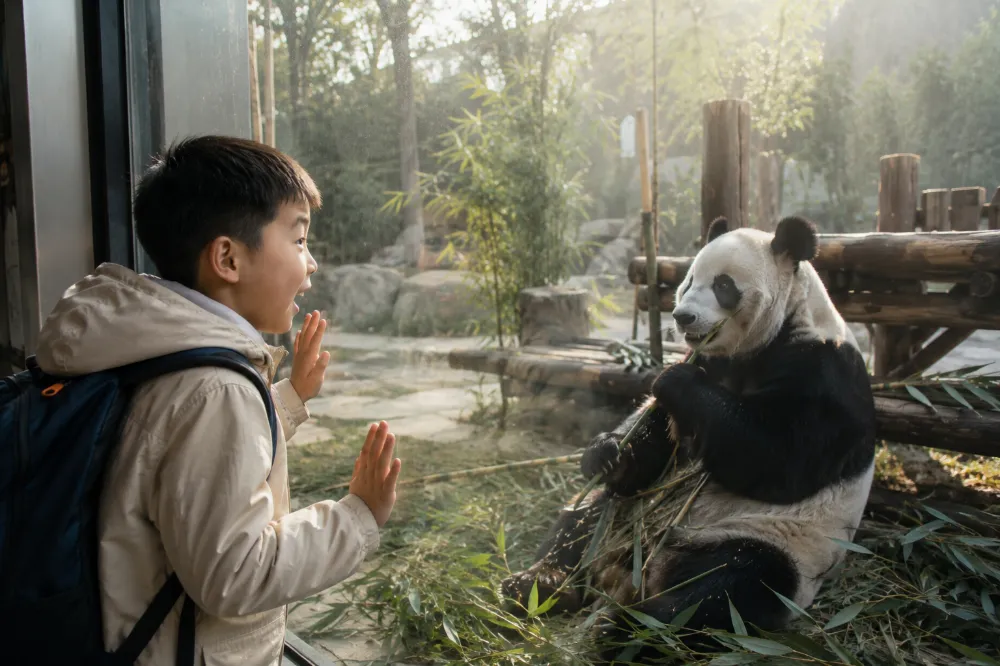
For families with younger children especially, Chengdu can be the emotional highlight of the entire trip. The Chengdu Research Base of Giant Panda Breeding lets visitors get remarkably close to pandas eating, climbing, and lounging around in naturalistic enclosures. Arriving right at opening time is worth the early wake-up call — pandas are most active in the cooler morning hours, and the base is far less crowded before mid-morning tour groups arrive.
Chengdu is also a good place to slow the pace down. Wide pedestrian streets, tea houses, and a noticeably more relaxed vibe than Beijing or Shanghai make it a natural “recovery day” stop in a longer itinerary.
Shanghai: A Glimpse of China’s Future
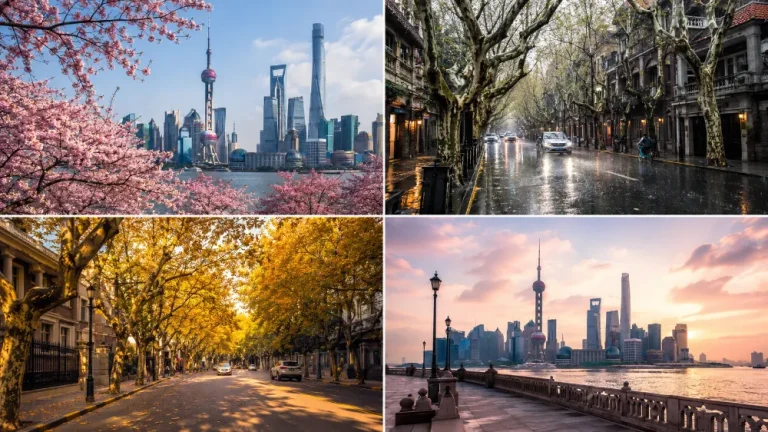
Shanghai gives families the contrast that rounds out a China trip nicely — after days of ancient history, the futuristic skyline along the Bund and the Pudong financial district shows kids a completely different side of the country. The observation decks in towers like the Shanghai Tower offer views that consistently impress even the most jaded teenager. Since Shanghai’s climate shifts noticeably across the year, it’s worth checking our month-by-month guide to visiting Shanghai before locking in your dates.
Shanghai Disneyland is an option worth considering if the budget and schedule allow, though many families choose to skip it in favor of purely China-specific experiences, since a Disney park is available closer to home in most cases.
Guilin: Nature That Looks Almost Unreal
For families wanting a break from cities altogether, Guilin and the nearby town of Yangshuo offer some of the most dramatic natural scenery in China — limestone karst peaks rising out of the Li River in a landscape that looks like a classical Chinese painting come to life. A relaxed river cruise, combined with a bike ride through the countryside around Yangshuo, gives kids a very different, more laid-back experience compared to the pace of Beijing or Xi’an.
Types of Family China Tours: Which Style Fits Your Family?
Before diving into an itinerary, it helps to decide what kind of tour structure actually fits your family’s travel style. Not every family wants — or needs — the same level of guidance, and picking the wrong format is one of the most common sources of frustration on a first trip to China.
Fully Escorted Group Tours
These are the classic bus-and-guide packages, usually run on a fixed schedule with a set group of travelers. They tend to be the most affordable per person and require the least planning on your part, since flights, hotels, meals, and entrance tickets are all pre-arranged. The tradeoff is flexibility — group tours run on a schedule that has to work for everyone, which can be tough if your child needs an unplanned nap or your toddler melts down halfway through a museum visit. This style tends to work best for families with older kids or teens who can keep pace with a group.
Private, Customized Family Tours
A private tour puts a dedicated guide and driver at your family’s disposal, with an itinerary built around your pace rather than a group’s. This is generally the most popular option among families with young children, simply because you can leave a site early, extend lunch, or swap an afternoon activity without disrupting anyone else. It costs more per day than a group tour, but many families find the added flexibility pays for itself in reduced stress.
Self-Guided or Semi-Independent Travel
Some families, especially those who’ve traveled internationally before or who speak some Mandarin, choose to book flights and hotels themselves and hire local guides only for specific sites like the Terracotta Warriors or the Great Wall. This approach offers maximum flexibility and can be cost-effective, but it does require more comfort navigating unfamiliar transport systems and occasional language barriers without a guide on hand to smooth things over.
Multi-Generational Family Tours
Trips that bring grandparents along add a different set of considerations — mobility, walking pace, and rest stops matter more, and stairs at sites like sections of the Great Wall can be a genuine obstacle for less mobile travelers. Many tour operators now offer itineraries specifically designed for multi-generational groups, favoring destinations and hotels with elevators, shorter walking distances, and more frequent breaks built into the schedule.
Family-Friendly Add-On Destinations Beyond the Classic Circuit
Beijing, Xi’an, Shanghai, and Chengdu form what many tour operators call the “golden circuit” of Chinese family travel, but families with more time or a second visit under their belt often branch out to a few other regions that pair especially well with kids.
Zhangjiajie: The Real-Life “Avatar” Mountains
The dramatic sandstone pillars of Zhangjiajie National Forest Park, which inspired the floating mountains in the film Avatar, offer a genuinely awe-inspiring landscape that tends to leave a strong visual impression on kids, even those too young to appreciate the cinematic reference. Glass-bottomed skywalks and a scenic cable car add a bit of thrill-seeking excitement that older kids and teens particularly enjoy. Nearby, our Tianmen Mountain guide covers the famous glass skywalk and the 999-step Stairway to Heaven in more detail if you’re adding this stop to your itinerary.
Hong Kong: A Gentle Bridge Between East and West
Families flying long-haul often combine mainland China with a few days in Hong Kong, which offers a more Western-familiar transition point — English is widely spoken, the metro system is famously easy to navigate, and Disneyland Hong Kong or Ocean Park provide reliable kid-pleasing options if the itinerary needs a lighter day. If you’re weighing an autumn visit, our Hong Kong weather guide for November is a handy reference for packing and pacing.
Yunnan: Slower Travel and Ethnic Diversity
For families interested in a quieter, more nature-focused leg of the trip, Yunnan province — particularly Lijiang and Dali — offers old towns, mild weather, and a noticeably slower pace than the bigger cities. It’s a strong option for families who want to add a relaxed, scenic stretch toward the end of a longer trip rather than ending on another big-city push.
Traveling With Toddlers vs. Traveling With Teens
The age range within your family changes what a “good” itinerary actually looks like, and it’s worth adjusting expectations accordingly rather than forcing a one-size-fits-all schedule.
Families with toddlers and preschoolers generally do best with fewer destinations, more downtime, and a heavier weighting toward sensory, physical experiences — the panda base, a river cruise, a toboggan ride down the Great Wall — over anything that depends on sitting still and listening to historical explanations. Naps should be treated as non-negotiable scheduling blocks, not an afterthought.
Families traveling with tweens and teens can generally handle a more ambitious pace and more historically dense sites, and many teens respond well to being given some ownership over the itinerary — picking one “must-see” per city, for example. Older kids also tend to enjoy hands-on experiences like calligraphy or dumpling-making more than passive sightseeing, so weaving a few of these into an otherwise history-heavy schedule keeps engagement higher throughout the day.
Sample 10-Day Family China Tour Itinerary
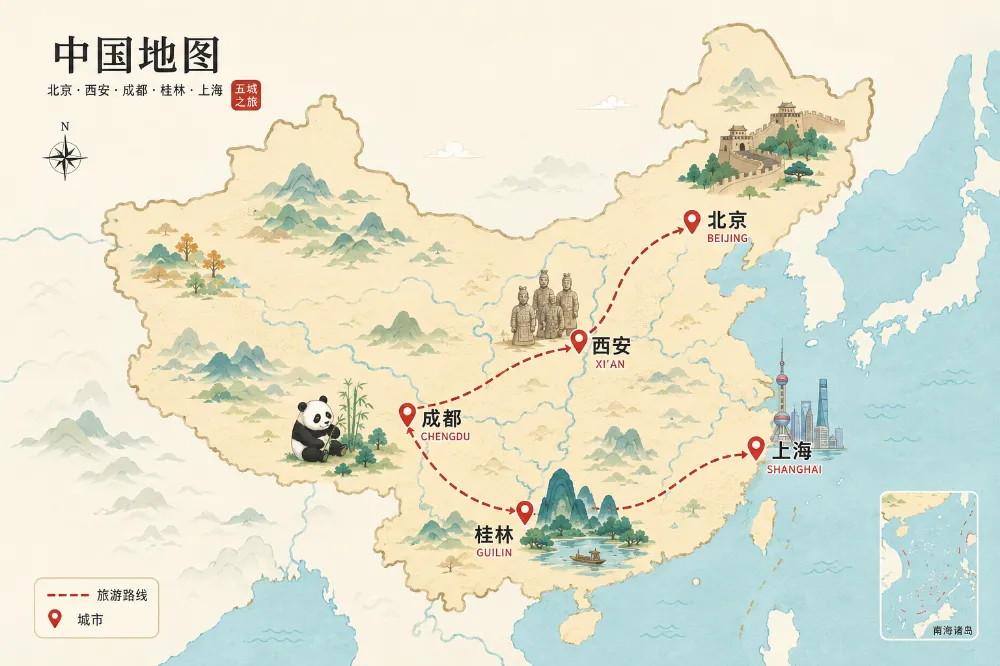
Below is a realistic, kid-tested pacing structure. It avoids back-to-back travel days and builds in downtime, which matters more with children than with adult-only groups.
| Day | Location | Focus |
| 1–2 | Beijing | Arrival, rest, Forbidden City, Tiananmen Square |
| 3 | Beijing | Mutianyu Great Wall (with toboggan ride), Summer Palace |
| 4 | Xi’an | High-speed train from Beijing, city wall bike ride |
| 5 | Xi’an | Terracotta Warriors, Muslim Quarter food tour |
| 6 | Chengdu | Flight or train to Chengdu, giant panda base (early morning) |
| 7 | Chengdu | Relaxed day, tea house, local park, downtime |
| 8–9 | Shanghai | Flight to Shanghai, Bund walk, Shanghai Tower, Yuyuan Garden |
| 10 | Shanghai | Free morning, departure |
Families with two weeks available often add Guilin between Xi’an and Chengdu, or extend the Shanghai stretch with a day trip to the nearby water town of Zhujiajiao — a much gentler, more photogenic alternative to another big city.
Kid-Friendly Activities and Experiences
Beyond the headline sights, a handful of smaller experiences tend to be the ones kids talk about long after the trip ends.
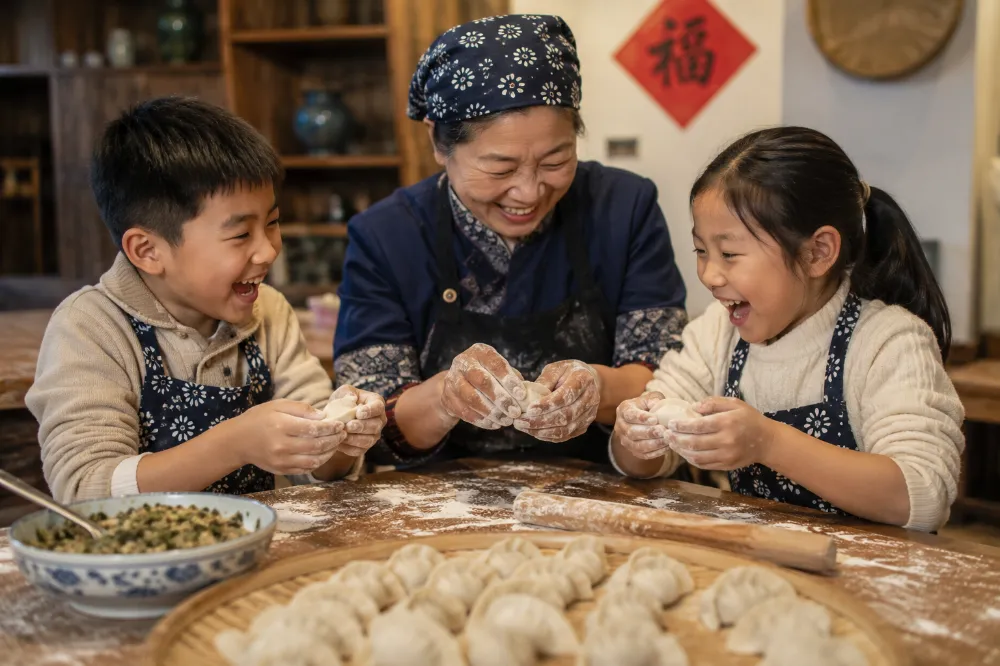
- Dumpling-making classes — widely available in Beijing and Xi’an, and genuinely fun for kids old enough to handle dough without eating it all first.
- Calligraphy or paper-cutting workshops — a quiet, hands-on activity that works well as a midday break between more physically demanding sightseeing.
- Rickshaw rides through Beijing’s hutongs — narrow historic alleyways that give a street-level view of daily life, usually a hit with younger kids simply because of the mode of transport.
- Kung fu shows — evening performances in cities like Beijing offer an accessible, visually exciting way to introduce kids to martial arts culture without needing any language skills to enjoy it.
- River cruises in Guilin — a low-effort, high-reward activity for families with younger children or anyone needing a rest day from walking.
Practical Travel Tips for Families
Visas and Entry Requirements
Visa policy for China has shifted meaningfully in recent years, with expanded visa-free transit and entry programs for citizens of a growing list of countries. Because these rules change fairly often, it’s worth checking the current policy directly with the Chinese embassy or consulate in your home country, or with your tour operator, rather than relying on outdated blog posts — our own breakdown of whether Americans can travel to China covers the latest entry requirements in detail. If a visa is required, apply well in advance, since children usually need their own passport and application, even infants.
Health and Safety
No unusual vaccinations are required for most travelers to China’s major tourist cities, though it’s worth discussing your specific itinerary with a travel health provider, especially if you’re heading to rural or southern regions. Pack a basic first-aid kit with children’s fever and pain medication, since finding familiar Western brands can be harder outside major cities. Bottled or boiled water is the norm — tap water isn’t recommended for drinking, even for adults.
Food and Dietary Needs
Chinese cuisine varies enormously by region, but plain rice, steamed buns, and simple noodle dishes are available almost everywhere and tend to be safe bets for picky eaters. If anyone in the family has allergies, it’s worth learning a few key phrases or carrying a translated allergy card, since ingredient labeling and menu descriptions can be less detailed than what you might be used to at home.
Getting Around
China’s high-speed rail network is one of the best in the world and is generally the most comfortable way to move between cities with kids — seats are spacious, trains are clean, and travel times are short. Within cities, ride-hailing apps and metro systems are efficient, though having your hotel or guide write your destination in Chinese characters makes taxi rides far smoother.
Connectivity
Some commonly used apps and websites outside China are not accessible without a VPN, so it’s worth setting one up on your devices before you leave home rather than trying to do it after arrival. A local SIM card or portable Wi-Fi device, arranged either before the trip or at the airport on arrival, makes navigation and translation apps far easier to use throughout the trip.
Packing Considerations
Comfortable, broken-in walking shoes matter more than almost anything else on a family China tour, since most days involve significant walking on uneven or cobbled surfaces. A lightweight rain jacket, a portable phone charger, and a small day pack for water and snacks round out the essentials. If traveling in summer, sun protection is non-negotiable; in winter, especially in Beijing, warm layers matter far more than most first-time visitors expect.
Cultural Etiquette Tips to Share With Kids Before You Go
A few minutes of preparation before the trip goes a long way toward smoother interactions once you’re on the ground. Kids don’t need a formal lecture — a couple of simple, concrete pointers usually stick better than a long list of rules. For a deeper look at customs beyond what’s covered here, our guide to Chinese traditions and customs is a useful companion read before you fly.
- Pointing and staring are common. Local families, especially outside the biggest cities, may point at or want to photograph foreign children out of friendly curiosity rather than rudeness. Preparing kids for this in advance prevents confusion or hurt feelings in the moment.
- Queuing norms can differ. Lines at popular attractions can feel less orderly than what kids may be used to at home. A quick heads-up avoids frustration when a queue doesn’t move in a perfectly straight line.
- Public volume tends to run louder. Restaurants and public spaces in China are often louder and more bustling than kids might expect, which is worth mentioning so it doesn’t feel overwhelming on arrival.
- Tipping isn’t customary. Unlike many Western countries, tipping isn’t expected in most restaurants or for taxi rides, which can actually be a relief for parents managing a tight budget.
- Two hands show respect. Teaching kids to receive small gifts, business cards, or change with two hands rather than one is a small but appreciated gesture of respect in Chinese culture.
Common Mistakes Families Make on China Tours — and How to Avoid Them
After watching countless families move through China, a handful of avoidable missteps show up again and again. Sidestepping these upfront can save real frustration mid-trip.
Overpacking the itinerary. It’s tempting to try to see everything in one trip, but cramming five major sights into a single day is a recipe for exhausted, cranky kids by mid-afternoon. Building in buffer time and accepting that you won’t see absolutely everything leads to a far more enjoyable trip.
Underestimating walking distances. Many of China’s biggest attractions — the Forbidden City, the Terracotta Warriors complex, sections of the Great Wall — involve significantly more walking than first-time visitors expect. Comfortable footwear and realistic daily walking budgets matter more than most packing lists suggest.
Skipping the jet lag adjustment. Flying from North America or Europe to China usually crosses eight to thirteen time zones, and pushing straight into a packed sightseeing schedule on arrival day often backfires. Building a light first day into the itinerary — short activities, an early bedtime — helps the whole family adjust faster.
Not booking high-speed trains far enough in advance. Popular routes between cities like Beijing and Xi’an can sell out during peak season, particularly around holidays. Booking train tickets as early as your itinerary allows avoids the stress of scrambling for alternatives.
Assuming credit cards work everywhere. Mobile payment apps dominate day-to-day transactions in China, and not every small vendor accepts foreign credit cards. Carrying some cash and setting up a mobile payment option in advance, where possible, avoids awkward moments at food stalls and small shops.
What to Pack: A Family China Tour Checklist
Beyond the general packing tips covered earlier, a few specific items consistently prove useful for families traveling through China:
- Hand sanitizer and tissues — public restrooms don’t always stock soap or paper
- A printed or photographed copy of your hotel address in Chinese characters, for showing taxi drivers
- A universal power adapter, since China uses a mix of plug types
- Snacks familiar to picky eaters, for the inevitable meal that doesn’t go over well
- A lightweight, foldable stroller for children under five, even if they mostly walk — long museum and palace visits add up
- Motion sickness remedies, useful for both flights and winding mountain roads near the Great Wall
- A portable battery pack, since long sightseeing days drain phone batteries fast, especially with translation apps running
Choosing the Right Family Tour Package or Operator
Not every China tour company is built with families in mind, and the difference shows up in small but meaningful ways — pacing, guide patience, and how flexible the itinerary is when a child needs an unscheduled break.
When comparing operators, a few questions tend to separate genuinely family-friendly companies from ones simply adapting a standard adult itinerary:
- Does the itinerary build in rest time? A schedule with back-to-back full-day excursions every single day is a red flag for anyone traveling with young children.
- Are guides experienced with kids? A good family tour guide knows how to make a 2,000-year-old wall interesting to an eight-year-old, not just recite dates.
- Is private or small-group touring available? Large coach tours can be efficient, but families often do better with private guides or smaller groups, since the pacing can flex around nap times or meltdown moments.
- What’s included with transport and meals? Confirm whether high-speed train tickets, domestic flights, and meals are included in the quoted price, since these add up quickly if arranged separately.
- What’s the cancellation and rebooking policy? Families are statistically more likely to need to adjust plans due to a sick child, so flexible terms are worth paying slightly more for.
Reading recent reviews specifically from other families — not just general traveler reviews — is one of the most reliable ways to gauge whether a company actually delivers on family-friendly promises.
Budgeting for a Family China Tour
Costs vary widely depending on season, tour style, and how many cities you visit, but a few general patterns hold true across most family trips to China.
Guided group tours tend to offer the best value for families new to China, since flights, trains, hotels, and entrance fees are bundled into a single price, removing a lot of planning stress. Private, customized tours cost more per person but offer far more flexibility around pacing, meal choices, and daily schedules — often worth the premium for families with young children or specific dietary needs.
Domestic flights and high-speed trains between major cities are generally affordable by international standards, and children under a certain age or height typically qualify for discounted or free tickets, though policies vary by carrier and route. Hotels in China span an enormous price range, and mid-range international chain hotels — which tend to have larger rooms and Western-style bathrooms families often prefer — are widely available in every major tourist city without a huge price premium over local options.
Frequently Asked Questions About Family China Tours
Is China safe for families with young children?
Yes. Major tourist cities in China are generally very safe, with low rates of violent crime and infrastructure well suited to travelers with strollers and small children. Standard travel precautions — watching belongings in crowded areas, keeping kids close in busy markets — apply just as they would anywhere else.
How many days do we need for a family trip to China?
Ten to fourteen days is a comfortable range for covering three to five major cities without rushing. A shorter trip of five to seven days works well if you focus on just one or two cities, such as Beijing and Xi’an.
What’s the best age for kids to visit China?
There’s no strict minimum, but children around five years and older tend to get the most out of the historical and cultural sites, since they can engage with the stories behind what they’re seeing. Younger children and toddlers can absolutely travel too, especially if the itinerary includes plenty of downtime and highlights like the panda base that don’t require much context to enjoy.
Do we need a guide, or can we do a family China tour independently?
Both are possible. A guide removes a significant amount of logistical stress — language barriers, ticket purchasing, transport coordination — which many families find worth the cost, especially on a first visit. Independent travel is more feasible than it used to be thanks to translation apps and improved English signage, but it requires more planning and comfort with uncertainty.
Is the food safe and suitable for kids in China?
Generally, yes. Reputable restaurants maintain solid hygiene standards, and simple dishes like steamed rice, noodles, and dumplings are widely available and popular with picky eaters. Sticking to bottled water and well-reviewed restaurants further reduces any risk.
How much does a family China tour typically cost?
Costs vary significantly by season, tour style, and number of cities, but a mid-range guided group tour covering three to four cities often runs comparable to a family trip to a mid-tier European destination, once flights, hotels, meals, and entrance fees are factored in. Private, customized tours generally cost more per person but reduce planning stress and offer far more scheduling flexibility.
Will there be an English-speaking guide for our family?
Most reputable tour operators catering to international families provide English-speaking guides, and many can arrange guides who speak other languages on request. It’s worth confirming this directly with your tour operator before booking, especially for smaller cities outside the main tourist circuit.
Can we customize a family China tour around specific interests, like pandas or the Great Wall?
Yes — most tour companies that specialize in family travel are used to building itineraries around specific highlights, whether that’s extra time at the panda base, skipping certain museums in favor of more outdoor activity, or adding a cooking class. It’s generally easiest to communicate these priorities clearly when requesting a quote, rather than adjusting a fixed itinerary after booking.
Is it hard to find diaper-changing facilities or family restrooms in China?
Major attractions, airports, and shopping malls in large cities typically have decent family restroom facilities, though standards can vary more in smaller towns or older sites. Carrying a small portable changing pad is a reasonable precaution for families traveling with infants or toddlers.
Final Thoughts
A family trip to China rewards a bit of upfront planning with an experience that’s genuinely hard to replicate anywhere else — ancient history that feels tangible rather than textbook, natural scenery that looks almost too dramatic to be real, and enough modern convenience to keep the logistics manageable even with kids in tow. Whether your family ends up more excited about the Great Wall, the terracotta army, or simply watching pandas tumble around in the morning sun, the memories from a well-planned family China tour tend to stick around for a very long time.
If you’re ready to start mapping out your own trip, the next step is deciding which cities matter most to your family and finding a tour partner who genuinely understands how to travel well with kids — not just adults. There’s a meaningful difference between an itinerary that’s simply been shortened from an adult tour and one that’s actually been built, from the ground up, around how families move, eat, rest, and get excited about new places.
Every family’s ideal version of this trip looks a little different — some will spend an extra day watching pandas in Chengdu, others will prioritize an extra night in Shanghai for the skyline views, and some will trade a city for a slower few days in the Guilin countryside. None of those choices are wrong. The best family China tours are the ones flexible enough to bend around what actually makes your kids light up, rather than forcing every family down an identical checklist of sights. Start with your family’s interests, build in more breathing room than feels strictly necessary, and the rest of the trip tends to fall into place.
Want help mapping out the details? Get in touch with our travel team to start planning, or browse our China travel guides for more destination-specific tips.