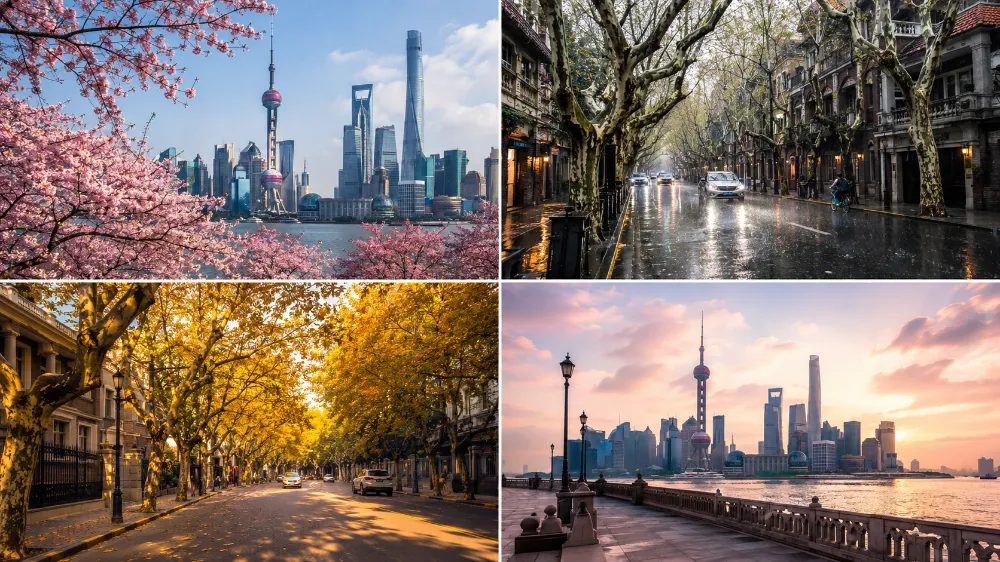
Most guides on Shanghai will tell you to come in “spring or autumn” and call it a day. That’s lazy advice, and frankly, it skips the stuff that actually matters — like when typhoons hit, when hotels triple in price, and when half the city disappears for Spring Festival.
I’ve lived in Shanghai long enough to know the answer isn’t one-size-fits-all. The “best” month depends on whether you care more about weather, crowds, your wallet, or specific events like cherry blossoms or the ATP Masters. So instead of a generic verdict, here’s a real month-by-month breakdown for 2026 — what to expect, what to skip, and the local tricks that don’t show up in most travel blogs.
TL;DR: When Should You Actually Go?
Quick answer for people who don’t want to read 5,000 words:
- Best months overall: Mid-April to mid-May, and late September to late October. Mild weather, manageable crowds (outside Golden Week), and the city’s prettiest light.
- Best months for savings: Late November through early March — except the two weeks around Chinese New Year, which is its own beast.
- Worst months to visit: The first week of October (National Day Golden Week), the week of Chinese New Year, and August if you hate humidity or typhoons.
- Most underrated month: November. Warm enough for t-shirts most days, almost no tourists, and the plane tickets are genuinely cheap.
Now, if you want to know why, keep reading.
Shanghai’s Weather at a Glance (Without the Fluff)
Shanghai sits on the Yangtze delta. The climate is humid subtropical, which is a fancy way of saying: hot, sweaty summers; chilly, bone-damp winters; and two shoulder seasons that locals genuinely treat as the best part of the year.
Here’s the 30-year average, so you can stop guessing:
| Month | Avg High (°C) | Avg Low (°C) | Rain (mm) | Rainy Days | Humidity |
|---|---|---|---|---|---|
| January | 8 | 1 | 64 | 6 | 72% |
| February | 10 | 3 | 68 | 7 | 75% |
| March | 14 | 7 | 97 | 8 | 72% |
| April | 20 | 12 | 110 | 8 | 73% |
| May | 24 | 17 | 131 | 7 | 76% |
| June | 27 | 21 | 268 | 11 | 83% |
| July | 31 | 26 | 147 | 10 | 82% |
| August | 31 | 26 | 162 | 12 | 81% |
| September | 27 | 22 | 111 | 9 | 79% |
| October | 23 | 16 | 62 | 4 | 75% |
| November | 17 | 10 | 60 | 5 | 73% |
| December | 11 | 4 | 47 | 5 | 70% |
A few things that won’t jump out from the numbers but absolutely will from the sidewalk:
- June is the rainiest month by far. Plum rain season (梅雨, yǔméi) usually kicks in around mid-June and lasts 2–3 weeks of near-constant drizzle. Plan around it.
- Summer “feels” hotter than the numbers. 32°C with 80% humidity is not the same as 32°C in Madrid. You’ll sweat through shirts in five minutes.
- Winter is damp, not snowy. It rarely dips below freezing, but the damp cold cuts through you. Pack a real coat, not a denim jacket.
- October is the driest month. That’s why locals call it “秋高气爽” — literally “high sky, fresh air.”
How to Split the Year: Peak, Shoulder, and Low Season
Forget the four-season pitch. From a trip-planning angle, Shanghai has three real seasons:
Peak Season (March–May, September–October, plus the first week of October): Hotel rates roughly 50–120% higher than low season. The Bund, Yu Garden, and Disneyland will have lines. Book 60–90 days out for the best rates, especially around Easter, Labor Day, and Golden Week.
Shoulder Season (June, late August, early November): Rates drop 10–25%. Crowds are thinner. The trade-off is weather — either rain or the tail end of typhoon season. June is probably the worst “shoulder” month, honestly.
Low Season (mid-November through February, except Chinese New Year): Hotels run 40–60% below peak. Lines at major attractions are basically nonexistent. You will be cold, but you will have the Bund almost to yourself at sunrise, which is a real experience.
January in Shanghai: Cold, Quiet, and Almost Free
January is one of the most slept-on months for Shanghai travel. Average highs around 8°C, lows near freezing, and only 6 rainy days all month. It’s grey a lot, but the city doesn’t shut down the way it does in Beijing or Harbin.
What’s good: Hotel prices in Jing’an or near the Bund can be 50% cheaper than April. Lines at Shanghai Tower? Maybe five minutes. Disneyland walk-ons during weekdays. Rooftop bars are open year-round. The French Concession has its own winter mood — bare plane trees, locals in padded jackets, dumplings at every corner.
What’s bad: It gets genuinely cold at night, and Shanghai apartments and older buildings are not well heated. Indoors you’ll often see people in their coats. If you’re not used to damp cold, bring thermals. The Huangpu river wind off the Bund in January is something else.
Events worth catching: None major in early January. Late January usually brings pre-Spring Festival energy — decorations go up, lanterns at Yu Garden, and the city’s big markets at Nanjing Road get busy from the 20th onward.
Verdict: Great if you hate crowds and don’t mind bundling up. Skip if you want sunshine.
February in Shanghai: Spring Festival (Don’t, Unless You Mean To)
February is two completely different trips depending on the dates.
Before Chinese New Year (usually Feb 1–16 in 2026): Decent. Cold but dry-ish, low crowds, cheap hotels. You can have Tianzifang almost to yourself.
During Spring Festival (Feb 17–23, 2026, give or take): Half the city goes home. Many restaurants and shops close for a week. The ones that stay open jack up prices. Trains out of Hongqiao Railway Station look like a Black Friday stampede. Airports are mobbed. Hotels that survive price gouge.
Spring Festival 2026 falls on February 17, with the official holiday window roughly February 15–21. Avoid Shanghai that week unless you specifically came for the fireworks, the temple fairs, and the cultural experience of watching 25 million people try to leave at once.
After the holiday (Feb 24 onward): Calm again, but cold. Snow is unlikely but not impossible — Shanghai gets a real snowfall maybe once every 3–4 years.
Verdict: First 10 days of February, fine. Middle 10 days, run. Last week, fine again.
March in Shanghai: Cherry Blossoms, Politics, and Shoulder Pricing
March is when Shanghai starts showing off. The 2026 Shanghai Cherry Blossom Festival runs March 9 to April 9 at Gucun Park in Baoshan (north Shanghai), and the late-March peak is genuinely one of the city’s prettiest events. Over a million people went last year, so go on a weekday morning or you’ll be swimming upstream.
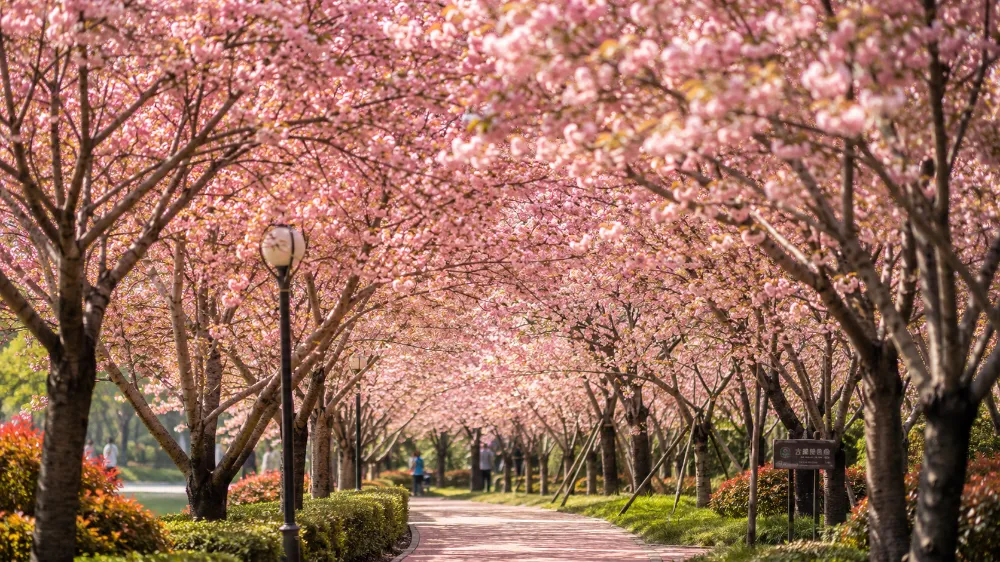
Weather-wise: highs climbing from 13°C to 18°C, around 8 rainy days, and the magnolia trees (Shanghai’s city flower) bloom across People’s Square and along the Bund.
What’s good: Cherry blossoms at Gucun, Tongji University’s famous cherry tunnel on Yangshupu Road, and the new nighttime illumination at Gucun Park (Gate 3 stays open until 9:30pm during early bloom, Gate 2 during peak bloom). It’s shoulder pricing — hotels are 10–20% below April.
What’s bad: Spring rain, which hits on and off throughout the month. Pollen allergies flare up — Shanghai’s plane trees and cypresses are no joke for sensitive noses. Bring antihistamines.
Verdict: Top-three month if you want blossoms + lower crowds. Top-three if you hate allergies and rain.
April in Shanghai: Peak Bloom, Peak Crowds, Peak Vibes
April is the month everyone talks about, and for good reason. Average highs hit 20°C, the rain is manageable (8 days), and the city is fully alive. The Shanghai International Flower Show 2026 runs April 18 to May 10, with two main venues and 10 sub-venues — including Xintiandi, which turns into a flower market for nearly a month.
What’s good: Almost everything. Wisteria at Chenshan Botanical Garden. Tulips at Shanghai Botanical Garden. Outdoor seating at every café. Wukang Road looks like a movie set. The night cruise on the Huangpu is genuinely pleasant at this temperature. The 36th Shanghai Peach Blossom Festival (March 25 – April 12, 2026) is also worth catching if you’re into that.
What’s bad: Crowds. Real crowds. Tomb Sweeping Day (Qingming, April 4–6, 2026) is a 3-day holiday — every train out of Shanghai is packed with people going to ancestral hometowns, and prices jump. Disneyland lines can hit 90+ minutes. Hotel rates near the French Concession spike 80–100% over low season.
The Shanghai Marathon usually happens in late November or December, but a smaller half-marathon pops up in spring sometimes — check the official Shanghai Sports site if you want to enter the lottery (it’s a lottery for non-elite runners).
Verdict: Best month of the year, weather-wise. Book hotels 2–3 months out if you’re coming in mid-April.
May in Shanghai: The Sweet Spot
May is my personal favorite. Average high of 24°C, mostly sunny, low humidity compared to June, and the crowds from Qingming have thinned out. The International Flower Show is still running until May 10, and Dragon Boat Festival (端午, Duanwu) usually falls in late May or early June — in 2026 it’s May 30 to June 1, a 3-day weekend.
What’s good: The wisteria at Chenshan usually peaks in early May. Outdoor cinemas start popping up along the Bund. Rooftop bars are open. West Bund has its art fair circuit (West Bund Art & Design tends to land in November, but the galleries there are worth a stop any month). The cycling culture in Shanghai peaks — try the ride from Xintiandi through the French Concession to Longhua.
What’s bad: Labor Day (May 1–5, 2026) is a 5-day holiday. The first three days are brutal for crowds. From May 6 onward, things calm down. Last week of May is genuinely lovely.
Verdict: If you can only pick one month and you’re flexible on dates, aim for May 6–25. You’ll rarely see Shanghai this balanced.
June in Shanghai: Plums, Pollen, and the Worst Rain of the Year
June is the city’s most misunderstood month. Early June is genuinely fine — 25°C, sunny mornings, perfect for outdoor photography. Then around mid-June the plum rains hit (梅雨, yǔméi), and suddenly you’re getting 268mm of rain over 11 days, sometimes nonstop for 48 hours at a stretch.
Dragon Boat Festival 2026 falls on May 30 – June 1, so by the time the rain really kicks in (around June 15–20), the crowds are gone.
What’s good: Low prices (10–20% below peak), very few tourists at the major sites, and the city has a moody, atmospheric quality that photographers love. The smell of rain on the plane trees in the French Concession is something else. Indoor activities (Shanghai Museum, Power Station of Art, Long Museum) are quiet and air-conditioned.
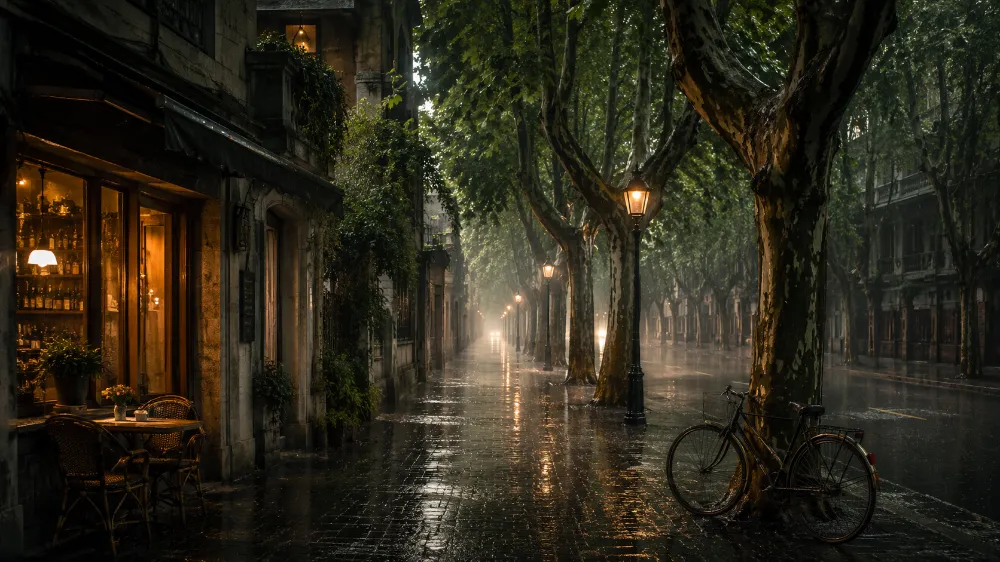
What’s bad: Everything else. You’ll need a real rain jacket, not an umbrella — Shanghai wind + umbrella is a losing battle. Your shoes will not dry. Mold becomes a real concern if you have leather goods. Some outdoor attractions (like Jinshan City Beach, which opens its summer swimming season on June 20) become weather-dependent.
Verdict: Skip unless you have a specific reason (cheaper hotels, fewer crowds, or a love for noir photography).
July in Shanghai: Brutal Heat
July is Shanghai’s hottest month. Average high of 31°C, but the heat index regularly hits 38–40°C when humidity is factored in. There were 15+ days above 35°C last July, and that’s the new normal.
What’s good: Surprisingly, the indoor attractions shine. Shanghai has world-class malls (iapm, K11, Plaza 66) with seriously good air conditioning. The museums, the Shanghai Tower observation deck, and aquariums are all climate-controlled. Nightlife shifts later — locals start dinner at 7pm, drinks at 9pm, clubs at midnight. The night Bund cruise is genuinely nice with a breeze.
What’s bad: Walking anywhere between 11am and 4pm is a special kind of punishment. You’ll see locals carrying those portable fans and folding umbrellas as parasols. If you have any heat sensitivity, July is not for you. Outdoor queueing at Disneyland becomes an endurance test.
Events: The 2026 Shanghai Summer International Consumption Season runs July through October — events, deals, and family activities across the city. The Shanghai Book Fair usually lands in mid-August, but a few exhibitions kick off in July.
Verdict: Only if you can handle heat, or if you want cheap hotels (rates drop 30% from peak).
August in Shanghai: Typhoon Roulette
August is Shanghai’s other extreme month. Still hot (28–31°C), still humid, and now you’ve added typhoons to the mix. On average, 1–2 typhoons affect Shanghai each year, most often in August and early September. Some years you get a glancing blow. Some years you get three days of canceled flights.
2026 specifically: Shanghai Disneyland celebrates its 10th anniversary on June 16, 2026, with new attractions including a Spider-Man themed land and a third hotel (the Enchanted Star Hotel) opening this winter. So if you want to combine a 2026 trip with Disney’s big year, the resort will be at its busiest June–August.
What’s good: Same as July — cheaper hotels, indoor culture, late nights. Jinshan City Beach is open all summer (until September, generally) for a quick coastal escape — it’s actually closer than you think, about an hour by train from downtown. Shanghai Beer Festival pops up in some years.
What’s bad: Typhoons. They rarely make direct landfall on Shanghai (Zhejiang and Fujian take most hits), but the outer bands bring flooding, flight cancellations, and the kind of rain that floods subway stations. August is also the month with the most rainy days (12 on average). The Mid-Autumn Festival sometimes falls here too, though in 2026 it lands on September 25 — so October 6 (the holiday day) is the one to watch.
Verdict: Bottom-tier month. Only if you’ve got a specific event or you’re chasing serious deals and you’ve got backup plans.
September in Shanghai: Coming Back to Life
September is Shanghai’s recovery month. The heat breaks around mid-September. Typhoon risk drops sharply after the 15th. Crowds haven’t peaked yet — National Day is still a week away.
What’s good: Average high of 27°C early in the month, dropping to 23°C by the end. Low rainfall (111mm spread out, mostly toward mid-month). The Mid-Autumn Festival in 2026 is September 25, and the city goes all out — Yu Garden lanterns, mooncakes everywhere, the Bund lit up. The Rolex Shanghai Masters 2026 runs September 29 – October 12, so if you want to catch world-class tennis at the Qizhong Tennis Center, late September is your slot.
What’s bad: The first week can still feel like August. Typhoon season isn’t quite over until around September 20. Hotel prices start climbing from September 20 onward.
Verdict: Top-three month, especially the last 10 days.
October in Shanghai: Golden Week Madness, Then Pure Magic
October is a tale of two cities. The first week is the worst week of the year to be in Shanghai. The rest of the month is one of the best.
National Day Golden Week (October 1–7, 2026): A billion Chinese people travel simultaneously. Shanghai receives a huge share of them. The Bund is unrecognizable. Yu Garden queues run 90 minutes. Hotels near People’s Square triple in price. Trains are sardine cans. Avoid this week like the plague unless you have very specific reasons.
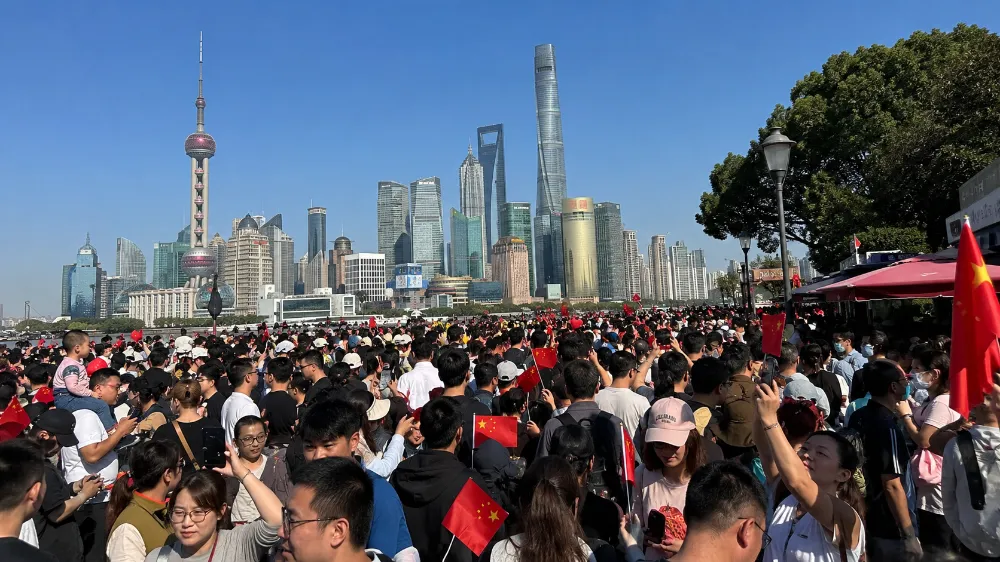
Mid-Autumn Festival 2026: Falls on September 25, with the public holiday on October 6 — so the Golden Week (Oct 1–7) and Mid-Autumn overlap, which makes it even worse than usual.
October 8 onward: The city exhales. Temperatures sit at 18–22°C, humidity drops to 70%, and the plane trees along Yuyuan Road and Hengshan Road turn gold and amber. It’s genuinely the most photogenic month in Shanghai. The Rolex Shanghai Masters wraps up October 12, adding energy to the city.
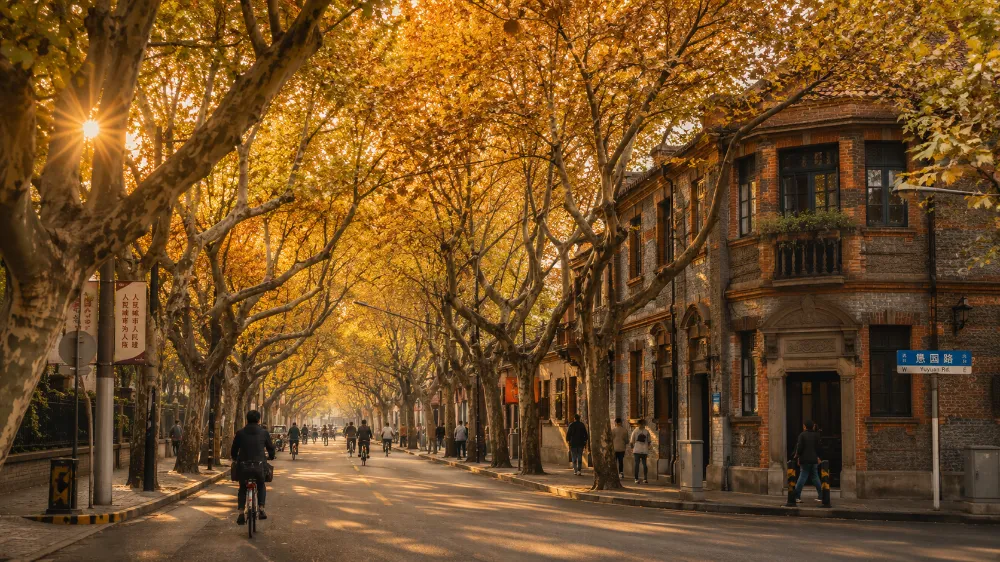
Verdict: Book October 8–25 for the magic. Avoid October 1–7 unless you’re a glutton for punishment.
November in Shanghai: The Underrated Month
November is the month I recommend most often to friends, and the one nobody writes about. Average high 17°C, low 10°C, only 5 rainy days, 60mm of total rain. It’s dry, mild, and uncrowded.
What’s good: Hotel rates are at their annual low (often 40–50% off peak). Lines at the major sites are minimal. Outdoor seating at cafés along Yuyuan Road is still pleasant most afternoons. West Bund Art & Design and several other art fairs hit in November, drawing a creative crowd. Late November brings the start of the Shanghai Marathon (usually the last Sunday of November or first of December) — the route takes runners past the Bund and through the city center.
What’s bad: It’s grey more than sunny. The light is moody rather than bright. Some outdoor attractions start reducing hours. By late November, you need a real coat.
Verdict: Best underrated month. Top-three for value, top-five for weather.
December in Shanghai: Festive Lights, Real Winter
December is a mixed bag. The first two weeks are pleasant autumn weather — sunny days around 12–14°C, very few rainy days. From mid-December onward, winter sets in properly. Highs drop to 8°C, nights to 3°C, and you start seeing locals in puffy coats.
What’s good: Christmas and New Year decorations transform the city — Xintiandi, Jing’an Temple area, and the major malls go hard. The Christmas market at BFC (Bund Finance Center) has become a proper event, with European-style stalls, mulled wine, and live music. Hotel prices are still low. Disney’s Christmas season runs roughly December 8 to January 1. Yu Garden’s lantern festival starts in late December, building toward Chinese New Year.
What’s bad: Cold. Damp cold that gets into your bones. The wind off the Huangpu at night feels colder than the thermometer says. Limited daylight (sunset around 5pm by late December) means you lose sightseeing hours.
Verdict: Great for festive atmosphere + low prices. Tough if you hate cold.
Chinese Holidays That Will Ruin Your Trip (If You Don’t Plan Around Them)
Here’s the cheat sheet. These are the dates that will make your Shanghai trip significantly more expensive, more crowded, or both:
- Chinese New Year — February 17, 2026 (official holiday roughly Feb 15–21). Trains book out 30 days in advance. Half the city closes.
- Qingming / Tomb Sweeping Day — April 4–6, 2026. 3-day weekend. Domestic tourism spike.
- Labor Day — May 1–5, 2026. 5-day holiday. Domestic tourism spike.
- Dragon Boat Festival — May 30 – June 1, 2026. 3-day weekend. Modest spike.
- Mid-Autumn Festival — September 25, 2026 (holiday on October 6). Combines with National Day.
- National Day / Golden Week — October 1–7, 2026. The worst week of the year.
Pro tip: the week before each holiday is usually quiet. The week after is also quiet. Avoid the holiday weeks themselves.
Hotel & Flight Pricing: When to Book, When to Pounce
Here’s roughly what to expect on hotel rates for a mid-range 4-star in central Shanghai (Jing’an, French Concession, or near the Bund):
- Low season baseline: ¥450–650/night
- Shoulder season: ¥600–900/night
- Peak season: ¥900–1,500/night
- Golden Week (Oct 1–7): ¥1,800–3,500/night (yes, really)
- Spring Festival week: ¥1,500–2,800/night
Flights follow a similar pattern. Domestic flights from Beijing or Shenzhen can be ¥400 round-trip in low season and ¥1,500+ during Golden Week. International flights have less dramatic swings but follow the same logic — book 60–90 days out for the best rates on transpacific routes.
For hotel booking, the sweet spot is 45–75 days before arrival. Earlier than that, you don’t get the deals. Later than that, the cheap inventory is gone.
Crowds at the Top Attractions (Real Talk)
Most guides will tell you the Bund and Yu Garden are crowded. They are. But the timing matters more than people realize:
- The Bund: Sunrise (5:30–7am) and after 9pm are uncrowded year-round. Sunset is mobbed. Golden Week sunset is a human traffic jam.
- Yu Garden: Weekday mornings only. Weekends and holidays are brutal — minimum 45-minute queue to get in.
- Shanghai Disneyland: Tuesday and Wednesday are slowest. Avoid Chinese holidays entirely. The new Spider-Man land (opening soon) will make crowds worse, not better.
- Shanghai Tower / Jin Mao / SWFC observation decks: Buy tickets online in advance for any time of year. Skip the observation decks entirely on rainy days — the view is the only reason to go.
- Shanghai Museum: Free entry, but reserve online. Weekday afternoons are calmest. Closed Mondays.
- Tianzifang: Weekday mornings or late evenings. Weekends are sardine-can territory.
- Zhujiajiao Water Town: A day trip from Shanghai, but avoid weekends — it becomes a theme park.
FAQ: The Questions People Actually Ask
When is typhoon season in Shanghai?
Officially July through September, but the highest risk window is mid-August to mid-September. Most typhoons that affect Shanghai don’t make direct landfall here, but the outer bands bring heavy rain, flight cancellations, and flooding in low-lying areas.
When is cherry blossom season in Shanghai 2026?
The official Shanghai Cherry Blossom Festival at Gucun Park runs March 9 – April 9, 2026. Peak bloom usually hits late March to early April. The 2026 festival added a nighttime illumination experience at Gates 2 and 3.
When is the cheapest time to visit Shanghai?
Late November through early March, excluding the Chinese New Year week. Hotel rates can be 40–60% lower than peak. Flights follow the same pattern.
What about the rain in June?
Plum rain season (梅雨) typically runs mid-June to mid-July. Expect 2–3 weeks of nearly continuous drizzle. It’s not a hard rain, but it is persistent. Pack accordingly and lean into indoor attractions.
Is October really that bad during Golden Week?
Yes. The first week of October is the single worst week of the year in Shanghai for tourists. Half of China’s 1.4 billion people are traveling simultaneously. Shanghai gets a disproportionate share. If your dates are flexible, push to October 8 or later and you’ll have a completely different experience.
What’s the best month for photography in Shanghai?
Late October for the autumn colors on Yuyuan Road, Hengshan Road, and Wukang Road. Late March for cherry blossoms at Gucun or Tongji. September evenings for the cleanest light of the year.
When is the Shanghai Disney 10th anniversary?
June 16, 2026. Expect the resort to be busier than usual through summer and into fall.
What about the new Spider-Man land at Shanghai Disney?
It’s the park’s ninth themed land, currently under construction. The final piece of the attraction’s red track was installed in 2025, suggesting it opens in 2026. Check the official Shanghai Disney site for confirmed opening dates.
How to Actually Pick Your Month
Look, I’ve laid out all the data. But most people overthink this. Here’s the simple decision tree:
- If you want the best weather and don’t mind crowds and prices: mid-April to mid-May, or October 8–25.
- If you want the lowest prices and don’t mind cold or rain: mid-November to early March (skipping Spring Festival week).
- If you want cherry blossoms: late March.
- If you want autumn foliage: late October to mid-November.
- If you want to avoid Chinese tourists entirely: June (yes, it’s rainy, but the plum rain keeps most domestic travelers home).
- If you have school-age kids and must travel in summer: early July before peak heat, or late August. Bring a portable fan.
Seasonal Food: What Shanghai Eats When
Shanghai is not just a sightseeing city — it’s a serious food city, and the menu shifts with the calendar. If you time your trip around what’s actually in season, you’ll eat better and pay less.
January–February: Hot pot season. Locals lean into spicy Sichuan and Cantonese shabu-shabu. The hairy crab (大闸蟹, dàzháxiè) season officially ended in December, but you’ll still see late-season crabs on menus through January — they won’t be as good as October’s, though. Hot congee (粥) at breakfast counters is the local move.
March–April: Spring vegetables flood the markets — bamboo shoots (春笋), Chinese toon (香椿), and the city’s famous “eight-treasure” duck (八宝鸭). Yangchun noodles (阳春面) — the simplest, cheapest bowl of noodles Shanghai does — feel especially right in early spring. Try them at any 弄堂 shop for under ¥15.
May–June: Hairy crabs are still out of season, but the freshwater shrimp (河虾) are peaking. The city’s “sour soup” (酸汤) restaurants do well in the humid weather. Sweet mango and lychee desserts appear on menus from late May.
July–August: Cold noodles (冷面), jellyfish salad (海蜇皮), and sliced eel (鳝丝) all over the place. Shanghai’s version of eel fried rice (鳝丝炒饭) is underrated. Avoid heavy hot pot unless you’re in a heavily air-conditioned restaurant — locals mostly skip it in peak summer.
September–November: The main event: hairy crab season opens in late September, peaks in October, and runs through December. If you visit October 8–November 30, eat as many as your wallet allows. Yangcheng Lake crabs (阳澄湖大闸蟹) are the famous ones — they’re real, but the markup is real too. Crab from other lakes (Tai, Chongming) is 80% as good at 50% the price. Pair with yellow wine (黄酒) and a local beer.
December: Hot pot is back. Lamb skewers (羊肉串) start popping up at night markets. Glutinous rice balls (汤圆, tāngyuán) for winter solstice. Christmas and New Year dinners at upscale hotels book out weeks in advance.
The general rule: follow the locals. If the locals are eating something, it’s in season and probably great.
What to Pack: Shanghai by Season
Shanghai’s weather changes enough that packing wrong can ruin a day. Here’s the honest list:
Spring (March–May): Light layers — a cardigan or light jacket for evenings, t-shirts for midday. One rain jacket (not an umbrella, the wind will flip it). Comfortable walking shoes that can handle wet pavement. Pollen medication if you’re prone. A compact umbrella as backup.
Summer (June–August): Breathable, light-colored fabrics. Linen if you have it. A portable handheld fan (¥20 at any convenience store when you arrive). Sunscreen — UV index hits 8–9 in July. A second pair of shoes in case one gets soaked. Flip-flops for the hotel. The air conditioning inside is aggressive — keep a thin layer in your bag.
Autumn (September–November): Layers you can shed. Late October mornings can be 12°C and afternoons 22°C. A light wool or fleece for evenings. One umbrella for the occasional shower (early September especially).
Winter (December–February): Real winter coat, ideally wind-resistant. Thermals if you’re sensitive to cold — Shanghai heating only reaches about 18°C indoors, which feels colder than it sounds. Warm, water-resistant shoes. Scarf and gloves for night walks along the Bund. Moisturizer — winter air is dry and Shanghai’s indoor heating compounds it.
One universal: pack one nicer outfit. Shanghai has a dressy nightlife and several rooftop bars with dress codes. You don’t need a suit, but flip-flops and a tank top will get you turned away at places like Bar Rouge or the Flair rooftop.
Seasonal Transportation Tips
The metro runs on time year-round — it’s the most reliable thing in Shanghai. But a few seasonal quirks:
- Summer: Metro cars get packed between 6pm and 8pm when everyone escapes the heat. Air conditioning is on full blast, which can be a shock coming from 38°C outdoors.
- Golden Week (Oct 1–7): Expect metro lines 1, 2, 8, and 10 to be standing-room-only between 9am and 7pm. Disneyland station gets line-control measures — you may wait 30+ minutes just to enter the platform.
- Spring Festival week: Many taxi drivers go home for the holiday. Surge pricing kicks in on Didi (China’s Uber). Plan ahead.
- Typhoon days (Aug–Sep): Subway usually keeps running, but above-ground sections may pause. Pudong Airport sometimes shuts down for several hours. Don’t schedule a same-day international flight if a typhoon is within 200km.
- November: Best weather for cycling. The bike-share system (Meituan, HelloRide) works well, but be aware that cycling on main roads is genuinely dangerous in Shanghai — stick to designated bike lanes along the Suzhou Creek or in the Expo area.
Taxis are metered and cheap by global standards (¥14 base fare, ¥2.5/km after the first 3km). Didi works well but requires the Chinese app — foreigners can use the international version, which is fine but pricier.
Day Trips That Change With the Season
If you’ve got an extra day, these four spots are within 1–2 hours of central Shanghai and change character dramatically with the seasons:
Zhujiajiao Water Town (朱家角): 1 hour by metro/bus. A 1,700-year-old canal town. Spring (April) is gorgeous with willows. Summer is steamy and crowded. Autumn (October–November) is the move — golden light on the water, way fewer tourists than summer.
Chenshan Botanical Garden (辰山植物园): 1 hour by metro. The 2026 cherry blossom display runs through April, with rare domestic varieties. Late April/early May for the rhododendrons. October for autumn foliage. The mining-themed quarry garden is genuinely worth the trip year-round.
Sheshan (佘山): 1.5 hours west. Shanghai’s only real hill (only 100m, but it’s something). The 150-year-old Catholic basilica on top is the main draw, plus hiking trails. Best in October when the air is clear and you can actually see the skyline from the summit.
Jinshan City Beach (金山城市沙滩): 1 hour south. Shanghai’s only proper beach. The summer swimming season runs June 20 to mid-September. Skip if it’s rained — the water gets murky. Best on a clear July or August day with the wind off the East China Sea.
Where to Stay: Picking the Right Neighborhood by Season
Shanghai’s hotel scene is huge, but the right neighborhood depends on when you’re visiting and what you’re doing. Here’s how locals think about it:
For first-timers, year-round: Jing’an or the French Concession. Jing’an gives you metro access to everything (lines 2, 7, 13 all converge), walking distance to Nanjing Road and the Bund, and a food scene that punches above its weight. The French Concession is quieter, prettier, and better for cafés and boutique hotels — but you’ll rely more on Didi or the metro.
For summer visitors: Stay near a metro station and within 10 minutes of a major mall. July and August heat means you’ll want quick access to air-conditioned retreats (iapm, K11, Plaza 66, IFC). Pudong near Century Avenue is convenient — metro lines 2, 4, 6, and 9 converge, and you’re walking distance from both Pearl Tower and the river.
For winter visitors: Anywhere metro-connected works, but consider staying in Puxi (west bank) over Pudong — Pudong’s wind exposure off the river makes it feel noticeably colder. Bund-adjacent hotels look magical in winter (lights, river views), but verify the room has good heating. Older 3-star properties sometimes skimp on winter heat.
For budget travelers: Hongqiao area near the railway station has decent budget chains (Jinjiang Inn, Hanting, Home Inn) for ¥200–350/night. You trade convenience for price — Hongqiao is a 30-minute metro ride from the Bund.
For Disneyland trips: Stay on-site at one of the Disney hotels if budget allows (Shanghai Disneyland Hotel, Toy Story Hotel, or the new Enchanted Star Hotel opening winter 2026). The off-site hotels near Disney Resort station are cheaper but you lose the early-entry perk.
Avoid these areas in peak season: People’s Square has good location but the crowds during holidays make it exhausting. Pudong airport-adjacent hotels look cheap but you’ll waste 90 minutes a day commuting.
Money, SIM Cards, and Apps You Actually Need
A few practical things that don’t fit neatly elsewhere:
Cash: You can get through almost all of Shanghai cashless in 2026. Alipay and WeChat Pay work everywhere, even at tiny dumpling shops. Foreign cards still work at hotels, big restaurants, and chain stores, but mobile payment is the default. If you don’t have a Chinese bank account, set up Alipay’s “Tour Pass” before you arrive — it lets you link a Visa/Mastercard and pay like a local.
SIM card / eSIM: Airalo, Nomad, and Holafly all sell China eSIMs that work in Shanghai. A 10GB/30-day plan runs $10–20. Don’t bother with roaming from your home carrier unless money is no object.
VPN: You’ll need one. Google, Instagram, WhatsApp, Gmail, and most Western news sites are blocked in mainland China. Get your VPN set up before you arrive — many VPN websites are themselves blocked in China, so you can’t download them once you’re there.
Apps that make life easier:
- Metro Man (地铁通): Real-time Shanghai metro info in English.
- Didi: The international version works without a Chinese phone number, but pricing is higher than the local app.
- SmartShanghai (smartshanghai.com): The best local events and nightlife listings. Their weekly newsletter is genuinely useful.
- Shanghai Metro / 大都会: Official metro app, supports foreign credit cards, lets you scan to ride.
- BonApp (or just Google Maps): Restaurant discovery.
Tipping: Don’t. It’s not expected and can actually cause awkwardness at mid-range restaurants. Top-tier hotel restaurants and private tour guides may accept tips, but it’s optional.
2026 Calendar: Key Dates Cheat Sheet
Print this out (or screenshot it):
- Jan 1 — New Year’s Day
- Feb 15–21 — Chinese New Year (avoid)
- Feb 17 — Spring Festival
- Mar 9 – Apr 9 — Shanghai Cherry Blossom Festival at Gucun Park
- Mar 25 – Apr 12 — 36th Shanghai Peach Blossom Festival
- Apr 4–6 — Qingming Festival (avoid if possible)
- Apr 18 – May 10 — Shanghai International Flower Show
- May 1–5 — Labor Day holiday (avoid if possible)
- May 19 — China Tourism Day (119 citywide activities)
- May 30 – Jun 1 — Dragon Boat Festival
- Jun 16 — Shanghai Disneyland 10th Anniversary
- Jun 20 — Jinshan City Beach summer season opens
- Jul – Oct — Shanghai Summer International Consumption Season
- Sep 25 — Mid-Autumn Festival
- Sep 29 – Oct 12 — Rolex Shanghai Masters 2026
- Oct 1–7 — National Day / Golden Week (avoid at all costs)
- Oct 6 — Mid-Autumn public holiday (combined with Golden Week)
- Late Nov — Shanghai Marathon (date TBD)
- Dec 8 – Jan 1 — Disney Christmas season
Bookmark this and check back as 2026 unfolds — some dates get finalized closer to the event.
The Bottom Line
Shanghai doesn’t really have a “bad” time to visit — it just has trade-offs. Summer is hot and wet, but the city is alive at night and hotels are cheap. Winter is grey and cold, but the Bund at sunrise is yours alone and rates are slashed. Spring and autumn are objectively the best months, but you’ll pay for it and share the Bund with everyone else.
For most first-time visitors in 2026, I’d say aim for May 6–25 or October 8–25. Book your hotel 60 days out. Avoid Chinese holidays. Pack a rain jacket no matter what month you come.
And honestly? Don’t over-plan. Shanghai is a city that reveals itself in the unplanned moments — a random 弄堂 (lòngtáng) alley, a hole-in-the-wall dumpling shop run by an 阿姨 (āyí, “auntie”) who’s been making xiaolongbao for 30 years, a rooftop bar where someone strikes up a conversation in broken English and perfect Shanghai dialect. The season matters less than your willingness to wander.
Come whenever you can. Just don’t come during Golden Week.