Ask ten different travelers when the best time to visit China is, and you’ll probably get ten different answers, and honestly, they’d all be right. That’s the genuinely tricky thing about planning a China trip around the calendar: this is a country roughly the size of the entire United States, stretching from subarctic forests near the Russian border down to tropical beaches near Vietnam, from humid coastal cities to bone-dry desert basins thousands of kilometers inland. The “best” time depends almost entirely on where in this enormous country you’re actually headed, and what you’re hoping to see when you get there.
This guide breaks down China’s climate by region and season, walks through the major holidays that can make or break a trip depending on timing, and points you toward the specific windows that tend to work best for the country’s most popular destinations.
Why “Best Time to Visit China” Doesn’t Have One Simple Answer
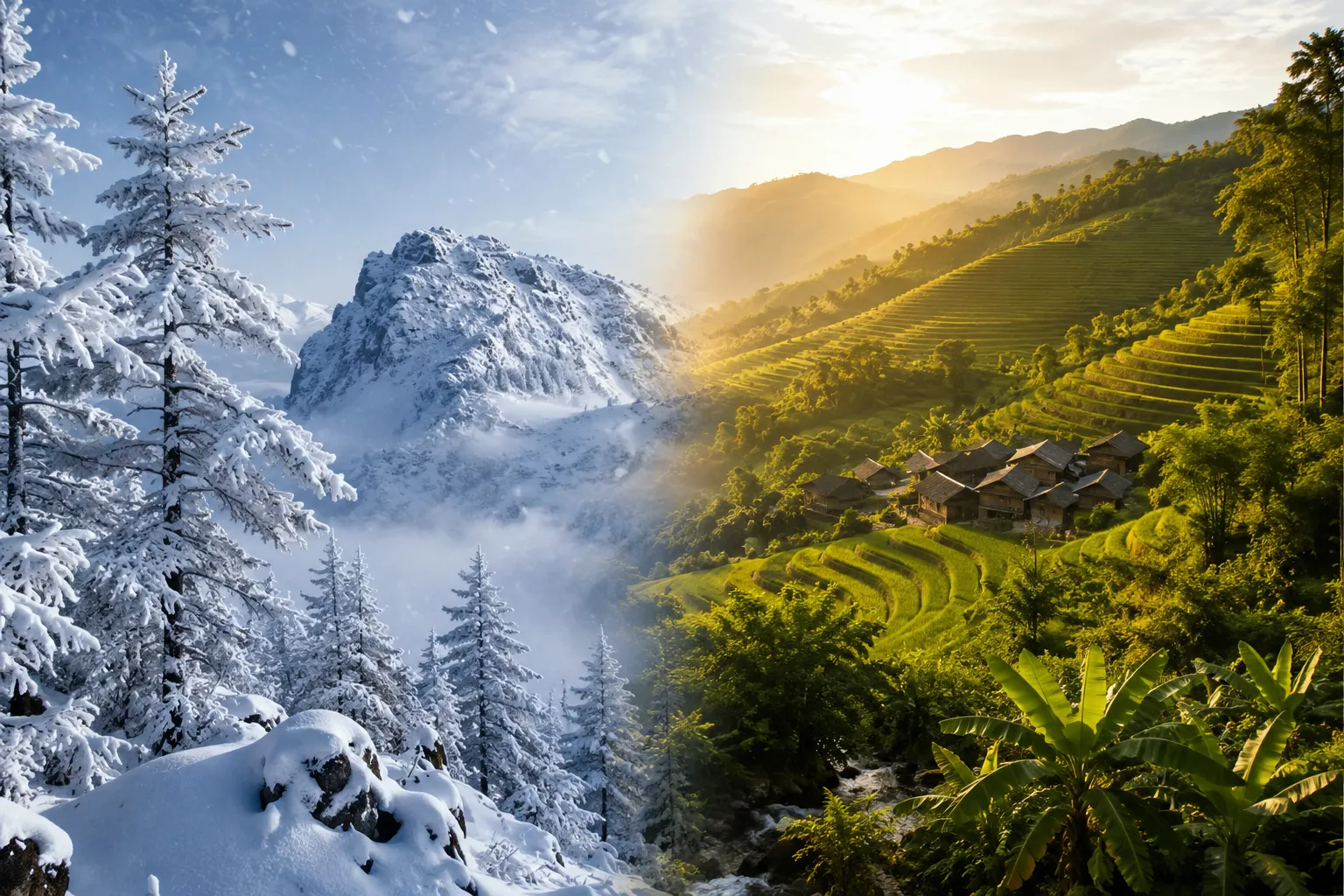
China spans five major climate zones, and the gap between them is genuinely extreme. Harbin, up in the northeast, regularly drops below -20°C in January, cold enough to host the world’s largest ice and snow festival built almost entirely from frozen river water. At the same time, Hainan Island in the south stays comfortably warm and tropical year-round, drawing beachgoers in the dead of winter precisely because the rest of the country is freezing. Tibet and the high-altitude western regions operate on their own logic entirely, with thin air, intense UV exposure, and weather that can shift dramatically within a single day regardless of season.
Layered on top of all that geographic variation is China’s holiday calendar, which can transform a destination from peaceful to gridlocked literally overnight. Getting the timing right means balancing weather, crowds, and what you actually want to do once you’re there, rather than chasing a single universal “best month.”
China’s Four Seasons: The Quick Overview
Before diving into regional specifics, it helps to understand the broad seasonal pattern most of mainland China follows, keeping in mind that this generalization bends considerably once you get into the far north, the deep south, or the high-altitude west.
Spring (March to May)
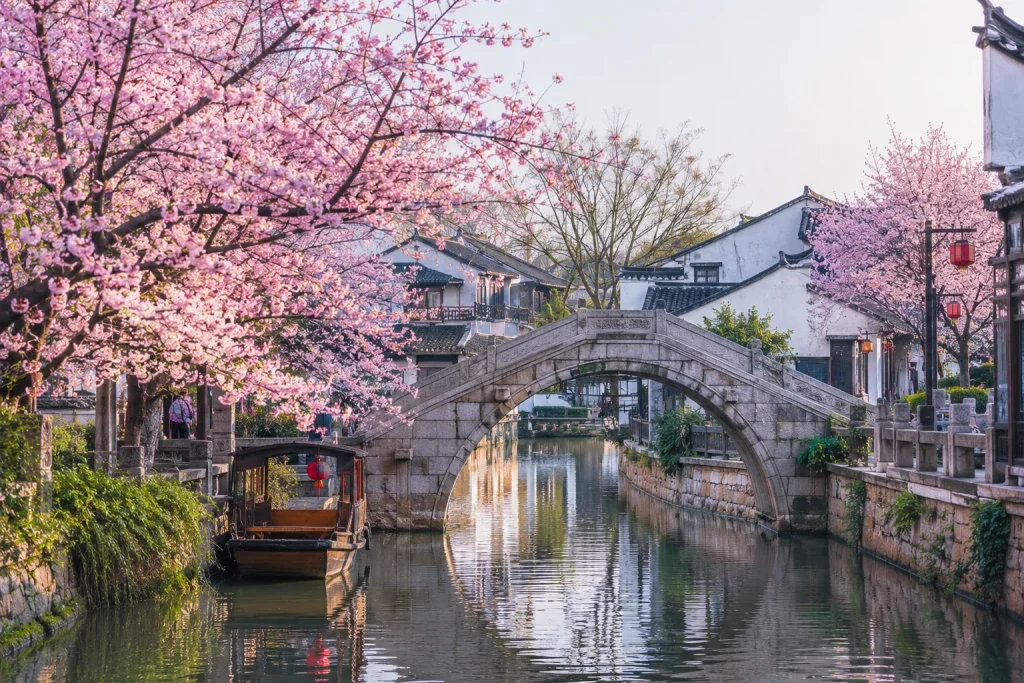
Spring is widely considered one of the two best overall windows to visit China, and for good reason. Temperatures across most of the country sit in a comfortable range, humidity hasn’t yet ramped up into the oppressive levels that define Chinese summers, and the countryside genuinely comes alive. Cherry blossoms and other flowering trees bloom across many regions, rice paddies in the south take on that vivid green that shows up in so many postcard shots, and outdoor sightseeing across most of the country, from Beijing’s historic sites to the karst peaks of Guangxi, becomes genuinely pleasant rather than a test of endurance.
The trade-off, depending on exactly when in spring you go, is that early spring can still carry a lingering chill in northern China, while late spring starts edging toward the humidity that defines summer further south.
Summer (June to August)
Summer brings the heat, and in much of China, that heat comes packaged with serious humidity. Cities like Shanghai, Wuhan, and Chongqing earn nicknames like the “furnace cities” for a reason, with daytime temperatures regularly pushing past 35°C alongside humidity that makes the air feel genuinely heavy. This is also typhoon season along the southeastern coast, affecting cities like Xiamen, Fuzhou, and Hong Kong, where storms can disrupt ferry services and outdoor plans with little warning between July and September.
That said, summer isn’t a write-off everywhere. Higher-altitude regions like parts of Yunnan, Sichuan, and the grasslands of Inner Mongolia offer genuine relief from the heat elsewhere, and summer happens to be the prime window for visiting some of China’s most dramatic alpine and grassland scenery, when wildflowers bloom and temperatures at elevation stay comfortably mild even as the lowlands bake.
Autumn (September to November)
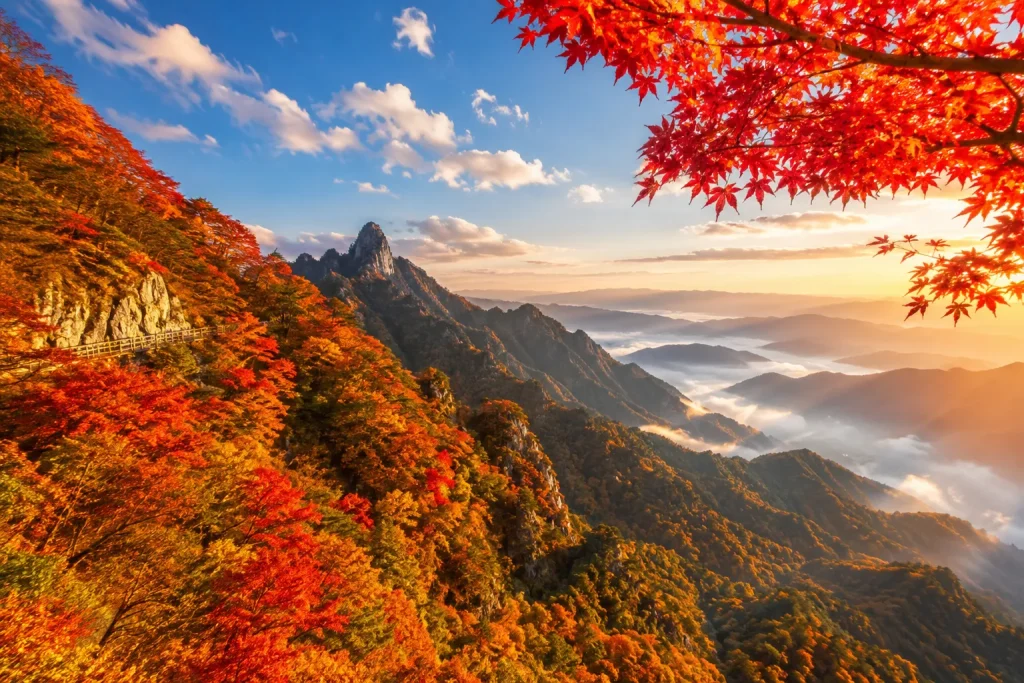
Autumn is the other contender for China’s best overall travel season, often edging out spring in the eyes of plenty of seasoned travelers. The summer heat and humidity break, the air clears noticeably, especially in northern cities where pollution levels tend to dip compared to other times of year, and the foliage display across much of the country rivals anywhere in the world. Mountain destinations in particular come alive with color: the maple forests around Beijing, the peaks of Zhangjiajie, and the alpine valleys of western Sichuan all put on a genuinely spectacular autumn show.
Early autumn can still carry some residual summer heat in the south, while late autumn starts bringing the first real chill to northern China, so the sweet spot tends to fall somewhere in the middle of the season for most travelers.
Winter (December to February)
Winter is where China’s regional extremes really show their teeth. The north, including Beijing, Harbin, and the broader northeastern provinces, gets genuinely, seriously cold, with Harbin’s average winter lows regularly dropping below -20°C. This is also exactly when the country’s most famous winter spectacle takes place: the Harbin Ice and Snow Festival, an enormous annual celebration built from carved river ice and packed snow that transforms the city into something resembling a glowing fantasy landscape after dark.
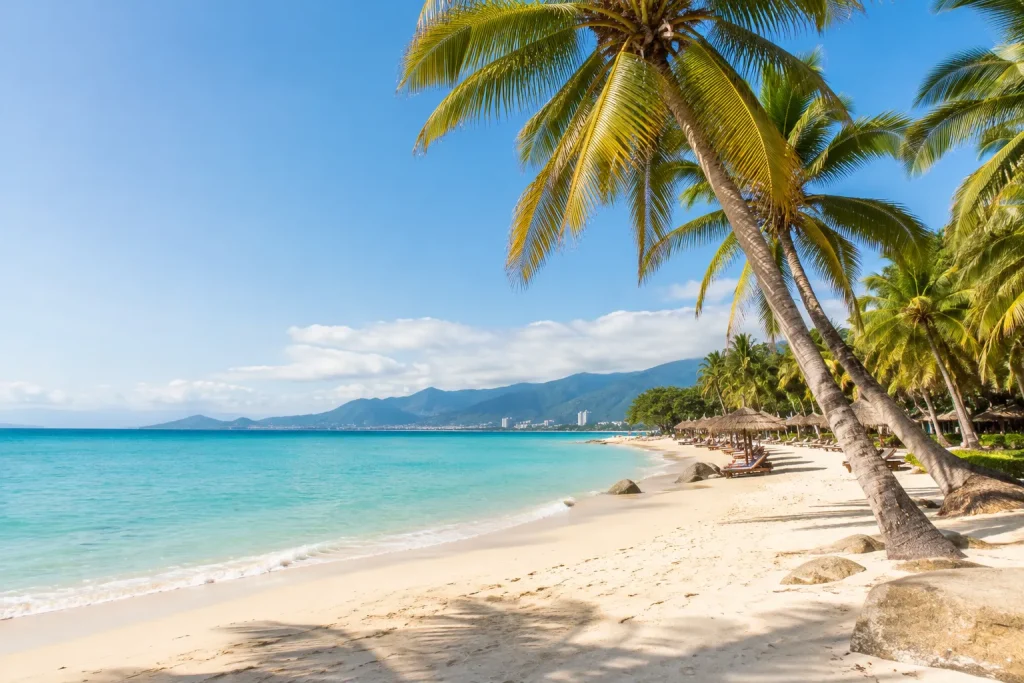
Meanwhile, the south tells a completely different story. Cities like Guangzhou and Xiamen stay mild, and Hainan Island remains genuinely tropical, making winter the peak season for beach-focused travel in exactly the parts of the country that other regions are actively fleeing for warmth. Winter is also, generally speaking, the cheapest and least crowded time to visit most of China’s major cities, with the notable exception of the Chinese New Year period, which flips that equation entirely.
China’s Major Holidays: The Dates That Actually Matter
Understanding China’s domestic travel calendar is arguably just as important as understanding the weather, because getting caught in the middle of a major national holiday without planning for it can derail an otherwise well-timed trip.
Chinese New Year (Spring Festival)
This is the big one. Chinese New Year, also called Spring Festival, follows the lunar calendar and typically falls somewhere between late January and mid-February, shifting slightly each year. It’s the most important holiday on the Chinese calendar, roughly equivalent in cultural weight to Christmas and New Year’s combined, and it triggers what’s often described as the largest annual human migration on the planet, as hundreds of millions of people travel home to be with family.
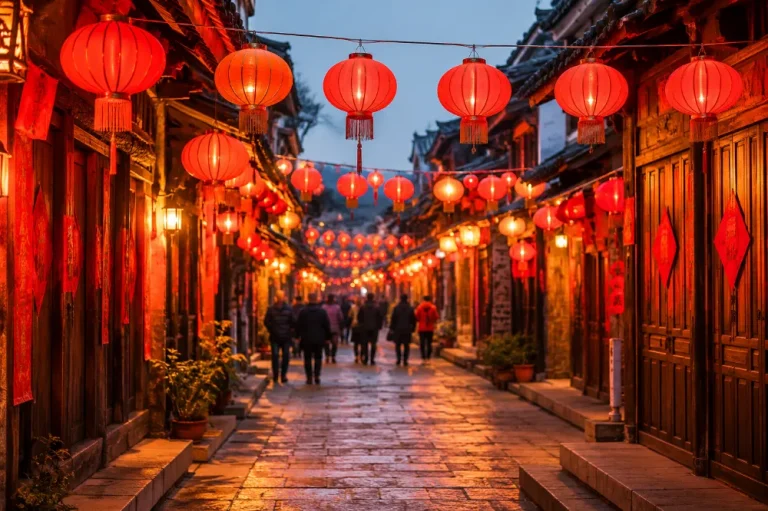
For travelers, this period cuts both ways. On one hand, major cities can feel genuinely festive, decorated with red lanterns and filled with celebratory energy, and certain destinations put on spectacular holiday-specific displays. On the other hand, domestic transportation becomes extraordinarily congested, with trains and flights booked solid weeks in advance, prices spiking accordingly, and many smaller businesses, restaurants, and shops closing for several days as staff travel home. Major tourist sites in big cities can also see significant crowding from domestic travelers using the extended holiday period to sightsee. If your itinerary depends on specific transportation connections or you’re hoping for a quiet experience at popular sites, this is generally a period to either plan around carefully or avoid entirely.
National Day and Golden Week
Falling on October 1st and extending into a roughly week-long holiday known as Golden Week, National Day marks the founding of the People’s Republic of China and triggers another massive wave of domestic travel. Unlike Chinese New Year’s family-focused travel pattern, Golden Week skews more heavily toward leisure tourism, meaning major attractions, from the Great Wall to Zhangjiajie’s sandstone pillars, can become extremely crowded with both domestic and increasingly international visitors. Hotel prices in popular destinations often climb noticeably during this window, and booking well in advance becomes essential rather than optional.
The silver lining is that Golden Week falls right in the middle of China’s best overall season, early autumn, with generally excellent weather across most of the country. If crowds don’t bother you and you book everything early, the conditions themselves are genuinely ideal.
Labor Day
A shorter holiday at the start of May, Labor Day creates a smaller but still noticeable bump in domestic travel and pricing, generally far more manageable than either Chinese New Year or Golden Week, but still worth factoring into a spring itinerary if your dates happen to overlap.
Best Time to Visit China’s Major Regions
With the broad seasonal patterns and holiday calendar covered, it’s worth zooming in on specific regions, since “best time to visit China” really splits into several distinct answers depending on where your itinerary takes you.
Beijing and Northern China
Beijing’s climate runs hot, humid summers and bitterly cold, dry winters, with spring and autumn offering the most comfortable conditions for walking the Great Wall, exploring the Forbidden City, and generally spending long days outdoors. Autumn in particular tends to bring noticeably cleaner air than other times of year, along with the added bonus of golden foliage at sites like the Fragrant Hills. Winter, while cold, has its own appeal for travelers who don’t mind bundling up, with thinner crowds at major sites and the novelty of seeing landmarks like the Great Wall dusted in snow.
Shanghai and the Yangtze Delta
Shanghai’s climate mirrors much of east-central China: hot, sticky summers and cool, occasionally damp winters, with spring and autumn again representing the most comfortable windows. Spring brings blooming gardens and comfortable sightseeing weather, while autumn offers clearer skies and similarly pleasant conditions, making either season a safe default choice for a Shanghai-anchored itinerary.
Xi’an and the Silk Road Interior
Moving inland toward destinations like Xi’an, home to the Terracotta Army, and further west toward Dunhuang and the historic Silk Road oases, the climate becomes considerably more continental and dry, with hot summers, cold winters, and a desert-influenced extremity to the temperature swings. Dunhuang specifically, with its famous Mogao Caves and the singing sand dunes of Mingsha Mountain, sees intense summer heat with minimal shade across its desert landscapes, while winter brings biting, dry cold, particularly around exposed sites like the ancient pass ruins west of the city. Spring and autumn offer the most comfortable conditions here by a fairly wide margin, making them the clear choice for this region specifically.
Southern China and the Coast
Cities like Guangzhou, Xiamen, and the broader Fujian and Guangdong coastline experience a subtropical climate with hot, humid, typhoon-prone summers and noticeably milder winters than the rest of the country. Travelers heading to Xiamen in particular should pay close attention to typhoon season, which runs roughly from July through September and can disrupt ferry services to popular attractions like Gulangyu Island with little advance warning. Spring and autumn again represent the sweet spot for this region, offering comfortable temperatures without the typhoon risk or the summer’s oppressive humidity, while winter remains genuinely mild by Chinese standards, making it a reasonable, if slightly damp, alternative for travelers prioritizing milder weather over peak scenery.
Zhangjiajie and the Mountainous South-Central Regions
The dramatic sandstone pillars of Zhangjiajie, along with similar mountain scenery across Hunan and Guizhou, look spectacular across most of the year, but each season brings a distinctly different character. Spring brings mist and emerging greenery that gives the peaks an almost mythical, cloud-wrapped quality. Summer brings lush, vivid green forest cover alongside genuine heat and humidity at lower elevations. Autumn delivers some of the region’s best visibility and color, with clear skies revealing the full scale of the rock formations. Winter occasionally brings a dusting of snow to the peaks, creating a striking, less crowded alternative for travelers who don’t mind the cold and want a genuinely different look at the same scenery.
Tibet and the High-Altitude West
Tibet operates on its own seasonal logic almost entirely separate from the rest of China, driven primarily by altitude rather than latitude. The most popular travel window runs from May through October, when weather is most stable and major roads and mountain passes remain reliably open. Winter brings extreme cold and the risk of road closures due to snow, while the period leading up to and during the rainy season in July and August can bring landslide risk on certain mountain routes. Regardless of season, the high altitude itself, with Lhasa sitting above 3,600 meters, means altitude acclimatization matters more than almost any other single planning factor for this region.
Harbin and the Far Northeast

Harbin represents China’s most extreme seasonal contrast in a single destination. Winter, despite brutal cold regularly dropping below -20°C, is unambiguously the city’s peak season, built almost entirely around the Harbin Ice and Snow Festival, an enormous annual celebration of carved ice sculptures and snow art that draws millions of visitors specifically because of, not despite, the extreme cold. Outside the winter festival window, Harbin transitions into a much more conventional, pleasant summer climate, with the city’s Russian colonial architecture and riverside parks offering a completely different, far milder experience for travelers visiting between roughly June and August.
Matching the Season to What You Actually Want to Do
Beyond regional climate patterns, it’s worth thinking about timing through the lens of what specific experience you’re chasing, since the “best” season often depends as much on activity as on geography.
If You Want to See Cherry Blossoms and Spring Color
Late March through April tends to be the sweet spot across much of eastern and central China, though exact blooming windows shift slightly by region and year depending on that season’s specific weather patterns.
If You Want Comfortable Hiking and Outdoor Sightseeing
Autumn, particularly September and October, generally offers the most reliable combination of comfortable temperatures, low humidity, and clear skies across the widest range of China’s regions, making it the safest default for itineraries built heavily around outdoor activity.
If You’re Drawn to Winter Spectacle Specifically
December through February, with Harbin as the obvious centerpiece, offers an experience genuinely unavailable at any other time of year, provided you come prepared with serious cold-weather gear rather than underestimating just how extreme northern Chinese winters actually get.
If You Want to Avoid Crowds Above All Else
Outside of Chinese New Year and Golden Week, winter in most of China’s major cities (excluding Harbin’s festival season specifically) tends to bring the thinnest crowds and lowest prices of the year, a worthwhile trade-off for travelers willing to bundle up in exchange for a noticeably quieter experience at otherwise packed attractions.
If Cultural Festivals Matter to You
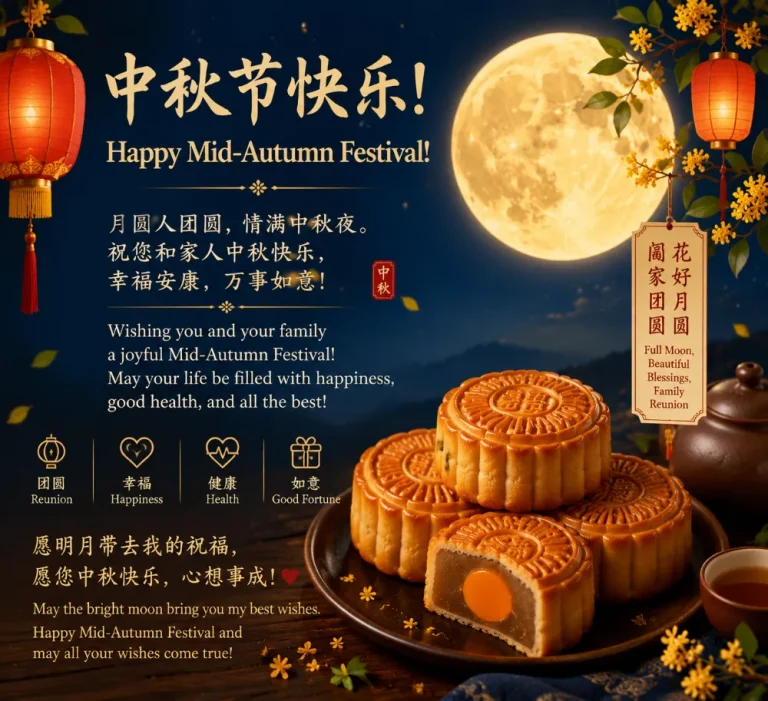
Chinese New Year offers an unmatched cultural immersion experience despite its logistical headaches, with celebrations, decorations, and traditions on full display, including the kind of traditional clothing and customs that come out in particular force during major festival periods. If experiencing this cultural dimension matters more to you than convenience or cost, it’s worth embracing the crowds rather than avoiding the period entirely.
A Simple Month-by-Month Cheat Sheet
For travelers who want a quick reference rather than working through every regional nuance, here’s a condensed breakdown of what each part of the year generally offers across most of China:
- March to April: Spring blooms, comfortable temperatures in most regions, occasional lingering chill in the north
- May: Comfortable nationwide, but watch for Labor Day holiday crowds early in the month
- June to August: Hot and humid across most lowland regions, with relief available in high-altitude areas like Tibet, western Sichuan, and Inner Mongolia; typhoon risk along the southeastern coast
- September to October: Generally the best overall window, with the major caveat of Golden Week crowds and pricing in early October
- November: A quieter, often overlooked sweet spot with autumn color lingering and crowds thinning out considerably
- December to February: Bitterly cold in the north (peak season for Harbin specifically), mild and pleasant in the south, generally low prices and thin crowds outside the Chinese New Year window
Final Thoughts on Timing Your China Trip
There’s no getting around the fact that “best time to visit China” is really shorthand for a dozen different, region-specific answers. The most reliable general advice, if you’re building a multi-region itinerary and need one default to lean on, is to aim for spring or autumn, when the widest range of China’s diverse regions tend to hit their most comfortable, most photogenic stride simultaneously. But if your trip is anchored around something specific, Harbin’s frozen spectacle, Tibet’s high-altitude plateau, Hainan’s tropical beaches, or the cultural immersion of Chinese New Year itself, it’s worth letting that specific goal, rather than a generic calendar recommendation, drive your final decision.
Frequently Asked Questions
What is the overall best time to visit China?
Spring (March to May) and autumn (September to November) are generally considered the best overall seasons for most of China, offering comfortable temperatures, lower humidity, and pleasant outdoor sightseeing conditions across the widest range of regions. Autumn often edges out spring for clearer skies and excellent foliage, though early October overlaps with Golden Week crowds.
Is it a bad idea to visit China during Chinese New Year?
It depends on your priorities. Chinese New Year offers unmatched cultural atmosphere but comes with extremely congested domestic transportation, spiked prices, and many smaller businesses closing for several days. Travelers prioritizing convenience and budget should generally avoid this period, while those seeking deep cultural immersion may find it worthwhile despite the logistics.
When is the best time to see the Harbin Ice and Snow Festival?
The festival typically runs from late December through February, with January generally considered peak season for both sculpture condition and festival atmosphere, though it also brings the largest crowds. Late December and early February offer a reasonable middle ground with thinner crowds.
Does China have a rainy season I should plan around?
Southeastern coastal China experiences typhoon season roughly from July through September, which can disrupt travel plans with little warning. Southwestern regions, including parts of Tibet, see increased rainfall and landslide risk during summer months as well, making spring and autumn generally safer windows for travel in these areas.
Is winter a good time to visit southern China?
Yes. Cities like Guangzhou, Xiamen, and especially Hainan Island stay mild to genuinely tropical throughout winter, making this region one of the few in China where winter, rather than spring or autumn, can represent peak comfortable travel conditions.