If you’re typing “Suzhou weather in December” into Google right now, you’re probably doing one of three things: planning a trip, deciding whether to go at all, or trying to figure out what the heck to pack. I’ve done all three, and I want to save you the hours of clicking around.
This guide is not a copy-paste of climate data. I’ll give you the numbers — because you do need them — but I’ll also tell you what those numbers actually feel like when you’re walking across the stone bridge at 8 a.m. in Pingjiang Road, or waiting for a bus in the工业园区 (SIP) when the wind is coming off Jinji Lake. December in Suzhou is honestly one of the more misunderstood months. People assume “south China = warm winter” and then show up in a hoodie and freeze their face off. Or they assume Shanghai is right next door so the weather must be the same (it is, mostly — but I’ll explain the small differences that actually matter).
By the end of this article, you’ll know:
- What temperature to expect, day by day, through December
- Whether it snows in Suzhou in December (and what to do if it does)
- What to wear, layer by layer, for the kind of day you’ll actually have
- Where to go, what to eat, and which “famous spots” are honestly a waste of time in winter
- How to avoid the three mistakes I see almost every first-time visitor make
Let’s get into it.
Quick Answer: Is December a Good Time to Visit Suzhou?
Yes — but for different reasons than April or October. December is the quiet, contemplative Suzhou. The gardens still have bones, the canals don’t smell in winter, the tourist crowds thin out after the first week, and the light is this soft, low-angle gold that photographers lose their minds over. The price is that it can get genuinely cold, and you’ll want to plan your day around the sun being out.
If you hate humidity, can’t stand heat, and want to actually hear yourself think in the Humble Administrator’s Garden — December is your month. If you need warm evenings on outdoor terraces and don’t own a real coat, go in May.
Suzhou December Weather at a Glance (The Numbers)
Here’s the headline data, and then I’ll break it down into what it means in practice.
| Metric | Early December | Mid December | Late December |
|---|---|---|---|
| Average high | 11°C / 52°F | 9°C / 48°F | 7°C / 45°F |
| Average low | 4°C / 39°F | 2°C / 36°F | 0°C / 32°F |
| Record high | 22°C / 72°F | 19°C / 66°F | 17°C / 63°F |
| Record low | -3°C / 27°F | -6°C / 21°F | -8°C / 18°F |
| Rainy days | 5–6 | 4–5 | 3–4 |
| Snow days (avg) | 0–1 | 0–1 | 0–1 |
| Humidity (afternoon) | 60–70% | 55–65% | 50–60% |
| Daylight hours | ~10h 15m | ~10h 05m | ~9h 55m |
Two things I want you to notice before we move on. First, the gap between record high and record low is huge — almost 30°C in a single month. December in Suzhou is not a stable temperature; it’s a sliding scale, and you can get lucky with a 18°C sunny day or unlucky with a -5°C grey week. Second, the average is around 5–10°C, but “average” is doing a lot of work here. Most days you’ll wake up to something between 2 and 6°C, and afternoons will top out around 8–12°C if the sun is out, or hover at 4–6°C if it’s overcast.
What December in Suzhou Actually Feels Like
Numbers are useful, but here’s the thing no climate chart tells you: Suzhou winter is damp cold, not dry cold. Coming from Beijing, you might find December here almost pleasant. Coming from Singapore, you’ll think it’s the surface of Mars. The air in December holds moisture, and that moisture seeps through a cheap jacket in about twenty minutes. The temperature might “only” be 4°C, but with the wind off the canals and the grey sky, it can feel like -2 or -3.
This is the part I want to be really honest about, because a lot of travel articles gloss over it: if you don’t have a proper wind-blocking outer layer, you will be miserable. The cold itself isn’t extreme, but the combination of damp + wind + stone buildings that hold the chill is the real story. I once walked from the Lion Grove Garden to the Suzhou Museum — about 800 meters — and by the time I got there my face was numb. It was 5°C. In Beijing, 5°C is a sweater day. In Suzhou in December, 5°C is a “real coat, scarf, and stop taking photos with your gloves off” day.
On the flip side, sunny December days in Suzhou are some of the most beautiful days of the year. The light is low and warm, the sky is that pale blue you only get in winter, and the old city looks like a Chinese painting. If you time it right, you’ll get one or two of these days and they will make the trip.
Does It Snow in Suzhou in December?
Short answer: rarely, but it happens. Suzhou gets measurable snow maybe once every two or three Decembers, and even then it’s usually a thin layer that melts by lunch. The most snow I saw in a December there was maybe 3–4 cm, and it was gone by mid-afternoon because the ground is too warm and the city is too sprawling to hold snow long.
What you will get more reliably is sleet — that annoying half-rain, half-ice that doesn’t look dramatic but soaks through shoes in five minutes. And you will definitely get cold rain, which is the worst weather in Suzhou in December. Cold rain + 3°C + wind off the canals = you rethinking your life choices.
If you happen to be in Suzhou the day it actually snows, the gardens become something else entirely. The black tiles of the roofs, the snow sitting on the bare branches of the pines, the canals reflecting the white — it’s genuinely worth seeing. But I would not plan a trip hoping for snow. Plan for grey, and treat snow as a bonus.
Fog, Haze, and Air Quality in December
December is one of the more polluted months in Suzhou, mainly because of the heating season in the broader Yangtze River Delta and the temperature inversion that traps stuff in the valley. The old city is usually better than the industrial fringe, and lake areas like Jinji and Dushu are noticeably cleaner than, say, the area around the north train station.
You’ll see the difference most on a still, grey morning. The sky goes from “soft overcast” to “I can taste something metallic” in the space of a few hours. Check AQI before any outdoor day, especially if you have kids or asthma. On bad days, the gardens are still worth visiting because the buildings create sheltered microclimates, and the museums (Suzhou Museum, Silk Museum, Pingtan Museum) are great backups.
Honest tip: the first 3–4 days of December are usually worse than the end, because a lot of pollution is atmospheric and gets dispersed over the month. If you can flex your dates by a week, late December tends to be cleaner than early December.
Daylight, Sunrise, and Sunset Times
Suzhou is at roughly 31.3°N, which means winter days are short. You get about 10 hours of daylight in early December and under 10 by the end. Sunrise is around 6:40 a.m. at the start of the month and slips to about 6:55 a.m. by New Year’s. Sunset goes from 4:55 p.m. to 5:05 p.m. — basically, the sun sets before you’re done with dinner.
What this means in practice: you have a narrow window for outdoor photos with good light. The hour after sunrise and the hour before sunset are golden, and they’re short. Midday is flat. If you’re shooting Pingjiang Road or the gardens, plan to be there at 7:30 a.m. or 4:00 p.m., not 11 a.m.
For sightseeing, the day basically goes: sleep in a bit, late breakfast around 9, garden or museum 9:30–12, lunch 12–1:30, indoor activity or café 1:30–3, second outdoor visit 3–5, dinner 5:30, and then night walk if you’re up for it. The gardens light up after dark in December, and that’s actually a really nice time to be there because there are basically no other tourists and the air is crisp.
What to Wear in Suzhou in December (The Real Packing List)
Most generic packing lists will tell you “a warm coat.” That’s useless advice. Here’s what I actually pack and what I see locals wearing in December.
The Three-Layer System That Works
Base layer: Merino or thermal top + bottom. Don’t bother with cotton — it stays wet. Decathlon has good cheap merino. Uniqlo Heattech is fine for everyday but won’t save you on a windy day.
Mid layer: Fleece or a light down vest. This is the one most tourists skip and regret. The mid layer is what lets you adjust to indoor heating, which in Suzhou is aggressive — restaurants and malls will be 22–24°C, and if you’re wearing a big down jacket inside, you’ll sweat, and then when you go out, the damp will kill you.
Outer layer: A windproof, water-resistant coat with some insulation. This is the most important piece. It does not need to be a heavy Canada Goose. It needs to block wind and not soak through in a sleet storm. A good wool-blend overcoat works for sunny days, but on wet days you want something with a membrane.
Extremities — Don’t Skip These
- Scarf: Non-negotiable. The single biggest difference between “I’m fine” and “I hate this” is whether your neck is covered. A simple wool scarf is enough.
- Gloves: Touchscreen-compatible ones so you can use your phone for maps and photos. Cheap ones on Taobao are fine.
- Hat or beanie: 20–30% of your body heat goes out the top of your head. Yes, that statistic is mostly a myth, but the principle is real in damp cold.
- Warm, waterproof shoes: Suzhou’s old city is a cobblestone-and-brick maze, and after a rain it stays wet for days. Leather-soled dress shoes are a mistake. Sneakers are okay if they’re Gore-Tex. I wear Blundstones most of the year there, and they’re perfect for December.
What Locals Are Actually Wearing
You’ll see a lot of down jackets, especially the long, puffy black ones that look ridiculous and are incredibly warm. Older Chinese people often wear a thin down vest under a cotton jacket. Young people in the city center wear the same things you’d see in New York or Berlin in winter — long wool coats, scarves, leather boots. Don’t overdress like you’re going to Harbin; you won’t be. But don’t underdress like you’re going to Bangkok either.
Best Things to Do in Suzhou in December
This is where I get to be opinionated, because there’s a lot of bad advice out there. A lot of Suzhou guides are written in spring and recommend things that are miserable in winter (boat rides on the canals in the rain, sitting on a rock garden in the wind, etc.). Here’s what actually works.
1. The Classical Gardens, Done Early
The gardens — Humble Administrator’s (拙政园), Lion Grove (狮子林), Lingering (留园), Master of the Nets (网师园) — are the whole point of coming to Suzhou, and they’re great in winter, but you have to do them right.
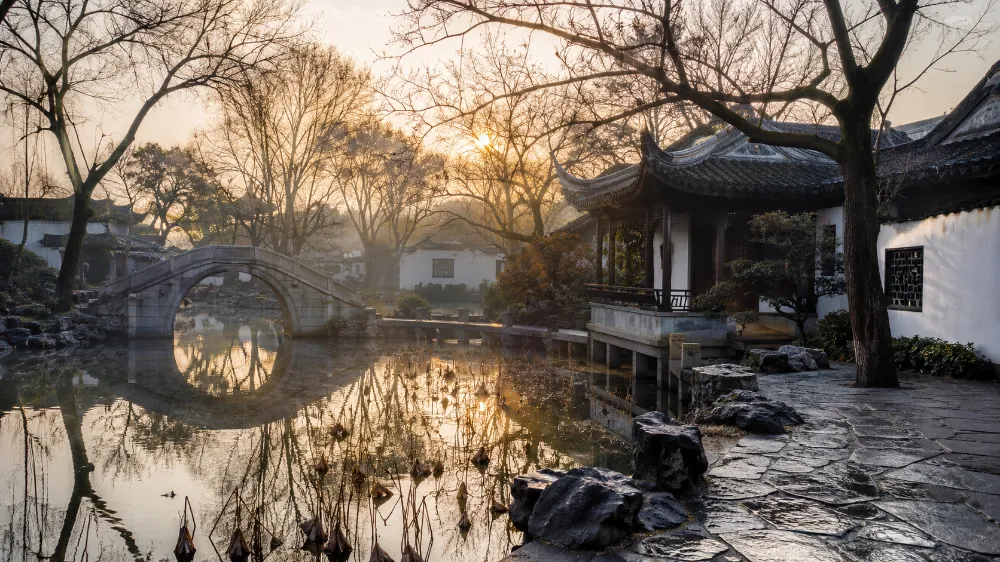
Go at opening time, 7:30 or 8 a.m., and you’ll have the place mostly to yourself. The light is good, the air is crisp, and the bare trees actually reveal the architecture in a way the summer foliage doesn’t. You can see the rockeries, the roof lines, the way the buildings are positioned to catch winter sun. I genuinely think the gardens are better in winter than in summer for anyone who cares about the design rather than the Instagram.
What to avoid: going at 11 a.m. on a weekend in December. The cruise ship crowds from Shanghai show up, and the gardens become a slow-motion queue. Also, the night-time “light shows” in some gardens are tacky. Skip them.
2. Pingjiang Road (平江路) Without the Crowds
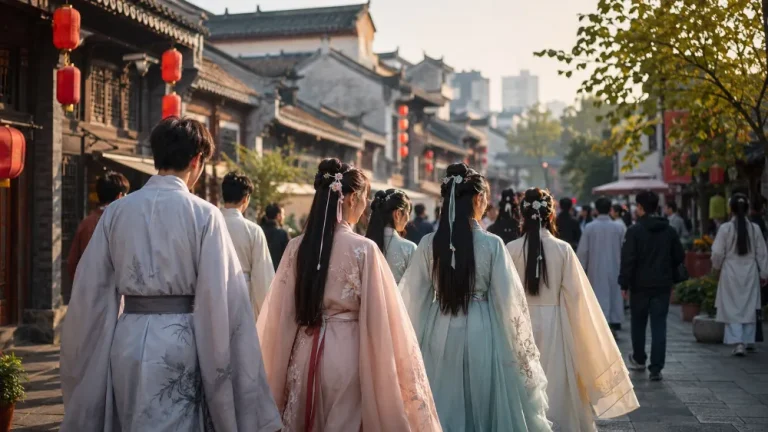
Pingjiang Road is the old canal-side street that most Suzhou pictures are taken on. In October it’s a wall of people. In December, on a weekday morning, it’s a quiet, beautiful walk along the canal with the smell of breakfast and the sound of someone practicing erhu in a second-floor window. This is the Suzhou people actually live in.
Walk the full length, from the north end near the Garden of the Master of the Nets down to the south end near the old city wall. Stop in the small museums (the Suzhou Pingtan Museum is small but excellent and free). Get a coffee at one of the canal-side cafés. Don’t buy the tourist stuff in the middle; the shops on the side alleys are better and cheaper.
3. The Suzhou Museum (贝聿铭设计)
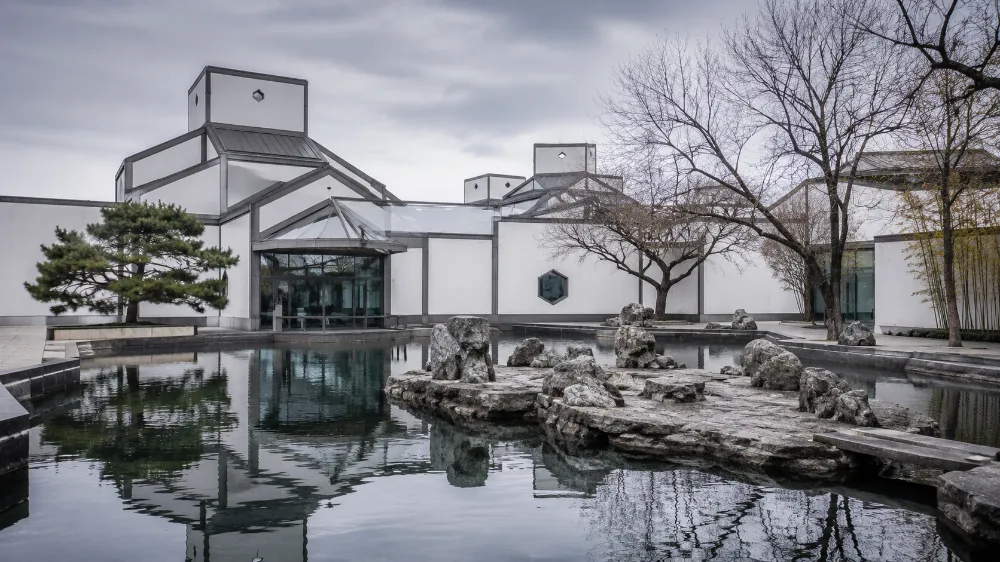
I.M. Pei’s last major work, and it’s the single best thing in the city to do on a cold or rainy December day. The building is its own exhibit, the collection is small but beautifully curated, and the courtyard garden is designed to be appreciated in all four seasons — including winter, where the rocks and water and bare trees have a real austerity to them.
Book your time slot online 1–7 days in advance. Walk-ups are possible but you might wait. The museum is right next to the Humble Administrator’s Garden, so pair them.
4. Jinji Lake (金鸡湖) at Sunset
If you want the modern Suzhou — the one with the skyline, the malls, the tech money — go to Jinji Lake in the SIP (Suzhou Industrial Park) in the late afternoon. The light hits the buildings, the Ferris wheel lights up, and it’s actually warm-ish because the buildings block the wind off the lake.
You can do a full loop walk (about 7 km) or just hang out in the area around the lake’s east side. The “Sky Tree” is a small version of the Tokyo one and the view is decent. If you want dinner with a view, the hotels around the lake have buffets and restaurants that are expensive but genuinely good.
5. Tiger Hill (虎丘)
Yes, it’s touristy, but Tiger Hill is one of the few sites in Suzhou that improves in winter. The ancient pagoda looks incredible against a winter sky, the bamboo grove is sheltered from the wind, and the entire site is way less crowded than in spring. The leaning pagoda thing is a real story and the engineering is interesting. Budget two hours minimum.
6. The Pingtan Teahouses
Pingtan is the local storytelling-music art form, and the teahouses where you can sit and listen for an hour are one of the most Suzhou things you can do. In winter, these teahouses are warm, the tea is hot, and the performances are usually in the afternoon. Some of the better ones are on Pingjiang Road itself, and the price is reasonable (50–150 RMB for a couple of hours with tea and snacks). You don’t need to understand the language to enjoy the music.
Where to Eat in December (and What to Eat)
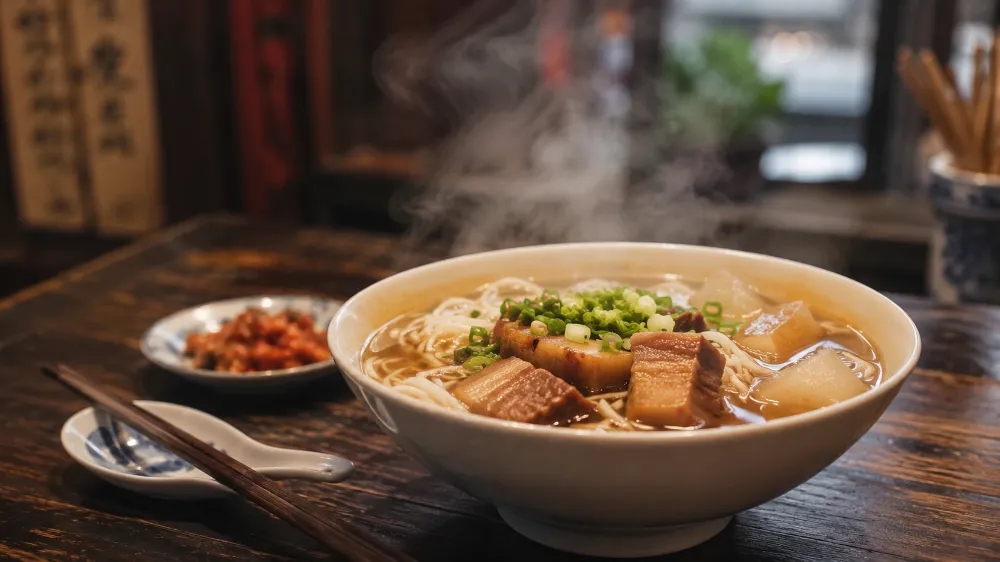
Suzhou food is famously light, sweet, and seasonal, but in December the local food culture shifts to warming, richer dishes. A few things you should try:
Yangcheng Lake hairy crabs (大闸蟹): yes, technically the season ends in December, but the late ones are still good and cheaper. Not the main draw for a December trip, but worth trying once.
Suzhou-style noodles (苏式汤面): the breakfast dish of the city. In winter, the broth is even better. The classic is 焖肉面 (braised pork noodles) or 爆鱼面 (fried fish noodles). Best places are tiny shops with line out the door. Trust the line.
Squirrel-shaped mandarin fish (松鼠桂鱼): a Suzhou classic. Sweet and sour, fried whole, looks like a squirrel. It’s a bit of a tourist thing but it’s genuinely good and is one of the dishes Suzhou does better than anywhere else.
Hot pot: not Suzhou-specific, but in December the city’s hot pot places (especially the Sichuan and Cantonese ones) are packed. There are good ones around Guanqian Street and in the SIP. Avoid the tourist trap ones on Pingjiang Road.
Sweet soups and red bean desserts: Suzhou has a strong dessert-and-soup tradition. In December, the 桂花糖芋苗 (osmanthus sweet taro) and 赤豆松糕 (red bean cake) are particularly good. Found in small dessert shops and traditional teahouses.
For restaurants, my honest advice: stay out of the big restaurants on Guanqian Street. They are designed for tour groups and the food is mediocre. Walk 10 minutes off the main street and you’ll find smaller places that are half the price and twice as good. Dianping (大众点评) is your friend here — it’s the Chinese Yelp and it’s accurate.
December Events and Festivals in Suzhou
December in Suzhou is not as event-heavy as, say, Harbin, but there are a few things worth knowing about:
Christmas / Christmas markets: Yes, even in a Chinese city, December has become a Christmas month — the malls in SIP and the old city put up trees, there are German-style Christmas markets around Tiger Hill and the Outlet Mall, and the hotels do Christmas dinners and buffets. It’s not authentic Christmas, but it’s festive and a nice way to spend an evening.
Dongpo Festival and cultural events: Suzhou occasionally has winter cultural events, calligraphy fairs, and the like. Check the local tourism site (in Chinese) closer to your dates.
New Year’s Eve: There are countdown events in the SIP and at the museums, and the temple at Hanshan Si (寒山寺) does a big bell-ringing ceremony on New Year’s Eve, based on the famous poem “Night Mooring at Maple Bridge.” If you’re there over New Year’s, this is genuinely one of the more memorable things you can do. It is, however, extremely crowded — book a hotel near Hanshan Si months in advance if you want to do this.
Lunar calendar: if your trip is in late December, you might overlap with the start of the Laba Festival (腊八节), which is the 8th day of the 12th lunar month. Temples give out Laba congee for free and it’s a nice local experience.
Day Trips from Suzhou in December
Suzhou is well-positioned for some excellent day trips, and several of them are actually better in December than in summer.
Tongli (同里)
The water town, 30 minutes by car or bus south. The canals, bridges, and old houses are gorgeous in winter because the crowds thin out and the bare trees reveal the bones of the architecture. Stay until evening if you can — the lantern-lit canals in winter mist are stunning. There’s also a small but lovely garden (Tuisi Garden 退思园) that’s the calmest of the major water-town gardens.
Zhouzhuang (周庄)
The most famous water town, an hour from Suzhou. Honestly, it’s very touristy and the entry ticket is overpriced for what you get. But on a cold December weekday, it calms down a lot, and if you’ve never been to a Jiangnan water town, it’s still worth one visit. Combine it with Tongli if you’re ambitious.
Luzhi (甪直)
Smaller, less famous, and in my opinion the best of the Suzhou-area water towns for a winter visit. Local feel, almost no foreign tourists, fewer souvenir shops. The temples and old bridges are real, and the prices are about half of Zhouzhuang.
Mudu (木渎)
Closer to Suzhou, has the famous Yanfu Temple and a small canal area. Easy half-day trip. Good in winter because the hills around it block some of the wind.
Hangzhou
Yes, you can day-trip to Hangzhou from Suzhou — high-speed train is about 1.5 hours. But honestly, Hangzhou deserves more than a day. If you have two extra days, spend a night in Hangzhou. West Lake in winter is one of the underrated sights of China. If you do a day trip, focus on the Lingyin Temple area and a single walk along the lake, not trying to see everything.
Where to Stay in Suzhou in December
Three areas make sense, and which one you pick depends on what kind of trip you want.
The Old City (Guanqian / Pingjiang Road area)
Best for: first-time visitors, classic Suzhou experience, walking around the gardens and the old town. The downside is that hotels here are mostly mid-range; there aren’t many luxury options, and the streets can be noisy at night. Look for places near the Suzhou Museum or Pingjiang Road. December prices are way lower than peak season — you can get a nice boutique hotel for 600–1000 RMB a night that would be 1500+ in April.
Suzhou Industrial Park (SIP) / Jinji Lake
Best for: families, business travelers, anyone who wants modern comfort. The hotels here are international chains (Hyatt, Marriott, W, InterContinental) and the malls and restaurants are designed for non-Chinese speakers. It’s about 20–30 minutes by car to the old city, which is the trade-off.
Near the Train Station
Best for: short trips, people using Suzhou as a base for Shanghai or Hangzhou. Not the most charming area but practical, with good metro connections. Hotel prices are the lowest of the three.
My honest recommendation for most people: stay in the old city, even if the hotel is just okay. The whole point of Suzhou is the old town, and being able to walk out of your hotel and be in a canal-side alley at 7 a.m. is worth a lot. The SIP hotels are great for sleeping but they feel like they could be in any Chinese Tier-2 city.
Getting Around in December
Suzhou has a clean, efficient metro system and is one of the easier Chinese cities to navigate without Chinese language skills. The metro has English signs and announcements, and the most useful line for tourists is Line 1, which runs from the old city through the train station to the SIP.
For the old city itself, the metro doesn’t go everywhere, and you need a combination of walking, taxi, and Didi (Chinese Uber). Didi works in Suzhou and the app has an English version. Taxis are cheap and abundant; just have your destination written in Chinese on your phone to show the driver, because not all of them read English.
Buses exist and are cheap but not tourist-friendly. Don’t bother unless you have a specific destination in mind.
For day trips to the water towns, you can take public buses from the Suzhou South Bus Station, but it’s way easier to hire a car for the day (around 600–800 RMB including the driver and the car), or use Didi. The trains to Tongli and Zhouzhuang are slow and infrequent.
December transport warning: If it rains, Didi surge-prices badly and you can wait 30+ minutes for a car. Plan a backup indoor activity for rainy evenings, because getting stuck in the old city without a ride is annoying.
Three Mistakes Almost Every First-Time Visitor Makes in December
I’ve seen these over and over, so let me save you the trouble.
Mistake 1: Treating the gardens like an outdoor walking experience. The gardens are made of buildings, paths, and pavilions. In winter, you should be popping in and out of the heated rooms, looking at the architecture, drinking tea in the pavilions. The visitors who try to do the whole garden in one continuous loop outside are the ones who end up cold and miserable. Use the buildings.
Mistake 2: Eating on the main tourist streets. The food on Guanqian Street, Pingjiang Road, and Shantang Street is fine but overpriced. Walk two alleys back, and you’ll find the same dishes for 40% less and twice the quality. The Chinese review app Dianping is essentially required for finding good food here.
Mistake 3: Underestimating the daylight. The sun sets at 5 p.m. in December. If you don’t plan your garden visits around the light, you’ll end up doing the most scenic spots in flat, grey light and the boring spots in golden hour. Time it.
How Suzhou in December Compares to Other Chinese Cities
This comes up a lot, so let me put it in one place.
vs. Shanghai: 30 minutes by high-speed train. Weather is essentially the same. Suzhou is more relaxed, more walkable, and has more historical stuff. Shanghai has more variety in food and entertainment. If you have 3–4 days, do both — they’re close enough to do as a pair.
vs. Hangzhou: Slightly colder in Hangzhou (it’s a bit further inland and the West Lake area has more wind). Hangzhou is more about the lake and the mountains; Suzhou is more about the gardens and the canals. Both are great in winter. I’d pick Suzhou if you like architecture and quiet; Hangzhou if you like bigger nature.
vs. Beijing: Suzhou December is significantly warmer (5–10°C vs. -5 to 5°C in Beijing) but the damp makes it feel more uncomfortable to some people. Beijing has the obvious advantage of being Beijing. If you’re choosing between them for a December trip, it depends on whether you’ve been before.
vs. Hong Kong: Hong Kong December is around 15–20°C, which feels balmy compared to Suzhou. If you want warmth in December, Hong Kong or Guangzhou are better options.
vs. southern cities (Guilin, Kunming, Xiamen): These are all warmer in December. Kunming in particular is famous for being spring-like year-round. The trade-off is that you lose the specific winter aesthetic of Jiangnan — the bare trees, the soft light, the quiet.
Budgeting for Suzhou in December
December is shoulder season, so you save on hotels compared to spring and the National Day holiday. Here’s a realistic daily budget per person, in USD, assuming mid-range choices:
- Hotel (mid-range boutique): $60–120 / night
- Food (mix of street and mid-range restaurants): $25–50 / day
- Garden entries: $3–8 each, plan on 2–3 visits a day = $10–20
- Local transport (metro, taxi, Didi): $10–20 / day
- Suzhou Museum and other museums: free to $10
- Coffee, snacks, souvenirs: $10–20 / day
So a comfortable daily budget is around $120–200 per person excluding the hotel. If you’re willing to stay in hostels and eat street food, you can do it on $50–70 a day. If you want the W Hotel and fancy dinners, double it.
Suzhou is, in general, significantly cheaper than Shanghai or Beijing for the same quality of experience. A $100 hotel in Suzhou is genuinely a $200 hotel in Shanghai.
What to Buy (and Not Buy) in Suzhou
Honest list of things worth buying versus the tourist trap stuff:
Worth buying:
- Suzhou silk: real, well-priced silk scarves, pillowcases, sleepwear. Avoid the airport and the main shopping streets; the silk market near the old city (the “Silk City” 丝绸城) has good prices. The very cheap ones on Pingjiang Road are mostly polyester.
- Tea: Suzhou has its own tea culture (碧螺春, Bi Luo Chun green tea, is a local product). Buy from a real teashop, not a tourist stand, and ask the staff what they’re drinking. December is not the freshest season for tea (spring is), but the aged and roasted ones are good for winter.
- Suzhou-style snacks and pastries: the small boxed pastries make decent gifts. The chains like 采芝斋 and 稻香村 are reliable.
- Hand-embroidered items: if you have the budget, the traditional Suzhou embroidery is a real art form and the good pieces are heirloom-quality. Way above tourist-knockoff level.
Not worth buying:
- The “antique” stuff on Pingjiang Road
- Most of the “Mao-era” memorabilia
- The fake calligraphy scrolls
- Anything that says “Made in Yiwu”
Practical Stuff You Should Know
Some quick things that don’t fit anywhere else:
- Currency: Yuan (RMB). Cards are widely accepted in hotels, restaurants, and big stores. For small shops, street food, and taxis, you still need cash or Alipay/WeChat Pay. Set up Alipay with a foreign card before you go — it works in 2026 for almost all foreign cards and removes a huge amount of friction.
- Visa: Check current China visa rules for your passport. Many countries are eligible for visa-free entry as of 2025–2026, but this changes.
- VPN: Google, Instagram, WhatsApp, etc. don’t work in China without a VPN. Download and set up your VPN before arriving.
- Water: Don’t drink tap water. Bottled water is everywhere and cheap.
- Tipping: Not a thing in China. Don’t tip.
- Language: English is hit-or-miss outside the major hotels. Have Google Translate (the offline Chinese pack is huge and very good) and a translation app that works on images (for menus).
- Toilets: Suzhou is way better than it used to be, but in the old city, public toilets are sometimes squat-style. Hotels and major sites always have sit-down ones.
- Health: No specific vaccines required for Suzhou. Standard travel hygiene and a small first-aid kit is enough.
A Sample 4-Day Suzhou December Itinerary
To put it all together, here’s a 4-day plan that I’ve refined over multiple December trips. Adjust to your dates, but this hits the right notes in the right order.
Day 1 — Old City South & Pingjiang Road
Arrive, check into a hotel near the Suzhou Museum. Afternoon walk through Pingjiang Road from south to north, stop in the Pingtan Museum, coffee in a canal-side café, dinner at a local noodle shop. Early to bed — you’ll want to start early on day 2.
Day 2 — The Gardens, Done Right
7:30 a.m., Humble Administrator’s Garden at opening. Spend 2 hours. Walk to the Suzhou Museum for your 10 a.m. slot. Lunch. Afternoon at the Lion Grove Garden, then walk to the Beisi Pagoda (the leaning one inside the old city). Dinner in the old city. Optional: night lights at the Humble Administrator’s Garden if you have energy.
Day 3 — Day Trip: Tongli or Luzhi
Take a 9 a.m. car to one of the water towns. Spend 4–5 hours. Lunch there. Back to Suzhou by 4 p.m. Evening: Hanshan Si temple at sunset, then dinner near the old city. If it’s the 31st, do the New Year bell at Hanshan Si instead of the day trip.
Day 4 — Modern Suzhou & Tiger Hill
Morning at Tiger Hill (8 a.m. opening, you’ll be there for the first 1–2 hours). Lunch. Afternoon at Jinji Lake in the SIP — walk the lakeside, take the Ferris wheel, have a coffee. Dinner at a hotel restaurant in the SIP or a Sichuan place in the old city. Pack for departure.
For a longer trip: add Hangzhou for 2 nights, or spend a second day on a different water town.
The Honest Bottom Line on Suzhou in December
Suzhou in December is not the postcard version. It is not a warm, romantic, blooming garden town. It is a quieter, sharper, more contemplative version — and if you ask me, the better version for actually understanding the place.
You will need a real coat, real shoes, and a real plan for the short daylight. You will not swim in the canals or sit on a rock garden in a t-shirt. But you will see the gardens as the architects designed them, with the bones of the trees and the lines of the water. You will eat warming food that locals actually eat. You will have Pingjiang Road mostly to yourself in the morning. And on a sunny day, you will understand why Chinese painters have been coming here for a thousand years.
Pack for damp cold, not deep cold. Get up early. Skip the tourist menus. Spend at least half a day in one garden instead of rushing through four. And bring a scarf.
That’s the December version. It’s a good one.
Frequently Asked Questions
What is the average temperature in Suzhou in December?
The average high is around 8–11°C (46–52°F) and the average low is 0–4°C (32–39°F), depending on whether it’s early or late December. The “average” day will feel like 4–7°C in the afternoon and 1–3°C in the morning, with damp air making it feel colder than the number suggests.
Does it snow in Suzhou in December?
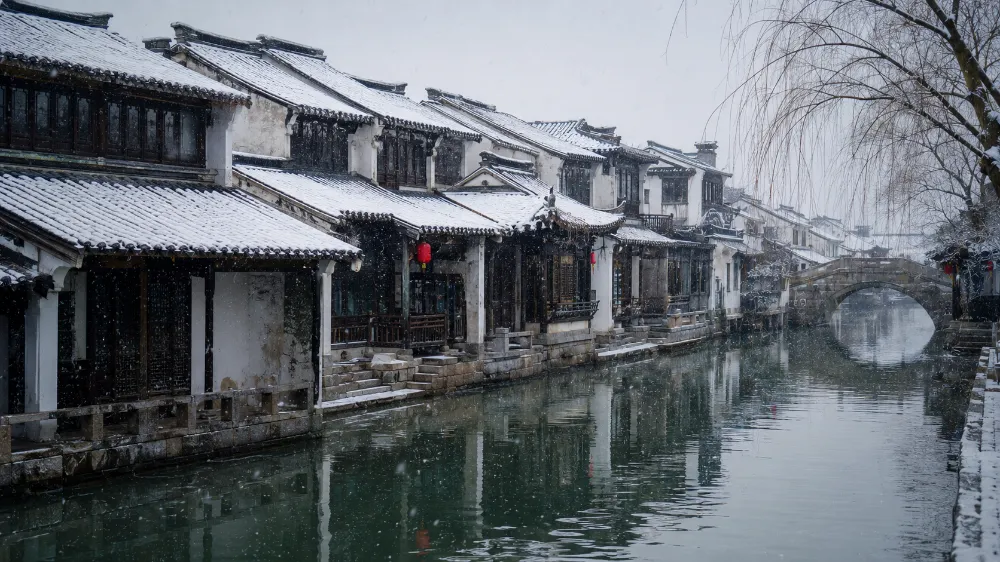
It can, but it’s rare. Most Decembers have no measurable snow, and when it does snow, it’s usually a thin layer that melts within hours. You’re much more likely to see cold rain or sleet than actual snow.
Is December a good time to visit Suzhou?
Yes, especially if you prefer fewer crowds, lower hotel prices, and the specific winter aesthetic of the Jiangnan region. The trade-off is the cold and short days. It’s not a good time if you want to spend long hours outdoors or hate the cold.
What should I wear in Suzhou in December?
A three-layer system: thermal base layer, fleece or down vest mid layer, windproof and water-resistant outer coat. Plus a scarf, gloves, and waterproof shoes. Avoid cotton as a base layer.
How many days do I need in Suzhou?
3 full days is the minimum to see the gardens, the old city, and one water town day trip. 4–5 days is more comfortable. A week lets you add Hangzhou or Shanghai.
Is Suzhou worth visiting in winter?
Yes. The gardens are architecturally more visible in winter, the canals are cleaner, the food shifts to warming dishes, and the crowds are way smaller than in spring or October. Photographers in particular tend to prefer winter Suzhou.
What is the coldest month in Suzhou?
January is the coldest month, with average lows around 0°C and occasional drops to -5°C or below. December is the second-coldest month, but it’s noticeably warmer than January, especially the first half.
Can I do Suzhou and Shanghai together in one trip?
Absolutely. They’re 30 minutes apart by high-speed train. A common itinerary is 3 days Shanghai + 2–3 days Suzhou, or vice versa. Most people base themselves in one and do day trips to the other.
Are the Suzhou gardens open in December?
Yes, all the major classical gardens are open year-round, with slightly reduced hours in winter. The major gardens (Humble Administrator’s, Lingering, Lion Grove, Master of the Nets) typically close at 5 p.m. in December, an hour earlier than in summer. Some smaller gardens close on Mondays.
Is it rainy in Suzhou in December?
December has moderate rainfall — about 30–50mm across the month, spread over 8–12 days. It rarely rains all day, but the days it does rain, the rain is cold and damp. A water-resistant outer layer is more useful than an umbrella for this kind of weather.
Have a specific question about visiting Suzhou in December that I didn’t cover? Drop it in the comments — I read them and I usually respond within a week. If I’ve made it to Suzhou since, I might be able to give you a first-hand answer.