I landed in Quanzhou on a foggy Tuesday morning in late October, expecting — honestly — a quiet, slightly sleepy Fujianese port town. I was wrong. Within two hours of walking out of the train station, I had eaten a bowl of mianxianhu (面线糊) so good I almost went back for seconds before noon, gotten lost in a 1,300-year-old alleyway full of red-brick houses and old men playing chess, and stood under the tallest pair of stone pagodas I had ever seen in my life.
Quanzhou doesn’t shout for your attention the way Shanghai or Beijing does. It whispers. And if you actually listen, you’ll find one of the most layered, underrated, genuinely surprising cities in all of China — a place where Song dynasty bridges still carry traffic, where the oldest mosque in the country sits next door to a Confucian temple, and where, in 2021, UNESCO officially said: yes, this place really was the busiest port on earth a thousand years ago.
This guide is everything I wish I had known before that trip. It’s long on purpose. Skip to whatever section you need using the table of contents below.
Table of Contents
- Quanzhou at a Glance
- A Brief (But Real) History of Quanzhou
- Why UNESCO Inscribed Quanzhou in 2021
- Top Attractions You Can’t Miss
- Minnan Culture: Music, Religion, and Daily Life
- What (and Where) to Eat in Quanzhou
- Practical Travel Info: Getting There, Getting Around
- Suggested 3-Day Itinerary
- FAQ
- Final Thoughts
Quanzhou at a Glance
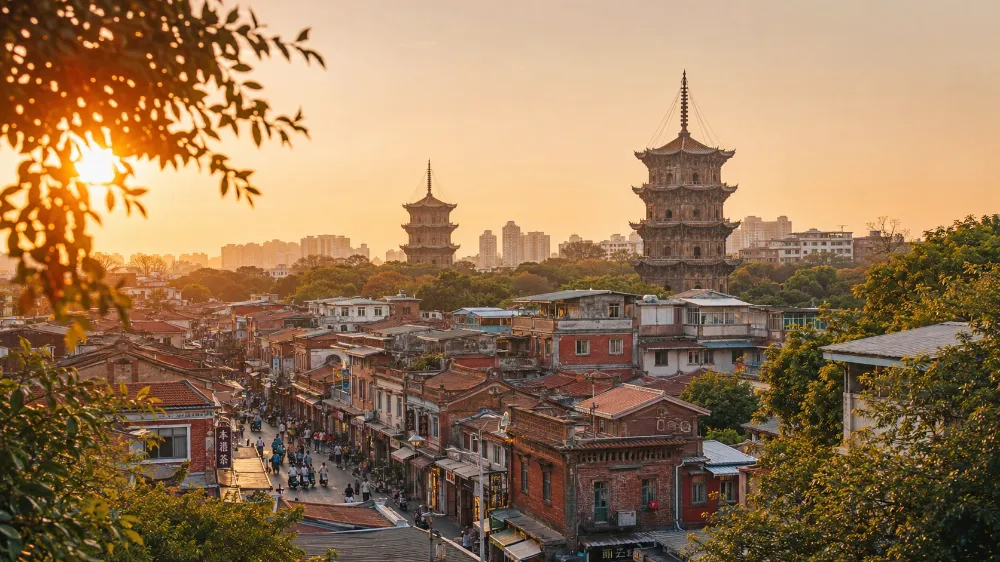
Quanzhou (泉州, pronounced something like “chwan-joe” in Mandarin, or “chhoan-chiu” in the local Minnan dialect) sits on the southeast coast of Fujian Province, looking out across the Taiwan Strait. It’s the capital of Quanzhou Prefecture-level City, which sprawls out to include a few smaller surrounding districts and counties, but the historic heart most travelers care about is in the old城区 (old city).
Here’s the thing most people get confused about first: Quanzhou is not the same as Fuzhou. Fuzhou (福州) is Fujian’s capital. Quanzhou (泉州) is the port city to the south. They’re about three hours apart by high-speed train and have completely different vibes. Fuzhou is more administrative; Quanzhou is more soulful.
Some quick facts to get oriented:
- Population: About 8.7 million in the prefecture, roughly 1.4 million in the urban core.
- Language: Mandarin works everywhere, but the local dialect is Minnan Hua (闽南话, also called Hokkien). Listen for the soft tones — they sound almost musical after a few days.
- Climate: Subtropical. Hot, humid summers (28–34°C / 82–93°F), mild winters (10–17°C / 50–63°F). I went in October and it was perfect — low 20s during the day, light jacket weather at night.
- Best time to visit: October to December, or March to early May. Avoid the June–August typhoon window if you can.
- Currency: Chinese Yuan (CNY / RMB). In June 2026 you’ll get roughly 7.2 CNY per US dollar. Yes, your money goes a long way here.
One more thing worth saying upfront: Quanzhou was, until fairly recently, the kind of place only Chinese domestic tourists and history-nerd expats visited. Foreign tourism is growing fast now, especially after the 2021 UNESCO inscription, but English signage is still hit-or-miss outside the major sites. Download an offline translator (Pleco is the standard one) and learn a few basic Mandarin phrases. It will genuinely change your trip.
A Brief (But Real) History of Quanzhou
You can skip this section if you just want the attractions list. But honestly, Quanzhou is one of those cities where, if you skip the history, you’ll walk past incredible things without realizing what you’re looking at. So here’s the short version.
The Tang Dynasty Foundation (7th–10th century)
Quanzhou’s modern story starts in 711 CE, when the Tang government officially moved the prefecture seat here and renamed the area Quanzhou. But people had been living on this stretch of coast for thousands of years before that, fishing, trading, and slowly building the maritime connections that would define the city.
By the late Tang period, Quanzhou was already a serious port. Arab and Persian merchants had permanent quarters here. The Kaiyuan Temple (开元寺), still standing in the center of the old city, was first built in 686 CE — yes, before the city was even officially named.
The Song Dynasty Golden Age (10th–13th century)
This is when Quanzhou became, briefly, the busiest port in the world.
Italian merchant Marco Polo visited in 1292 and wrote that Quanzhou — which he called Zayton — was “one of the greatest ports in the world,” with shipping traffic he compared to Alexandria. Arab, Persian, Indian, Malay, Korean, and Japanese traders all lived in the city, in distinct foreign quarters, each with their own temples and cemeteries.
It was during this period that the Luoyang Bridge (洛阳桥) was built — a 1,200-meter-long stone causeway across the bay, completed around 1059 CE. It was, at the time, the longest sea-spanning bridge anywhere on earth, and it’s still in use. You can walk or drive across it today.
The economy boomed on three things: silk, ceramics (the famous Dehua white porcelain was shipped from nearby ports), and tea. Quanzhou was the launching point for the Maritime Silk Road — the sea-based version of the overland Silk Road — which connected China to Southeast Asia, India, the Middle East, and eventually Europe.
The Yuan, Ming, and Quiet Centuries
The Mongol Yuan dynasty took over China in 1279. For a while, Quanzhou continued to thrive under Mongol rule, though there was a violent backlash against the foreign merchant communities in the late 1350s — something Chinese history sources sometimes gloss over.
From the Ming dynasty onward (the 14th century), government policy shifted. Sea trade was officially restricted, then outright banned for long stretches (the so-called haijin 海禁 policies). Quanzhou’s harbor silted up. The center of Chinese maritime trade moved up the coast to places like Quanzhou’s northern neighbor, Fuzhou, and then to Guangzhou and Hong Kong.
For several hundred years, Quanzhou was a quiet regional town. The old foreign quarters disappeared. What survived was the religion — the temples, the mosques, the shrines — and the architecture. Walking through old Quanzhou today is, in a real sense, walking through a city that time forgot to demolish.
The Modern Era and the UNESCO Boom
Quanzhou today is a mid-sized, industrially active city (it’s a major hub for sportswear manufacturing — yes, that includes Nike and Adidas contract factories) but it has leaned hard into its heritage tourism in the past decade.
On July 25, 2021, UNESCO inscribed “Quanzhou: Emporium of the World in Song-Yuan China” onto the World Heritage List. The inscription covers 22 individual sites across the city and its surrounds. Since then, visitor numbers to the old city have grown substantially, and the city has invested heavily in restoration, pedestrian zones, and English-language interpretation. It’s now one of the easiest historic cities in China to visit independently.
Why UNESCO Inscribed Quanzhou in 2021
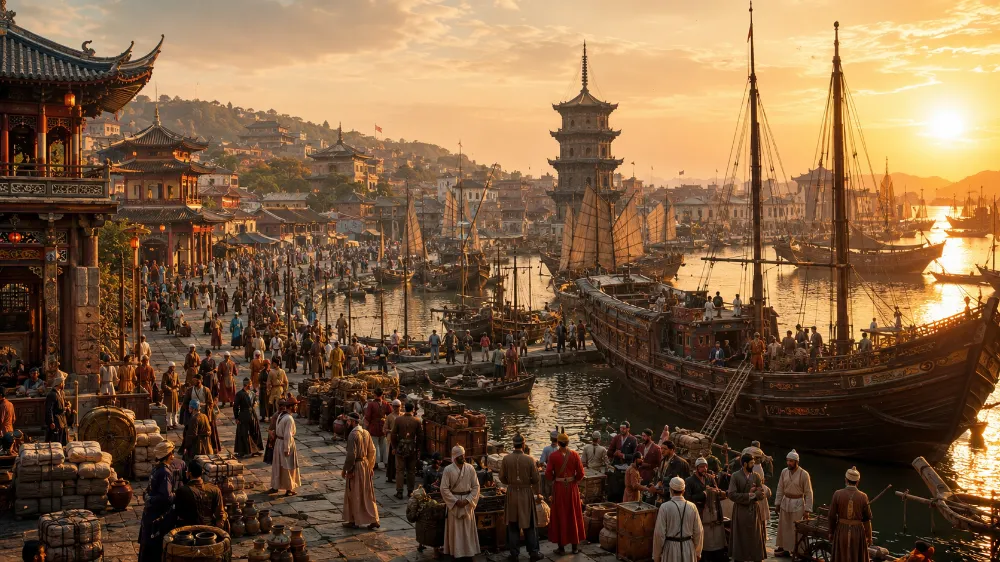
This is worth its own section because a lot of travelers don’t quite get what the UNESCO listing actually means — they think it’s just another Chinese city with some old buildings. It’s not.
Quanzhou’s UNESCO inscription is unique because it doesn’t cover a single monument. It’s a serial nomination: 22 sites scattered across the city, each representing a different facet of how this port worked in the 10th–14th centuries. Together, they tell the story of a multi-ethnic, multi-religious, globally connected trading metropolis that most of the world had forgotten.
Some of the sites you’ll recognize from the rest of this guide:
- Kaiyuan Temple (the Song-era twin pagodas)
- Qingjing Mosque (one of the oldest surviving mosques in China)
- Luoyang Bridge
- Laojun Rock (a Song-dynasty cliff carving of Laozi)
- Various stone ship-worm carvings (祈风石刻) near the old port, left by foreign merchants praying for fair winds
- Statue of Lao Tang (a Sogdian merchant from Central Asia who became a local deity)
What makes the listing intellectually interesting is the city’s religious diversity, which was and is unusual even by Chinese standards. In a single afternoon in old Quanzhou, you can visit:
- A 1,300-year-old Buddhist temple (Kaiyuan)
- A 1,000-year-old Islamic mosque (Qingjing)
- A Confucian temple still used for ancestor rites
- A Hindu-style stone temple foundation
- A Mazu (sea goddess) shrine
- At least two Catholic churches and a Protestant one
This is not normal. Cities don’t usually have this. UNESCO noted it explicitly in the inscription.
Top Attractions You Can’t Miss
I’ll group these geographically so you can plan walks. Most of the main sights are inside the old city and easily walkable from each other, with a couple of exceptions (the bridges) that need a short taxi or bus ride.
1. Kaiyuan Temple and the Twin Pagodas (开元寺 / 东西塔)
Start here. Don’t start anywhere else.
Kaiyuan Temple is the spiritual and geographic heart of old Quanzhou. Founded in 686 CE, rebuilt and expanded many times since, it’s a sprawling Buddhist complex in the middle of the city — which is itself unusual, since most old Chinese temples were built on hillsides outside the city walls. This one is downtown, surrounded by West Street (西街) on one side and modern shops on the other.
The two things you came to see:
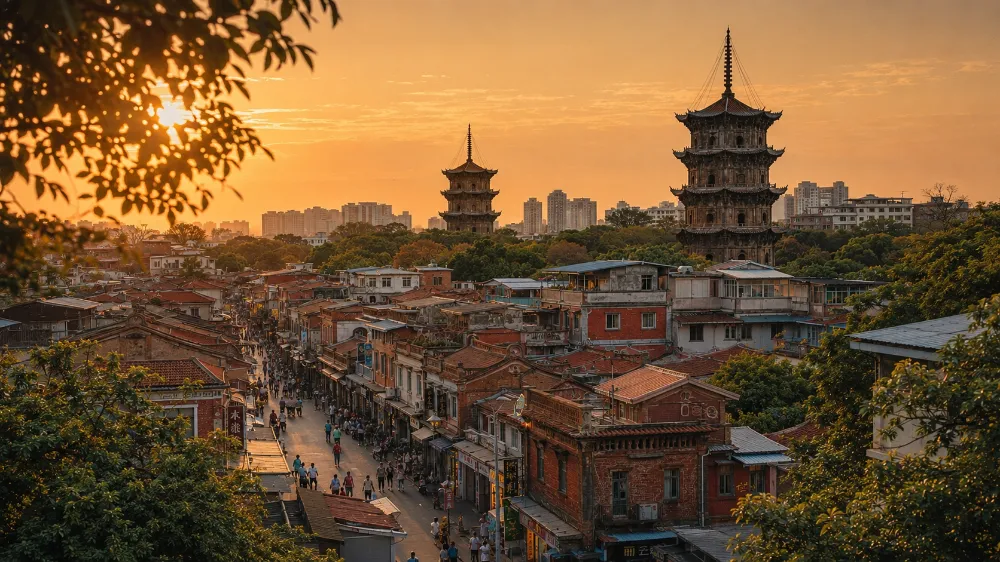
The East and West Pagodas (东西塔) are the calling card of the city. They appear on virtually every piece of Quanzhou tourism material. Both are about 48 meters (158 feet) tall, made of stone and brick, octagonal, and date from the 13th century (the current versions — earlier wooden versions burned down). The West Pagoda, called Renshou (仁寿), was completed in 1237. The East Pagoda, called Zhenguo (镇国), was completed in 1250. They are the tallest surviving stone pagodas in China and have survived earthquakes, typhoons, and the 1604 magnitude-8 quake that flattened much of the region.
Pro tip: Walk around the base of both pagodas slowly. Each one has eight carved stone panels per side, depicting Buddhist stories and Jataka tales. The detail is extraordinary. Most people photograph the pagodas from across the street and miss this.
Inside the temple complex, also worth your time:
- The Great Hall (大雄宝殿), a late-Song wooden structure with 24 stone pillars, some of which are original Song-era pieces.
- The Ancient Mulberry Tree (桑蓬古迹) — a 1,300-year-old tree in the courtyard. Yes, really. There’s a small stone plaque marking it.
- A pair of Song dynasty stone lions that look noticeably different from later Chinese lions — they’re leaner, more stylized.
Admission: Free. The temple is open roughly 7:00–17:30 daily.
Time needed: 1.5 to 2 hours if you’re not rushing.
2. West Street (西街) — the 1,300-year-old main street
West Street runs along the western edge of the Kaiyuan Temple complex and is, by local tradition, the oldest continuously inhabited commercial street in Quanzhou — possibly in all of Fujian. It has been a market street since the Tang dynasty.
Today it’s a partially pedestrianized lane lined with low-rise traditional buildings, small shops, snack stalls, teahouses, and the occasional boutique. It’s touristy, yes, but in the good way — there are still actual residents living up on the upper floors.
Don’t miss:
- The bell tower at the north end (a small but photogenic traditional pagoda-style structure)
- The row of old red-brick houses with Western-style facades from the late Qing / early Republic era, between West Street and Zhongshan Road
- The famous Shen Bing Cheng (升饼城) bakery for fresh turtle jelly cake (龟糕) — ask any local where it is, they’ll point you
Walk West Street slowly. Get a mianxianhu from one of the morning stalls, sit on a low stool, eat it standing or crouching like the locals do, and watch the city wake up.
3. Qingjing Mosque (清净寺)
Turns out there’s a 1,000-year-old mosque in downtown Quanzhou, and you can walk right up to it.
Qingjing Mosque (also called Ashab Mosque) was built in 1009 CE during the Song dynasty, making it one of the oldest mosques in China. It was founded by Arab and Persian merchants who lived in Quanzhou’s foreign quarters. The architecture is clearly Islamic — you’ll see pointed arches, Arabic calligraphy carved into stone, and a distinctive green dome on top of the new prayer hall — but it’s been modified over the centuries in Chinese style.
Two specific things to notice:
- The old gate (the original Song-era entrance) has carved Arabic inscriptions and a lotus motif — a deliberate hybrid of Islamic and Chinese Buddhist iconography.
- The ruins of the original minaret, damaged in the 1604 earthquake. You can see the sandstone base.
The mosque is still an active place of worship for Quanzhou’s small Hui Muslim community (about 5,000 people in the city). Be respectful: cover your shoulders, don’t photograph people praying, and check signs before entering the prayer hall.
Admission: Around 3 CNY. Yes, three yuan. Don’t lose your ticket; you’ll need it.
Time needed: 30–45 minutes.
4. Tianhou Temple / Mazu Temple (天后宫)
A few minutes’ walk from Qingjing Mosque, on the south bank of the old city moat, sits the Tianhou Temple. It’s dedicated to Mazu (妈祖), the Chinese sea goddess who is worshipped along the entire coast of southern China and across the diaspora in Taiwan, Hong Kong, and Southeast Asia.
This particular Tianhou Temple is one of the most important Mazu temples in the country, and it has been a focal point of Mazu worship for centuries. The current buildings are mostly Qing dynasty reconstructions, but the site itself has been a temple since the Song.
What I like about this temple is that it’s busy. It’s not a museum. Locals still come to light incense, ask for safe journeys, and leave offerings of fruit and tea. The incense smoke at the front entrance is genuinely thick.
Admission: Free (donations welcome).
Time needed: 30 minutes, or more if you wander the surrounding old neighborhoods.
5. Luoyang Bridge (洛阳桥)
You’ll need to leave the old city for this one. Take a taxi or bus to the Luoyang Bridge area, about 20–30 minutes from the center depending on traffic. The bridge is in the eastern suburbs, crossing the Luoyang River mouth into the sea.
Built between 1053 and 1059 CE under the direction of the Song-dynasty official Cai Xiang (蔡襄), Luoyang Bridge was the first major sea-spanning stone bridge in China. It’s about 1,200 meters long. The construction technique was revolutionary for the time: the engineers grew oysters on the bridge piers to glue the stones together naturally with their cement-like secretions. Yes, oysters as a building material. It’s called oyster reinforcement (种蛎固基) and it’s actually a real technique that worked for nearly 1,000 years.
The bridge is still in use. You can walk across it. It’s one of those slightly surreal travel moments — you’re on a medieval bridge, watching fishermen on one side and container ships passing on the other side.
Admission: Free.
Time needed: 1 to 2 hours including walking across and exploring the small Cai Xiang temple on the south end.
Getting there: Bus 13 or 39 from the old city, or a Didi (Chinese ride-hail) for around 25–35 CNY.
6. Laojun Rock (老君岩)
A Song-dynasty stone carving of Laozi (the founder of Taoism, traditionally dated to the 6th century BCE) cut into a giant natural boulder on the north side of the old city. It’s about 5.6 meters tall, was carved around 1236 CE during the Song dynasty, and is one of the largest Taoist cliff carvings in China.
The setting is lovely — a hillside park overlooking the city, with old banyan trees. Locals come here for morning tai chi. There’s a small museum nearby with Taoist-themed exhibits.
Admission: Free.
Time needed: 45 minutes.
7. Xunpu Village (蟳埔村) — the flower-wearing women
If you have half a day to spare, this is my single biggest recommendation that isn’t in most guidebooks.
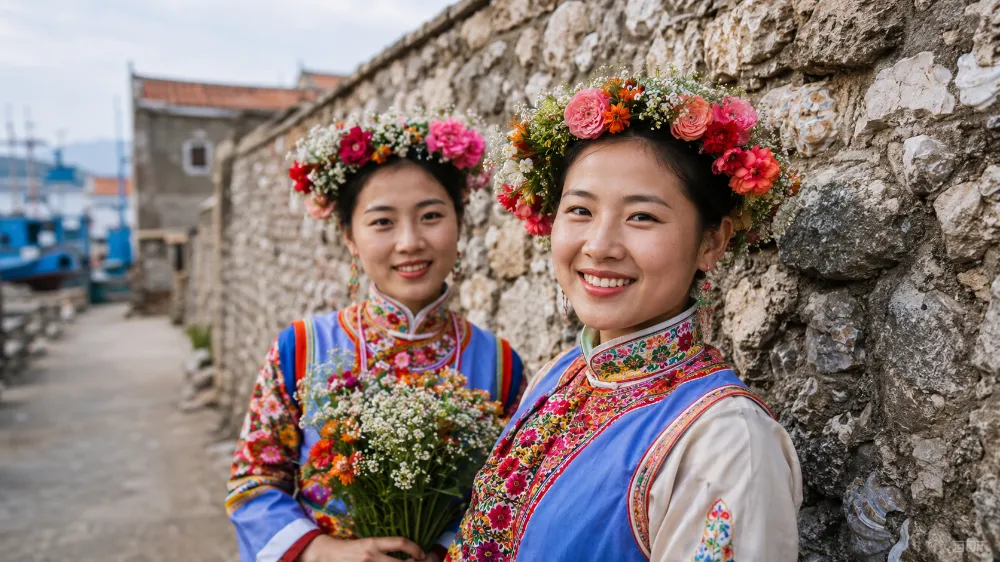
Xunpu is a small fishing village on the eastern outskirts of Quanzhou, about 25 minutes by taxi from the center. It’s famous for two things:
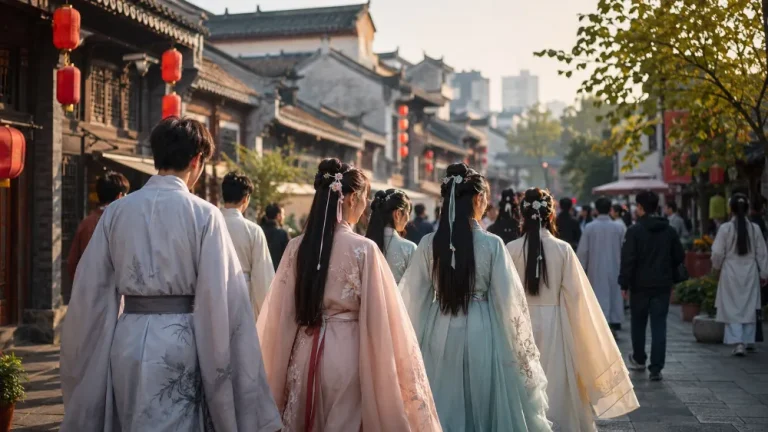
- The Xunpu women (蟳埔女) — local fisherwomen who wear a distinctive outfit of fitted blouses, wide black pants, and a “garden on the head” (簪花围) made of fresh flowers woven around their hair. The flowers are real, replaced daily, and the tradition has been passed down for generations. They look, frankly, magical.
- Oyster-shell houses (蚝壳厝) — traditional dwellings built using oyster and clam shells packed into the walls as insulation. Entire lanes are lined with these shimmering, rough-textured houses.
You can rent a traditional Xunpu outfit (flower crown included) for around 50–100 CNY from one of the village shops and have your photo taken. Yes, it’s touristy. Yes, it’s also genuinely lovely and the village itself is real, not a staged attraction.
Best time to visit: Morning, before the buses from cruise ships arrive.
Getting there: Didi, around 40 CNY from the old city. Or bus 21.
8. Five Stores Street / Wudianshi (五店市)
If you have an extra day and want to see a different kind of historic Quanzhou neighborhood — not the port-city old town but an inland Minnan village — head to Wudianshi Traditional Block in Jinjiang district (technically a separate city under Quanzhou prefecture, about 30 minutes by taxi).
Wudianshi is a restored traditional Minnan architectural quarter with houses from the Ming and Qing dynasties. The brick and stone work is gorgeous. There’s a small but excellent museum of overseas-Chinese history (Jinjiang has a huge diaspora community, especially in the Philippines and Indonesia), plus cafes, tea shops, and craft stores.
Admission: Free.
Time needed: 2–3 hours.
9. Maritime Silk Road Art Museum / Quanzhou Museum
Two museums worth mentioning, both inside the city:
Quanzhou Maritime Museum (泉州海外交通史博物馆) — smaller, more focused, all about the maritime trade history. Has a full-size replica of a Song-era trading ship and a depressing but fascinating exhibit on the multicultural cemeteries around Quanzhou (you’ll see Islamic tombstones carved with Arabic, Persian, and Chinese characters side by side). Free.
Quanzhou Museum (泉州博物馆) — the main municipal museum, much larger, with collections on local history, religion, ceramics, and folk customs. Also free.
You probably don’t need both unless you’re really into this. Pick the Maritime Museum — it’s the more distinctive one.
Minnan Culture: Music, Religion, and Daily Life
Here’s where Quanzhou gets really interesting if you stay long enough to slow down.
The Minnan Dialect
Minnan Hua (闽南话), also called Hokkien in Southeast Asia or Taiwanese in Taiwan, is the native language of most people in Quanzhou. It’s mutually intelligible with Taiwanese Hokkien and with the Hokkien spoken in Singapore, Penang, and Manila. If you’re from Singapore, by the way, you’ll hear your grandparents’ dialect in Quanzhou taxi cabs. It’s a real thing.
Mandarin is taught in schools and used in business, so you’ll get by in Mandarin. But the daily life of Quanzhou happens in Minnan: the aunties chatting in the market, the old men arguing in the teahouse, the temple chants, the opera.
Nanyin Music (南音)
This is the one cultural thing I want to push hardest. Don’t skip it.
Nanyin is a form of ancient chamber music that originated in the Quanzhou area over 1,000 years ago. UNESCO inscribed it on the Intangible Cultural Heritage list in 2009. It uses traditional instruments — the pipa held vertically, a bamboo flute, a small hand-held clapper, and several bowed stringed instruments — and the singing style is high, slow, and incredibly expressive. To Western ears it sounds a bit like a slower, more austere version of Japanese gagaku, or a more meditative blues.
You can hear it at:
- Nanyin Museum (南音馆) in the old city — small, with regular short performances. Free.
- Tianhou Temple on the first and fifteenth of each lunar month — the Mazu devotees incorporate Nanyin into the worship.
- Various tea houses and restaurants that host informal sessions. Ask around.
Even if you don’t understand a word of Minnan, the music itself is worth 30 minutes of your time. It will be one of the most memorable things from your trip, I’m pretty sure of it.
Puppet Shows, Opera, and Folk Performance
Quanzhou has two distinct puppet traditions:
- Quanzhou String Puppet Theatre (提线木偶戏) — puppetry performed with strings from above. The puppets are tiny, intricate, and manipulated by master puppeteers who can make them walk, dance, pour tea, and even fight with swords. Performances are usually in Minnan, with very theatrical (and often funny) staging.
- Hand puppets (掌中木偶) — glove puppetry, similar to Taiwanese Budaixi.
There’s also Liyuan Opera (梨园戏), a regional opera form that dates back to the Song dynasty. Performances are usually held at dedicated theaters and require some knowledge of Minnan to fully appreciate, but even as a foreigner you’ll get the costumes, music, and stagecraft.
The Quanzhou Intangible Cultural Heritage Museum (泉州非物质文化遗产博物馆) has short demonstration performances throughout the day. It’s the easiest place to see all of these in one stop.
Religion in Daily Life
I’ve touched on this already, but it bears repeating: religion in Quanzhou is not museum-ified. People still light incense at temples, pray at mosques, burn paper money at ancestor shrines, and observe both Buddhist and Taoist festivals. The line between “historical site” and “real living religion” is blurrier here than in, say, Xi’an or Beijing.
A few etiquette things that aren’t always obvious to foreign visitors:
- Step over the wooden threshold at temple entrances, not on it. It’s considered disrespectful.
- Don’t point your feet toward the main altar when sitting.
- Photography is usually fine outside the prayer halls but not inside. Watch for signs.
- During Lunar New Year, the temples get extremely crowded. You can go, but be ready for crowds and loud firecrackers.
What (and Where) to Eat in Quanzhou
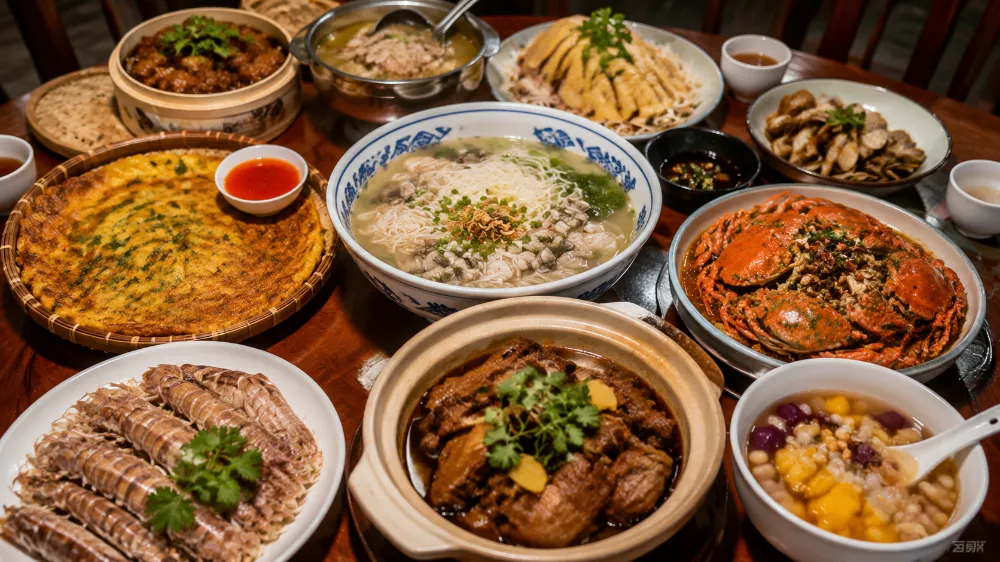
Quanzhou food is a branch of Minnan cuisine (闽南菜), which is one of the eight traditional regional cuisines of China. It’s lighter and sweeter than Cantonese, with strong seafood influences. Quanzhou in particular is known for its tong xiang (堂食) — long-cooked, slow-braised dishes — and for its snacks, which are arguably better than the formal restaurant dishes.
A few essentials to try, in rough order of “you absolutely must eat this”:
Mianxian Hu (面线糊) — the breakfast dish
This is the thing I ate three times in two days. Mianxianhu is a thin soup made from misua (super-thin wheat noodles) cooked down with seafood stock until it’s almost a broth-paste. You season it yourself at the table from a tray of toppings: fried dough sticks (you tear them in), oysters, pork intestines, shrimp, vinegar, pepper, garlic.
The result is comforting, slightly funky, deeply savory, and one of the great breakfasts of China.
Where: Almost any breakfast stall along West Street or in the old city. Look for the biggest morning crowds.
Hai Li Jian (海蛎煎) — oyster omelette
A famous Minnan street food: small, fresh oysters pan-fried with sweet potato starch and eggs, served with a sweet chili sauce. Crispy on the outside, custardy inside. Locals argue passionately about the right starch-to-oyster ratio.
Where: Try Shi Li Qiao (施琅桥) Hai Li Jian, near the Luoyang Bridge entrance, which has been making the dish for over 30 years. Or any street vendor in West Street.
Tu Sun Dong (土笋冻) — sea worm jelly
Ok, hear me out before you make the face. Tu sun dong is a jelly made from a kind of marine worm (a sipunculid, technically not a worm at all) boiled down with herbs and then chilled until it sets. You eat it cold with soy sauce, mustard, and garlic. The texture is like a slightly bouncy aspic, the flavor is mild and briny, and once you get past the ingredient list, it’s actually delicious.
This is one of the most “local” things you can eat in Quanzhou. If you try one weird food on this trip, make it this one.
Jiang Mu Ya (姜母鸭) — ginger duck
An old-school Quanzhou specialty: whole duck slow-cooked with massive amounts of ginger, sesame oil, and rice wine until the meat falls off the bone. It’s intensely aromatic, slightly medicinal in a good way, and usually served in clay pots.
Where: Look for restaurants advertising “好成财” (Hao Cheng Cai) or “张林” (Zhang Lin) — both are chains specializing in this dish.
Si Guo Tang (四果汤) — the dessert
A cold summer dessert of shaved ice with four (or more) kinds of jelly, beans, fruit, and sweet syrup. Refreshing, cheap, and a great way to recover from a hot afternoon of walking. Available at street stalls everywhere.
Man Tao Xia (满摊虾) and other seafood
Quanzhou is a coastal city, so the seafood is fresh. There’s a famous seafood street — ask for “Buhua Street” (埔花街) or just head to the area around the old harbor in the evening. Buy live fish and shellfish by weight and have a nearby restaurant cook it for you. Standard practice. Expect to pay 80–200 CNY per person for a serious seafood dinner.
Where to Eat at Night
The old city has two main night food zones:
- West Street (西街) in the evening — more tourist-oriented but lots of options, good for a casual snack crawl.
- Zhongshan Road (中山路) — wider street, more local, less English-friendly, but more authentic. Look for the noodle shops and the oyster stalls.
One more tip: in Quanzhou, “cafes” in the old city are often actually just small tea houses with Wi-Fi and pastries. Good for an afternoon break. Coffee culture is growing fast — you’ll find third-wave places in the university district east of the old city.
Practical Travel Info: Getting There, Getting Around
How to Get to Quanzhou
By air: Quanzhou Jinjiang International Airport (JJN) is about 15 km south of the city center. It has direct flights to most major Chinese cities (Beijing, Shanghai, Guangzhou, Hong Kong) and a growing list of international routes (especially to Southeast Asia: Manila, Bangkok, Singapore, Kuala Lumpur). If you can’t find a direct international flight, fly to Xiamen (XMN, about 1 hour north) and take the train.
By high-speed train: This is usually the best option. Quanzhou has a high-speed rail station (泉州站) connected to the nationwide HSR network. Approximate times from major cities:
- Xiamen: ~30 minutes
- Fuzhou: ~1.5 hours
- Shenzhen: ~4 hours
- Shanghai: ~5 hours
- Hangzhou: ~4 hours
- Guangzhou: ~4.5 hours
- Hong Kong: ~5 hours (with one transfer)
By bus: Quanzhou has long-distance bus connections to most of Fujian and Guangdong provinces. Slower than the train but cheaper. Probably skip this unless you’re on a tight budget.
Getting Around the City
The old city is very walkable. For longer distances:
- Didi (滴滴) — the Chinese Uber. Works through the app. Fares within the city are usually under 30 CNY.
- Taxis — abundant, metered, cheap. Make sure the meter is running. Have your destination written in Chinese characters if you don’t speak the language; this saves a lot of miscommunication.
- Buses — extensive network, 1–2 CNY per ride, but English signage is poor. Useful for the Luoyang Bridge.
- Bike share — Meituan (美团) and HelloRide (哈啰) have yellow and blue bikes all over the city. Scan a QR code, pay a small deposit, ride.
Where to Stay
Two main areas, depending on your style:
Old City (recommended): Lots of small boutique hotels set in restored traditional buildings, especially along West Street and around Kaiyuan Temple. Prices: 250–600 CNY per night for a decent double. The atmosphere is unbeatable.
New city / commercial district: Chain hotels (Hanting, Home Inn, Atour, Holiday Inn Express) at predictable prices and Western standards. Cleaner and more consistent, but you’ll be 20–30 minutes by taxi from the historic sites. Choose this if you need reliable plumbing, English-speaking front desk, and breakfast buffets.
Money, Internet, and Other Practicalities
- Cash vs. cards: China is essentially cashless. Bring a Visa or Mastercard and link it to Alipay (支付宝) or WeChat Pay (微信支付) before you arrive — both work for almost everything, even tiny street vendors. ATMs exist but can be hit-or-miss for foreign cards.
- VPN: Google, Instagram, Facebook, WhatsApp, and most Western social media are blocked in mainland China. Download and configure a VPN before you enter the country. Don’t wait until you’re there.
- SIM card: Buy a Chinese SIM at the airport on arrival. China Mobile and China Unicom both have tourist SIMs for around 100 CNY with 10–30 GB of data, valid for 7–30 days. You’ll need your passport.
- Language: English is not widely spoken outside the major hotels. Learn these four phrases: 你好 (nǐhǎo — hello), 谢谢 (xièxiè — thank you), 多少钱 (duōshǎo qián — how much?), 不要 (búyào — no thanks). That last one is more useful than you’d think.
- Tipping: Not customary in China. Don’t tip. Service staff will sometimes chase you down to return the money.
When to Visit: My Honest Recommendation
I went in late October and would do it again. The weather was perfect, the typhoon season was over, and the autumn light was gorgeous for photography.
If you have flexibility, avoid:
- Chinese National Week (October 1–7) — every tourist site in China is jammed.
- Lunar New Year (late January / mid-February, varies by year) — many shops close for 1–2 weeks.
- The May Day holiday (May 1–5) — similar story.
- July and August — typhoon risk and 35°C / 95°F heat with 90% humidity.
The sweet spots: late September to early December, and March to mid-May.
Suggested 3-Day Itinerary
If you have three full days — which is what I’d recommend as a minimum — here’s a sensible route. Adjust for opening hours and weather.
Day 1: The Historic Core
- Morning: Kaiyuan Temple and the twin pagodas. Spend 1.5–2 hours here.
- Walk West Street. Try mianxianhu for breakfast (or lunch, no judgment).
- Midday: Qingjing Mosque and Tianhou Temple, both within walking distance.
- Afternoon: Quanzhou Maritime Museum. Cool off, learn about the Song dynasty port.
- Evening: Dinner on West Street or Zhongshan Road. Try hai li jian and si guo tang.
Day 2: Bridges and Outer Sights
- Morning: Laojun Rock (early, before it gets hot), then taxi out to Luoyang Bridge.
- Lunch: Eat at the seafood stalls near the bridge.
- Afternoon: Xunpu Village to see the flower-women and oyster-shell houses.
- Evening: Back to the old city. If there’s a Nanyin performance scheduled, go. Otherwise, just walk and soak up the night atmosphere.
Day 3: Culture Deep Dive (or Slow Day)
Two options, depending on your energy:
Option A — Cultural: Quanzhou Intangible Cultural Heritage Museum (puppet show + opera), Nanyin Museum, Wudianshi Traditional Block in Jinjiang for the diaspora history and architecture.
Option B — Slow: Sleep in. Wander the old city alleys without an agenda. Sit in a tea house. Try every snack stall you walk past. End the day at a rooftop bar overlooking the twin pagodas. (There are several — ask your hotel for the closest.)
If you have a fourth or fifth day, consider a day trip to Xiamen (the coastal city to the south, very different in feel — more modern, beachy, with the famous Gulangyu Island). It’s only 30 minutes by high-speed train.
FAQ
Is Quanzhou worth visiting?
Yes, especially if you’re interested in history, architecture, food, or just seeing a less-touristy side of China. It punches well above its weight. UNESCO clearly thought so.
How many days do I need in Quanzhou?
Two days is the bare minimum. Three days is ideal. Five days lets you add day trips to Xiamen or the surrounding coast.
Is Quanzhou safe?
Yes, very. Violent crime against tourists is essentially unheard of. The main safety issues are petty (pickpocketing in crowded temple areas during festivals) and weather-related (typhoons in summer). Use normal urban caution.
Do I need a visa for China?
Most foreign passport holders do. Check the Chinese embassy website for your specific nationality. The recent transit visa-free policies (up to 240 hours in many regions, including Fujian) make a stopover visit possible without a full tourist visa — verify the latest rules before you book.
What’s the difference between Quanzhou, Fuzhou, and Xiamen?
Quick version: Quanzhou is the historic port and cultural heart. Xiamen is the modern coastal resort city with Gulangyu Island. Fuzhou is Fujian’s capital — more administrative, less tourist-focused, with its own quiet charm. They’re all within 1.5 hours of each other by train.
Is English spoken in Quanzhou?
Limited. Major hotels and tourist sites have some English, but restaurants, taxis, and shops usually don’t. A translation app is essential.
What’s the best local souvenir?
A few ideas: Dehua white porcelain (from the nearby county — it’s one of China’s most famous porcelain traditions), a piece of nanyin sheet music if you read music, a Mazu amulet from the Tianhou Temple, or — my pick — a bag of the local iron guanyin tea (铁观音) from Anxi county just outside Quanzhou. Anxi is one of the original homes of this oolong variety.
Final Thoughts
I’ve written a lot of travel guides, and I’ve deleted and rewritten this ending three times. The honest version is this:
Quanzhou is the kind of city that rewards people who don’t have a checklist. If you come here with a tight schedule and a mission to photograph every UNESCO site in three hours, you’ll leave slightly underwhelmed. But if you come with a couple of free afternoons and a willingness to get a little lost — to follow a side alley because the light looked interesting, to sit down in a teahouse with a local who gestures you over, to wake up early one morning and just walk — Quanzhou will give you things you can’t get anywhere else.
The Song dynasty trading port where Marco Polo stood is still here. The 1,300-year-old mosque is still here. The old women with flower crowns are still here. The Nanyin music is still being played the same way it was a thousand years ago. That continuity is rare. Most cities that old have been torn down and rebuilt. Quanzhou, somehow, wasn’t.
Go see it before more people figure out it’s there.
If this guide helped you plan your trip, drop me a note — I love hearing from people who actually went. And if you found something I missed, please tell me. I’ll update this.
Last updated: June 2026. All prices and travel info current as of writing; verify before booking.