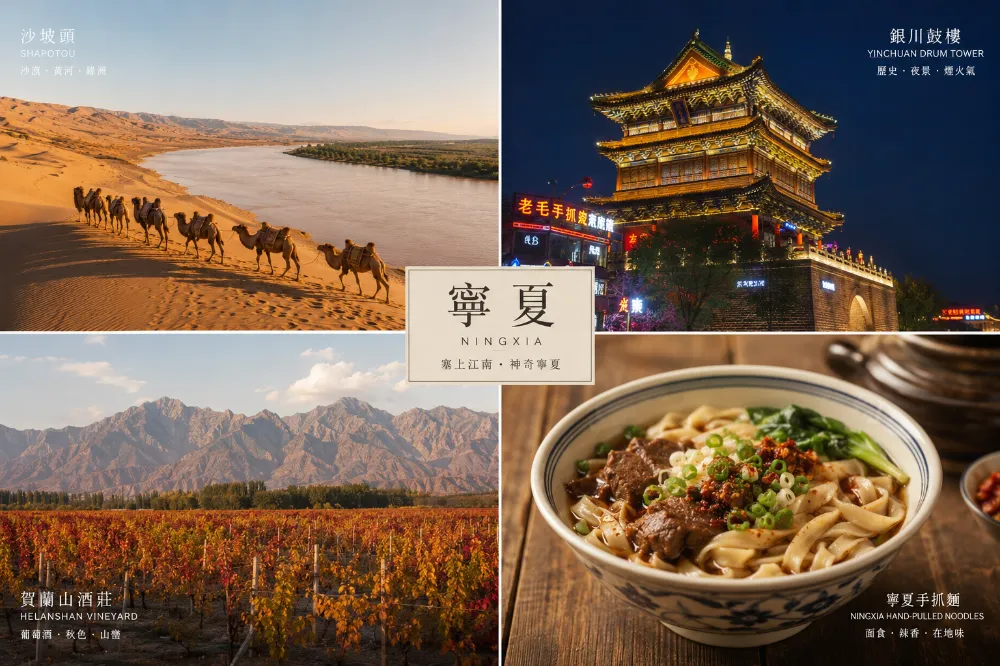
Most travelers to northwest China route through Xi’an or Dunhuang and never see Ningxia. That is a shame, because this small autonomous region is the rare place where you can sleep in a hotel, take a morning train, and be sandboarding down Tengger Desert dunes by lunch. It has a wine region, a Muslim food culture that locals argue (politely) beats Xinjiang’s, and a desert-meets-river landscape that does not need a filter. This Ningxia travel guide is written for travelers who want to actually do the place, not just photograph it.
I have rewritten this guide from scratch for 2027, with current prices, the new 240-hour visa-free rules, and the high-speed rail links that have changed the map since most older guides were published. If you only have a few days, skip to the itineraries at the end.
Why Ningxia deserves a spot on your China trip
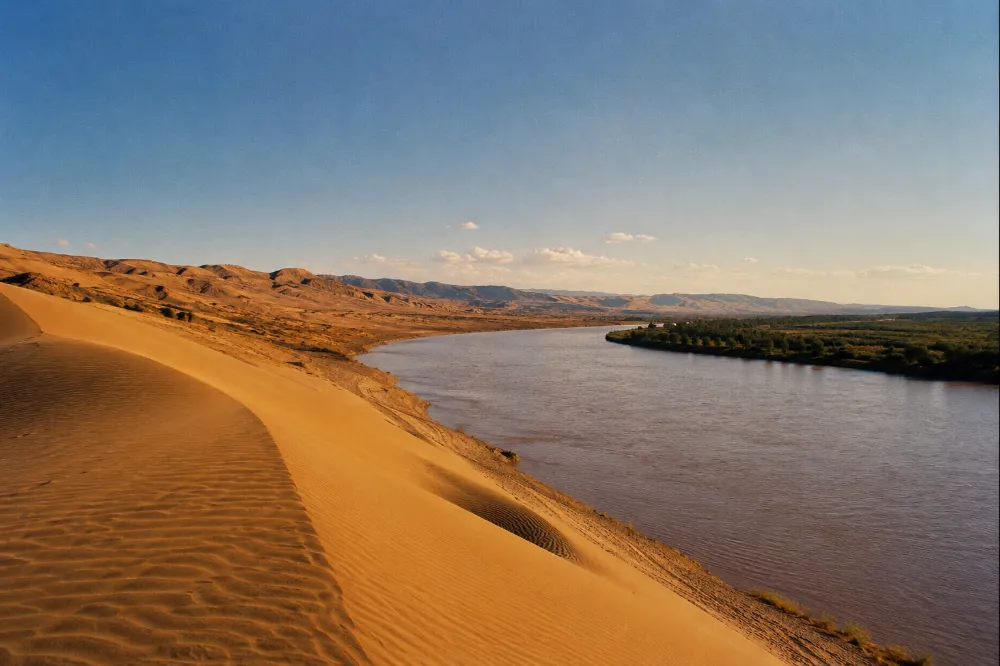
Ningxia is one of China’s five autonomous regions and the smallest by population at roughly 7 million. The Hui people, China’s third-largest Muslim ethnic group, make up about a third of that number, and the food alone is a reason to come. But the more interesting reason is geography. Ningxia is the hinge between the Mongolian plateau, the Loess Plateau, and the Yellow River, which means in a single 200 km drive you can be in mountains, in irrigated farmland, on the edge of a desert, and inside an industrial wine valley. No other Chinese province compresses that much variety into such a short drive.
It is also less touristed than Gansu, Qinghai, or Inner Mongolia. In late September I counted maybe a dozen Western tourists at the Western Xia Imperial Tombs, an AAAAA site that, anywhere else in China, would be swarming. If you have already done the obvious Beijing-Xi’an-Chengdu route and want something that feels more like a discovery, Ningxia is the answer.
What Ningxia is not: it is not a substitute for a Silk Road deep dive (that is Gansu and Xinjiang), it is not a hiking destination (the trails exist but infrastructure is thin), and it is not a beach holiday. Come for the desert, the food, and the wine. The rest is a bonus.
When to go: weather, season, and crowd calendar
Climate is the one thing that will make or break a Ningxia trip. The province sits in a continental arid zone, which means hot dry summers, brutally cold winters, and very little rain in between. Here is how I would plan it.
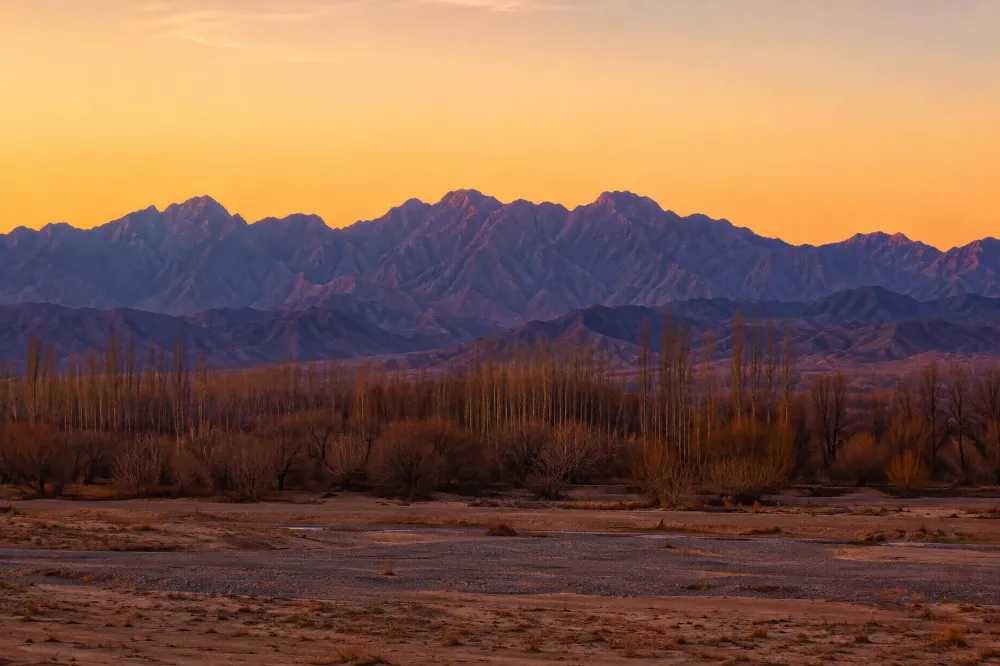
Late April to mid-May. This is the sweet spot for most travelers. Daytime highs sit around 20 to 26°C, the desert is still cool enough to enjoy at noon, and the Helan Mountain east slope vineyards are starting to leaf out. Apricot and peach blossom in Yinchuan parks is an underrated bonus. Crowds are thin.
June. Comfortable, but it starts getting warm. Average highs creep into the high 20s. Prices for hotels have not yet peaked.
July and August. High summer. Daytime in Shapotou regularly hits 35 to 38°C. The upside: long daylight, the Tengger Desert camel rides are warm until late, and the night sky for stargazing is clear. The downside: domestic family travel peaks, hotel rates in Yinchuan and Zhongwei roughly double during the first week of August, and you will be sweating through your sunscreen. I would skip this window if you can.
September to early October. My personal favorite. The Helan Mountain vineyards turn gold and amber around late September, the desert cools to a manageable 25 to 28°C, and grapes are being harvested at wineries like Pernigotti-Ningxia, Helan Qingxue, and Chateau Zhihui. Avoid the October 1 to 7 National Day week at all costs — it is the worst traffic of the year.
November to March. Cold. Yinchuan averages -8 to 2°C in January. Shapotou’s desert activities shrink or close. The reason to come in winter would be to ski at Shizuishan’s skis resorts (small but cheap) or to pair Ningxia with a Chinese New Year trip, but plan for shorter days and limited desert programming.
Getting to Ningxia and getting around
By air
Yinchuan Hedong International Airport (INC) is the main gateway. It has direct flights from Beijing (about 2 hours), Shanghai (around 3 hours), Guangzhou (about 3.5 hours), Xi’an (1.5 hours), Chengdu, Chongqing, Kunming, and several other major Chinese cities, plus some seasonal international routes. From the airport to central Yinchuan is roughly 35 to 45 minutes by taxi or by Airport Express Bus Line 1, which costs around 20 RMB.
Zhongwei Shapotou Airport (ZHY) is a smaller field with limited flights, mostly from Beijing, Shanghai, and Xi’an. If you can find a direct flight into Zhongwei and your priority is the desert, it saves you the train ride. Most travelers, however, will fly into Yinchuan and take the train south.
By high-speed rail
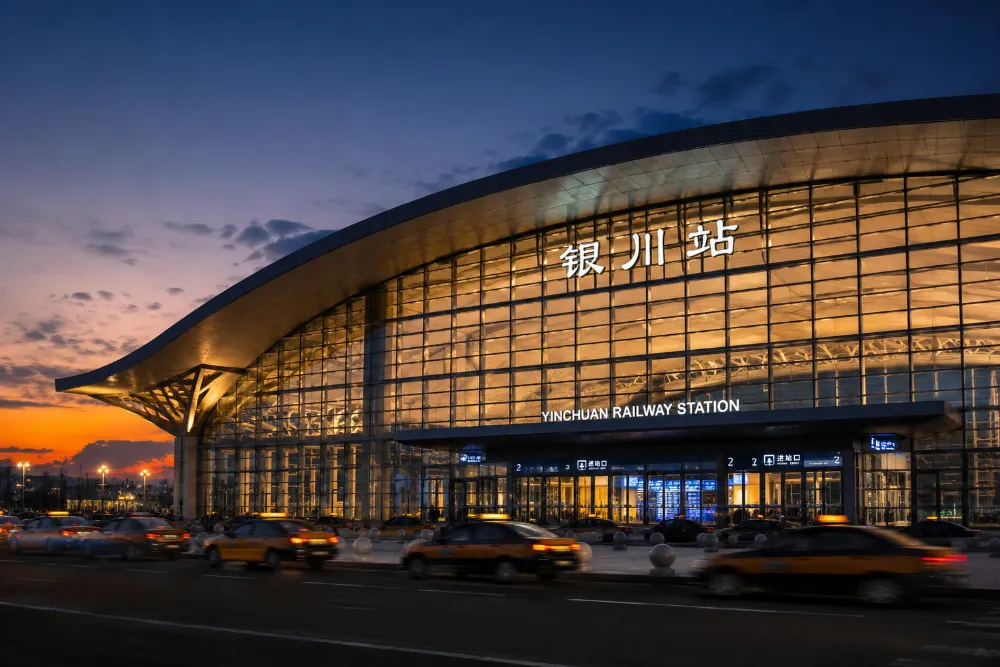
The Yinchuan-Zhongwei high-speed line opened in recent years and changed the way the province moves. A second-class seat from Yinchuan Station to Zhongwei Station takes about 1 hour 50 minutes and costs around 80 RMB. Trains run roughly hourly in daytime. From Zhongwei Station to the Shapotou scenic area entrance is another 15 to 20 minutes by taxi or the local tourist shuttle (around 30 to 50 RMB).
Yinchuan itself is on the Baotou-Lanzhou rail corridor, so you can reach it directly from Beijing, Xi’an, Lanzhou, and Hohhot without flying. The overnight Z-series sleeper train from Beijing to Yinchuan takes about 13 hours and is a relaxing way to arrive, though most people now prefer the 6-hour high-speed option via Taiyuan.
By car and by bus
Renting a car in Ningxia is genuinely easy and the roads are in good shape. Yinchuan, Wuzhong, Zhongwei, and Guyuan are all connected by expressways. A compact car for a day costs roughly 200 to 300 RMB from one of the local operators, and the Chinese app Amap (高德) or Baidu Maps handles navigation accurately even without a Chinese SIM. International drivers technically need a Chinese license, so most foreign travelers will use a driver or join a tour day.
Long-distance buses still work between cities but are slower and less frequent than the train. For Shapotou, buses from Yinchuan’s South Bus Station run directly to Zhongwei in about 3 hours for around 70 RMB.
Getting around Yinchuan
Yinchuan has a small but functional metro (Line 1 opened in 2017, with extensions in progress), a clean BRT system, and plenty of ride-hailing through DiDi. Most tourist attractions cluster in the Jinfeng and Xingqing districts, and a 30-minute DiDi ride will rarely cost more than 25 RMB.
Yinchuan: the underrated capital
Yinchuan is a city of 2.5 million that feels closer to 600,000. Wide leafy boulevards, low-rise Hui neighborhoods, the Yellow River running through the eastern edge, and the Helan Mountains visible on a clear day to the west. Most travelers use it as a one-night base, which is a mistake. Give it two nights and the city opens up.
Where to stay in Yinchuan
Three areas make sense.
Jinfeng District (around Wanda Plaza). The most convenient for first-time visitors, packed with mid-range and upscale hotels, walking distance to shopping and restaurants. International chains present here include JW Marriott, Kempinski, and Holiday Inn. Expect 400 to 800 RMB per night for a comfortable four-star.
Xingqing District (closer to the old town). Quieter, more local, and a good base if you are chasing food. Boutique options like the Ningxia Museum-adjacent Yinchuan Hotel give more character than the chain hotels.
Near the Drum Tower pedestrian street. Best for short stays that prioritize walking and street food. The Crowne Plaza Yinchuan is the only true luxury option, and the older state-run Yinchuan Hotel is a piece of socialist-modernist architecture that some travelers will love.
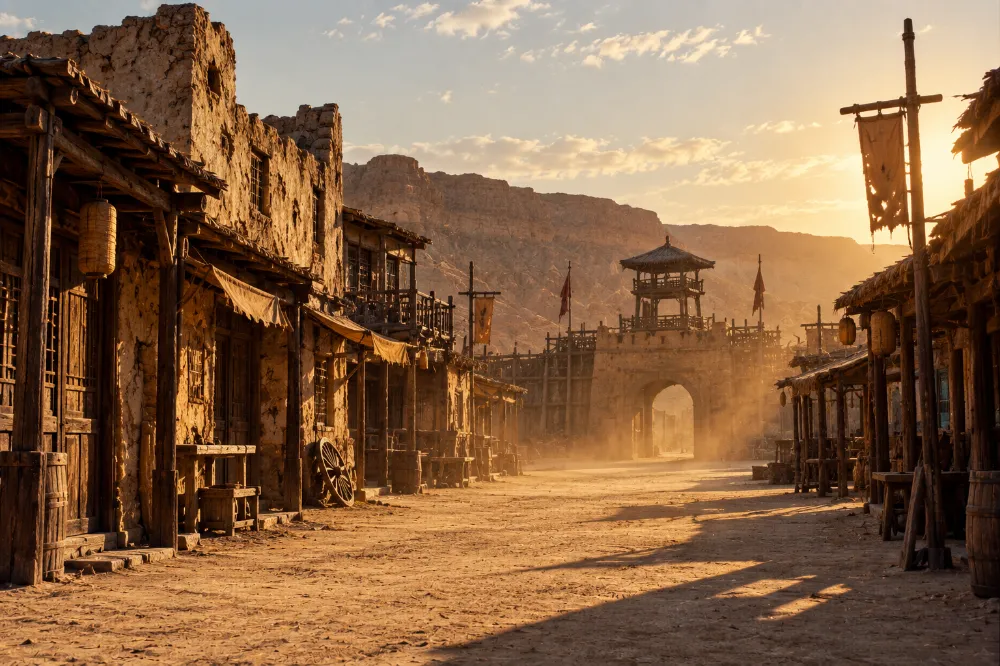
Zhenbeibu Western Film Studio
This is the single most popular attraction in Ningxia and the one I have the most complicated feelings about. Zhenbeibu is a former Qing Dynasty garrison town that has been used as a movie set since the early 1990s. Zhang Yimou’s Red Sorghum was filmed here, as was A Chinese Odyssey, which is why the place still pulls in fans of Stephen Chow. Today it operates as a theme park crossed with a film museum. Tickets are 80 RMB per person. The opening hours run roughly 8:30 to 18:00 in summer, 9:00 to 17:00 in winter.
If you are a Chinese film fan, give it three to four hours. If you are not, the honest verdict is that it is a slightly tired set, the Western-style facades are starting to flake, and the costume-rental photo opportunities can feel a little theme-park-generic. That said, the surrounding Gobi scenery is genuinely cinematic, the Ming-era fort walls are original, and if you time it for sunset, the light is gorgeous. Just don’t expect Hollywood-scale production design.
Western Xia Imperial Tombs (Xixia Wangling)
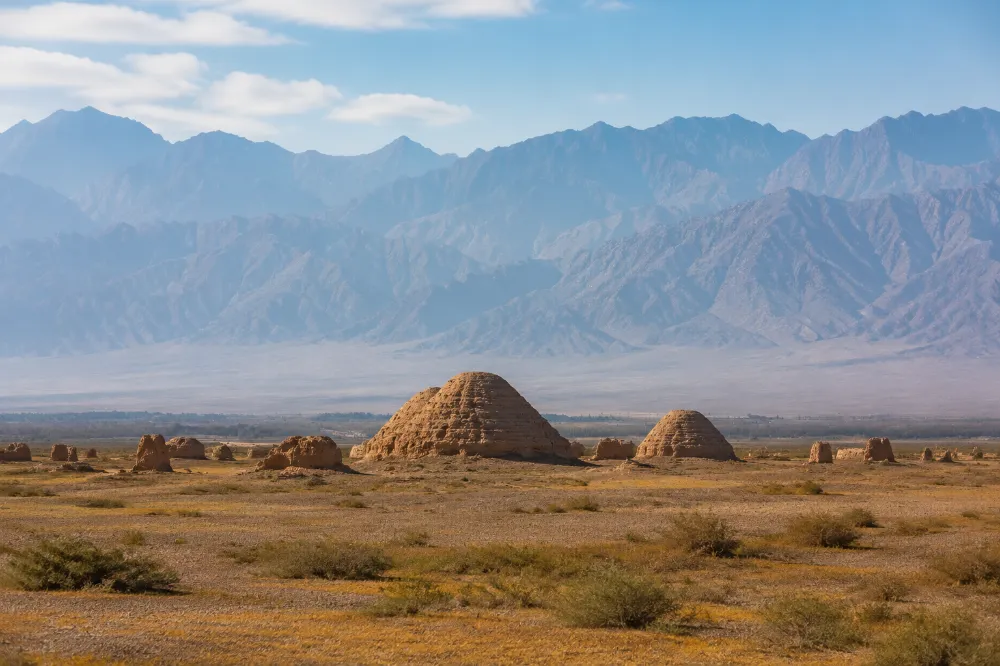
Nine imperial mausoleums of the Western Xia dynasty, which ruled northwest China from 1038 to 1227 before being wiped out by Genghis Khan. The site is 30 km west of Yinchuan, at the foot of Helan Mountain. The UNESCO-listed remains cover about 50 square kilometers of open Gobi-steppe, and the central museum was redesigned in 2019 with genuinely good English-language signage.
It costs 75 RMB to enter, plus a 20 RMB shuttle bus from the parking area to the inner tombs. Allow three hours. What you are actually looking at: low earthen pyramid mounds, originally capped with wooden pavilions and Buddhist stupas, that the Mongols tried to destroy and that nature has since half-buried. The visual effect, especially at dawn or dusk, is haunting. The site gets almost no Western tour groups, which is the whole point of coming.
Heads up: in 2024 and 2025, sections of the site were under partial restoration. Some of the smaller tomb mounds may be closed at any given time. Check the official notice on arrival.
Helan Mountain and the petroglyphs
Helan Mountain is the spine of Ningxia, and most of the eastern slope is either wine country (covered separately below) or scenic area. The Helan Mountain Rock Art site, in the northern foothills, holds over 5,000 individual petroglyphs carved between 10,000 BC and the 13th century. It costs 70 RMB to enter. The carvings themselves are small and surprisingly moving — sun faces, hunters, dancing figures — and the cliff-side location is quiet. The ride out from Yinchuan takes roughly 50 minutes each way.
For hiking, the Helan Mountain National Forest Park (separate from the rock art) is a decent half-day. Higher elevations, more birds, no other tourists. Entry is 80 RMB, closed in winter.
Other Yinchuan stops
Ningxia Museum, free, English signage, two hours. Best first stop to understand the province. The China Hui Culture Museum, also free, is in the south of the city and more niche but worth 90 minutes if you want to learn about the Hui before you eat your way through their cuisine. The drum tower pedestrian street, near the Yinchuan Hotel, is mostly for an evening stroll and a cheap lamb skewer dinner.
Zhongwei and Shapotou: the desert day
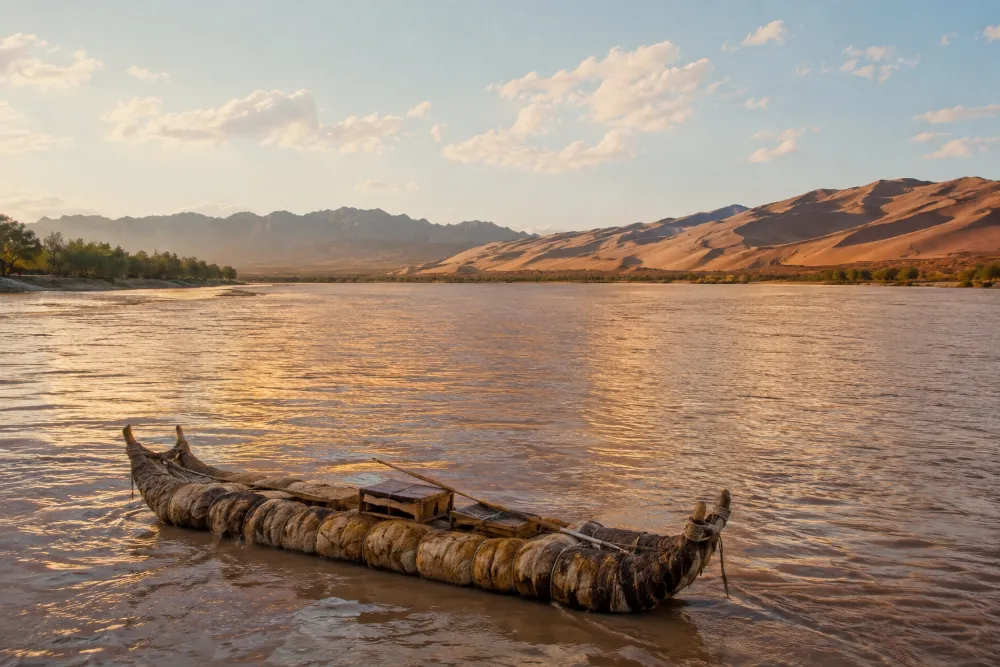
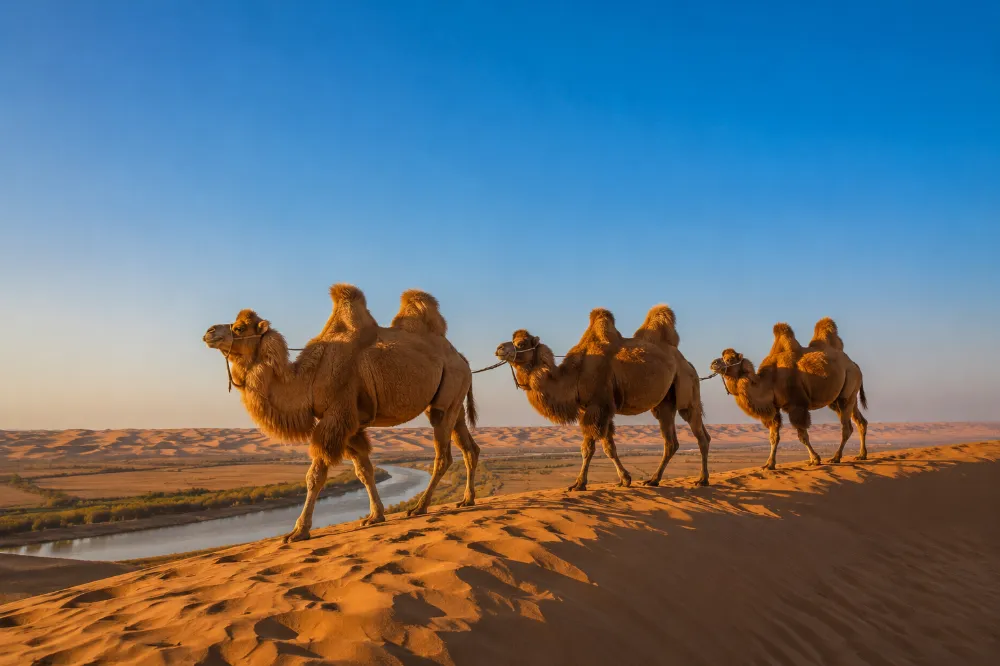
Shapotou is the reason most people come to Ningxia, and despite the heavy ticketing, it is genuinely good. The site is a 5,000-hectare national park on the southeastern edge of the Tengger Desert, where the dunes meet the Yellow River in a sharp curve. There are two halves. The Yellow River side is flat, slow, with sheepskin rafts and date palms. The desert side is the dune field, where the activities live. A standard entrance ticket is 80 RMB, but almost no one buys just that — you will end up paying for a package of activities.
The activity pricing is where Shapotou gets a little controversial. The full adventure package (camel ride, sand sliding, dune buggy, sheepskin raft, Yellow River glass-bottom boat) was 285 RMB in 2025 and is likely to climb slightly in 2026. If you only want the desert experience, the basic sand package (camel, sand sliding, dune buggy) is around 200 RMB. The sheepskin raft and Yellow River boat are extras. I would say: skip the glass boat, take the sheepskin raft — it is the more interesting and more photogenic option.
What to do at Shapotou, in order of actual fun:
- Camel ride into the dunes. 30 minutes, slow, and oddly meditative. The camels are well-treated by Chinese zoo standards but not by international animal-welfare standards. If that matters to you, walk the dune edge instead.
- Sand sliding. Sit on a flat board, push off, and scream down a 30-meter dune. Cheap, repeatable, and oddly addictive. Kids love it; grown-ups secretly love it more.
- Dune buggy or off-road kart. 10 to 15 minutes, bumpy, fun, and you will get dusty. Photographers will want a GoPro for this.
- Sheepskin raft across the Yellow River. Two to three people on a fully inflated sheepskin float, paddled by an old raft captain. Slow, cold water (in spring), and you will get wet at the knees. Authentic, photogenic, one of the few tourist activities in China that hasn’t been entirely Disneyfied.
- Stargazing. If you stay overnight at the Shapotou Desert Hotel or one of the new glamping camps (沙漠星星酒店 is the famous one), the night sky is one of the best you will see in eastern China.
For an overnight, the new desert star-themed hotels are polarizing. The official Shapotou Desert Star Hotel is essentially a glamping camp of white domes on the dunes. Prices run from 1,200 to 2,500 RMB per night depending on the season and dome type. It is photogenic and the experience is unique, but the rooms are small and the desert wind can be loud. A more comfortable alternative is a standard hotel in Zhongwei city (20 minutes’ drive) for 300 to 500 RMB.
Outside of Shapotou itself, Zhongwei has a small but interesting old town (Gao Miao, the old Confucian temple), some decent Hui restaurants, and a high-speed rail station that ties you back to Yinchuan. If you are not staying overnight in the desert, plan to leave Yinchuan at 7:30 AM, arrive Shapotou by 10, do the desert activities until 4 PM, and return to Yinchuan by 8 PM. It is a long day but it works.
Wuzhong, Qingtongxia, and the Yellow River bend
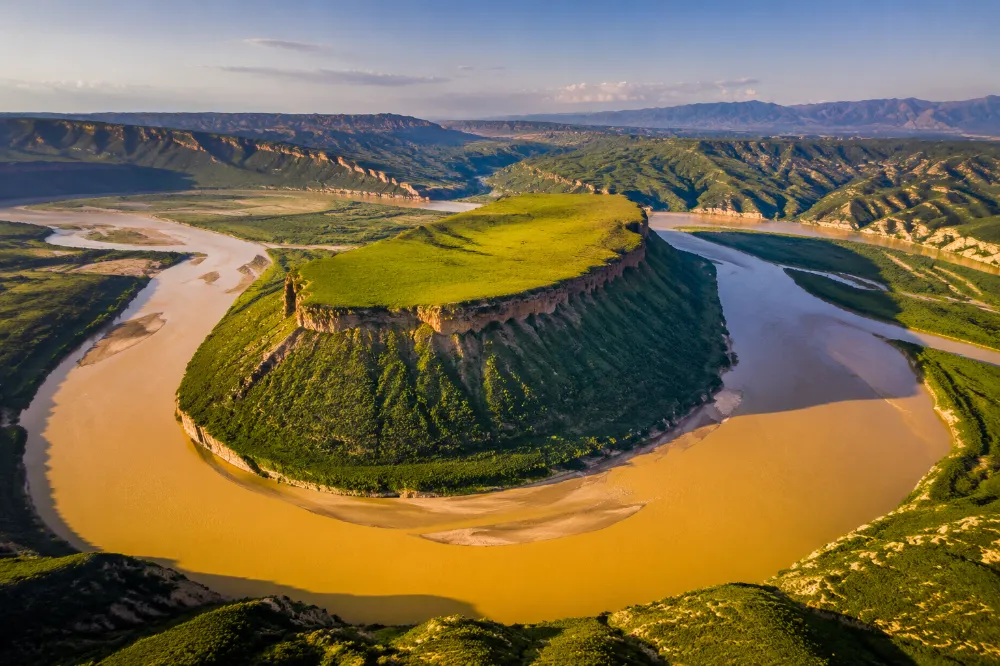
Most travelers skip the middle of the province, and they are right to do so on a short trip. But if you have five days or more, the Wuzhong-Qingtongxia stretch adds two things the rest of Ningxia cannot match: the dramatic 108-Buddha Grotto at Xumi Mountain, and the Sanguan Yellow River crossing, where the river does an enormous S-bend around a flat-topped mesa.
Qingtongxia is roughly 1.5 hours south of Yinchuan by car. The Xumi Shan Grottoes (须弥山石窟) are about 60 km further south, in Guyuan prefecture, and date from the Northern Wei dynasty (5th century). They are smaller than Dunhuang or Datong but atmospheric and almost empty. The cliff faces, the climbing access, and the views over the Yellow River valley are the point. Entry is 50 RMB. There is no high-speed rail to Xumi Shan, so a private car or day tour is necessary.
The Sand Lake (沙湖) scenic area, in Pingluo County between Yinchuan and Shizuishan, is the kind of place I have mixed feelings about. It is billed as a desert-meets-lake resort with boat rides, a bird sanctuary, and amusement rides. Tickets run 50 RMB for the entrance, plus 60 to 100 RMB for boat combinations. The reed beds and bird life are genuinely lovely in May and June, when migrant species stop over. The amusement park side feels dated. If you are traveling with kids, plan a half day. If you are not, the same wetland experience is available for free at Mingcui Lake National Wetland Park, just north of Yinchuan (40 RMB entry, 5 km from the city).
Guyuan: the underrated south
Guyuan is the southernmost prefecture of Ningxia, sharing a border with Gansu. It is also the poorest part of the province and the least visited by foreign travelers, which is exactly why I think it deserves an honest mention. Three things make it worth the trip.
First, the Xumi Shan Grottoes (covered above), one of China’s older Buddhist cave sites, are 60 km north of the city. Second, the Guyuan Museum holds a famous Northern Zhou tomb burial with silk paintings that predate Dunhuang’s cave murals. It is small, free, and has surprisingly competent English captions. Third, the Liupan Mountain (六盘山) range to the west has hiking, alpine scenery, and the Long March memorial corridor that the Chinese government maintains with mixed sincerity but real scenery.
Guyuan is not on the high-speed rail. The drive from Yinchuan is about 4 hours via the Fuyin expressway. If you are short on time, skip it. If you are making a slow loop through northwest China, a two-night stop in Guyuan is a nice change of pace from the desert and the wine tastings.
Hui Muslim food: what to actually order
Let’s talk about the actual reason most Chinese travelers admit, off the record, that they come to Ningxia: the food.
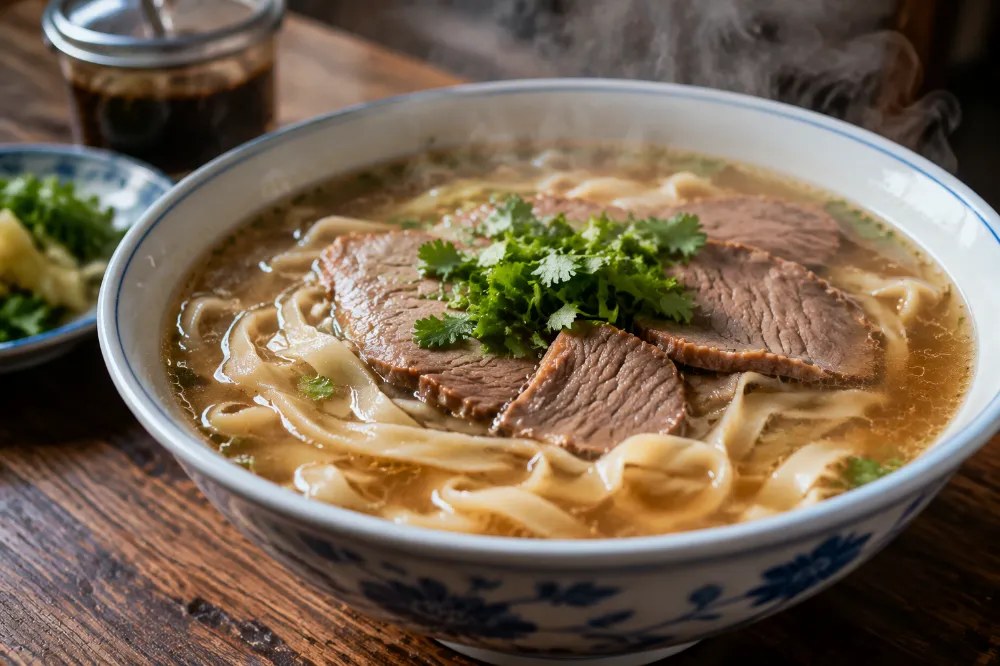
Hui cuisine is technically a subset of northwest Chinese cooking, with lamb, beef, noodles, and wheat-based staples, but the local Ningxia version has its own obsessions. The signature ingredient is hand-pulled noodles, made with a high-gluten local flour and served in broths or stir-fried. The second obsession is whole-roasted lamb. The third is the eight-treasure tea (八宝茶), a sweet jasmine-and-goji-berry tea that you will be offered in every Hui restaurant.
What to actually order in Yinchuan, Zhongwei, or anywhere in between:
Hand-pulled noodles (手抓 or 拉面). A bowl of clear beef broth, hand-cut noodles, a few slices of braised beef, some cilantro, and a sliced green chili. Sounds plain. Is not plain. The broth is the thing. Yinchuan’s best bowl, by general consensus among locals, is at the no-name places around the Drum Tower and the older Jiefang Street strip. Expect 18 to 30 RMB for a generous bowl.
Lamb skewers (烤羊肉串). Standard issue, but Ningxia’s are notably less cumin-heavy than Xinjiang’s and more reliant on salt and chili. 4 to 6 RMB per skewer. Buy them from the night markets around the Drum Tower and Jiefang Street. Do not be shy about the chili.
Whole roasted lamb (烤全羊). This is a celebration dish, ordered in advance, served at the table on a copper platter. A whole lamb runs 800 to 1,500 RMB depending on weight and feeds 6 to 10 people. If you are traveling in a small group, ask the restaurant in advance to do half a lamb. The skin is the prize.
Eight-treasure tea (八宝茶). Served in a glass teapot. You can watch the dried fruits, goji berries, dates, and longan slowly bloom. Sweet, light, and a perfect end to any heavy meal. Most restaurants include it free; some charge 10 to 20 RMB.
Yellow River carp (黄河鲤鱼). A Ningxia classic. Whole fish, deep-fried, sweet-and-sour sauce, served with sweet-and-sour cabbage. 80 to 150 RMB. Heavier than it sounds.
Mutton paomo (羊肉泡馍). The Shaanxi original, but Ningxia does a reasonable version. You tear a hard flatbread into pieces, the kitchen adds it to a lamb broth, and you eat it with pickled garlic and chili sauce. Warming, heavy, perfect for cold weather.
Where to eat in Yinchuan without a guidebook: pick any place with more Chinese than foreign customers, with a glass display of raw lamb skewers at the door, and a visible kitchen. If the menu has pictures, you are fine. If the menu has no English, you are even more fine. Most Hui restaurants will have at least one server who can talk you through the menu in simple English, and pointing works for the rest.
Helan Mountain wine country
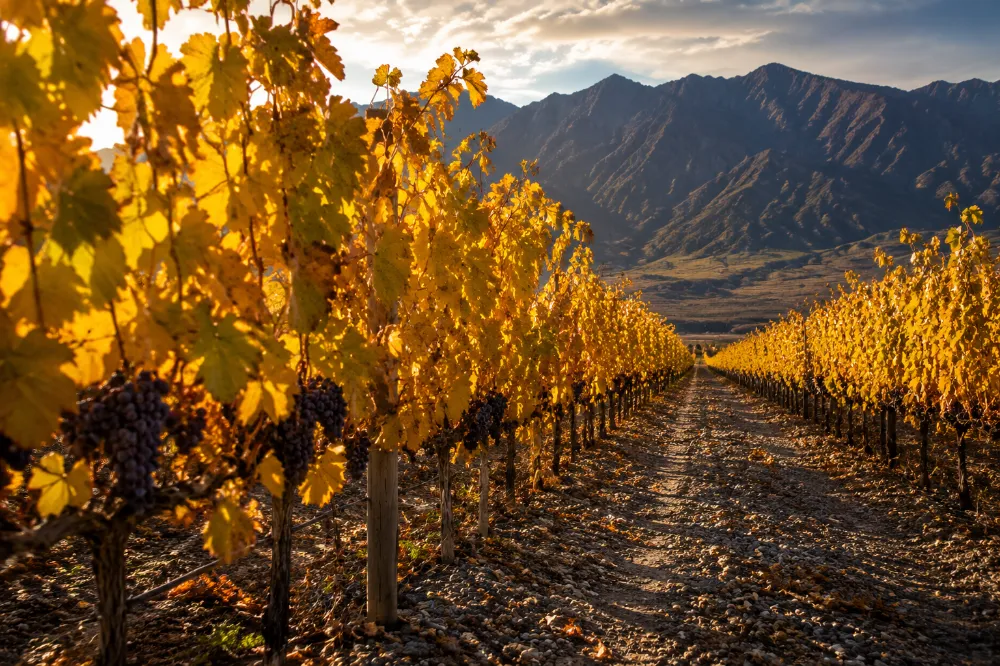
Here is the fact that surprised me most on my first Ningxia trip: the eastern foothills of Helan Mountain, between Yinchuan and the Helan range, are now China’s most awarded wine region. Cabernet Sauvignon, Chardonnay, Cabernet Geminis, and Marselan from Ningxia wineries are winning trophies in Bordeaux, Brussels, and London competitions. The terroir — sandy alkaline soil, dry climate, large day-night temperature swings, and irrigation from the Yellow River — is genuinely well-suited to red wine grape varieties.
There are over 100 wineries in the region, ranging from huge commercial players to small boutique estates. You cannot visit all of them in one trip. My recommended shortlist, in order of accessibility and quality of the visitor experience:
Chateau Zhihui (志辉源石酒庄). Built inside a reclaimed quarry. Cave-aged reds, on-site restaurant, sculpture park. The architecture alone is worth the drive. Tasting flights 100 to 200 RMB.
Helen Qingxue (贺兰晴雪). One of the pioneer wineries, family-run, and the bottle most likely to be on every Chinese fine-dining wine list. The cellar tour is 30 minutes and well done. Tastings 80 to 150 RMB.
Pernigotti-Ningxia (西鸽酒庄). Modern, slick, big production. Good for first-time tasters who want a guided experience. Tasting 120 to 250 RMB.
Silver Heights (银色高地). The cult favorite among Chinese sommeliers. Tiny production, hard to book, but the wine is excellent and the owners are charming.
Most wineries require advance booking, especially on weekends. A half-day tour with a driver from Yinchuan costs 600 to 900 RMB including two to three tastings. Going on your own is possible but expect to wait at the gates if you have not called ahead. The best time to visit is during the autumn harvest (mid-September to mid-October), when some wineries will let you stomp grapes if you ask nicely.
Three, five, and seven-day itineraries
These assume you are flying into Yinchuan, which is the simplest base. If you are arriving in Zhongwei directly, you can flip the order.
Three days: Yinchuan and Shapotou
Day 1. Arrive Yinchuan. Afternoon at the Ningxia Museum (free, 2 hours). Evening walk the Drum Tower pedestrian street and an early dinner of lamb skewers and hand-pulled noodles. Stay in Jinfeng District.
Day 2. High-speed train to Zhongwei at 8 AM. Shapotou for the full day. Camel ride, sand sliding, dune buggy, sheepskin raft. Return to Yinchuan by 8 PM, dinner near your hotel.
Day 3. Morning at Zhenbeibu Western Film Studio (3 hours) or the Western Xia Imperial Tombs (3 hours, requires a car). If you have an early evening flight, do the tombs. If not, do Zhenbeibu and catch the sunset. Depart.
Five days: add wine, the tombs, and one slow day
Take the three-day plan above, then add:
Day 4. Helan Mountain wine country. Hire a driver for the day, visit two or three wineries, eat lunch at Chateau Zhihui, return to Yinchuan by 5 PM. Evening free for a Hui dinner.
Day 5. Western Xia Imperial Tombs in the morning, return to Yinchuan for lunch, then the Helan Mountain Rock Art site in the afternoon, or the China Hui Culture Museum if the weather is bad. Depart.
Seven days: full loop, including Guyuan
Day 1 to 3 as above, then:
Day 4. Sand Lake in the morning (only worth it in May or June, otherwise skip), then drive south to Qingtongxia. Stay overnight in a Qingtongxia hotel.
Day 5. Drive to Xumi Shan Grottoes (1 hour from Qingtongxia), spend the morning. Then continue to Guyuan (2 hours from Xumi Shan). Stay overnight in Guyuan.
Day 6. Guyuan Museum in the morning. Optional Liupan Mountain half-day. Drive back toward Yinchuan (4 hours), stopping at a Helan Mountain winery en route for an evening tasting.
Day 7. Slow morning in Yinchuan — last noodle breakfast, last eight-treasure tea. Departure.
This seven-day plan assumes a private driver or self-drive. Without a driver, replace the Guyuan section with a second wine-country day and a Helan Mountain hike. The Yinchuan-Zhongwei-Yinchuan axis is the part that absolutely does not require a car.
Practicalities: visa, payments, SIM, altitude
Visa
For most Western travelers, the headline news is that Ningxia is one of the 24 mainland Chinese provinces accessible under the 240-hour visa-free transit policy, which China expanded in December 2024. The original 72- and 144-hour rules were replaced with a unified 240-hour (10-day) window for passport holders from 54 countries including the United States, the United Kingdom, Canada, Australia, France, Germany, Japan, and South Korea.
To use it, you must enter through one of the 60 designated ports (Beijing Capital, Shanghai Pudong, Guangzhou Baiyun, Chengdu Shuangliu, Xi’an Xianyang, and many others), hold a confirmed onward ticket to a third country or region, and stay within the 24 designated provinces. You cannot use this for a round-trip back to your home country. Within Ningxia you can move freely, including onward to Gansu, Shaanxi, or Inner Mongolia by train.
If you are not eligible, or your trip does not fit the transit pattern, you will need a regular Chinese tourist visa (L visa) from a Chinese consulate. Apply in your home country, allow at least 10 working days, and double-check the latest requirements — the rules are updated often.
Payments
Mobile payment in China is dominated by Alipay and WeChat Pay. Both apps now accept foreign credit and debit cards directly, including Visa, Mastercard, and in most cases American Express. You can also bind Apple Pay or Google Pay to Alipay. Set this up before you arrive — it is much harder to do on a slow hotel Wi-Fi. Cash still works, especially at small Hui restaurants, but expect to need exact change. The 100 RMB note is your friend; the 1 RMB coin is an endangered species.
SIM and internet
Buy a tourist SIM at the airport kiosk in Yinchuan on arrival. China Mobile, China Unicom, and China Telecom all sell 7- to 15-day data-only packages for 80 to 150 RMB. Speed is fine; the only catch is that Google, Facebook, Instagram, WhatsApp, and most Western news sites are blocked behind the Great Firewall. A VPN is technically restricted but in practice widely used by foreign residents. Set it up before you leave home.
Altitude
Yinchuan sits at about 1,100 meters, Zhongwei at about 1,200, and the Helan Mountain range tops out at around 3,500. None of these altitudes will cause altitude sickness for a healthy adult. If you are extending the trip to Qinghai or Tibet afterward, you might notice Ningxia as an easy acclimatization day on the way up.
Language
Mandarin is the operating language everywhere. English proficiency is improving but uneven, especially outside the international hotels. A translation app on your phone (Google Translate with the Chinese offline pack downloaded, or Microsoft Translator) is genuinely useful. The local dialect is the Ningxia version of the Lanyin Mandarin sub-branch, which is comprehensible to other Mandarin speakers but sounds a bit musical and uses some unique phrases. Hui restaurant workers often speak a working Arabic as well, though you will not need it for an everyday trip.
Health and safety
Ningxia is a low-risk destination. Tap water is not potable — stick to bottled or filtered. Sun is intense in the desert; SPF 50, a wide-brimmed hat, and UV-blocking sunglasses are not optional. In spring, the desert wind picks up in the afternoon and the air can feel sandy; bring a buff or light scarf. Pharmacy access is good in Yinchuan, weak in Shapotou. Bring any prescription medication you need.
Ningxia travel FAQ
Is Ningxia worth visiting in 2026?
Yes. Ningxia packs a desert, a wine region, a UNESCO site, and a strong Muslim food culture into a small, easy-to-navigate province. It is also one of the 24 mainland Chinese regions accessible under the 240-hour visa-free transit policy, so most Western travelers can visit without applying for a separate Chinese visa.
How many days do you need in Ningxia?
Three days is enough to cover Yinchuan and the Shapotou desert comfortably. Five days lets you add the Helan Mountain wine country, the Western Xia Imperial Tombs, and Sand Lake. A full week gives time for a side trip to Guyuan in the south, plus a slower food-and-wine pace.
Can foreigners use the 240-hour visa-free transit in Ningxia?
Yes, as long as you enter through one of the 60 designated ports and continue onward to a third country. Ningxia is one of 24 provinces where transit travelers can move around during the 10-day window. Many travelers combine Ningxia with Xi’an, Beijing, or Shanghai as their entry city.
What is the best time to visit Ningxia?
Late April through early October is the comfortable window. May and September are the sweet spots: warm, dry, and not too crowded. Avoid the Chinese National Day holiday (October 1 to 7) and the peak of summer (mid-July to mid-August) when daytime highs in the desert can pass 38°C.
How do you get from Yinchuan to Shapotou?
High-speed rail from Yinchuan Station to Zhongwei Station takes about 1 hour 50 minutes. From Zhongwei Station, it is a 15 to 20 minute taxi or shuttle to the Shapotou entrance. Several direct tourist buses also run from Yinchuan’s South Bus Station to Shapotou in around 3 hours.
Is Ningxia safe for tourists?
Yes. Ningxia is one of the quieter provinces in China for tourists. Petty crime is rare, the roads are modern, and Hui communities are welcoming. The main caution is the desert itself: bring sun protection, plenty of water, and a wind-proof layer in spring.
What is Ningxia famous for?
Three things, in this order: wolfberries (goji berries — Ningxia claims to produce 40 percent of China’s supply), the Shapotou desert, and the Helan Mountain wine region. The Western Xia Imperial Tombs are the cultural headline, and Hui Muslim cuisine is the underrated fifth pillar.