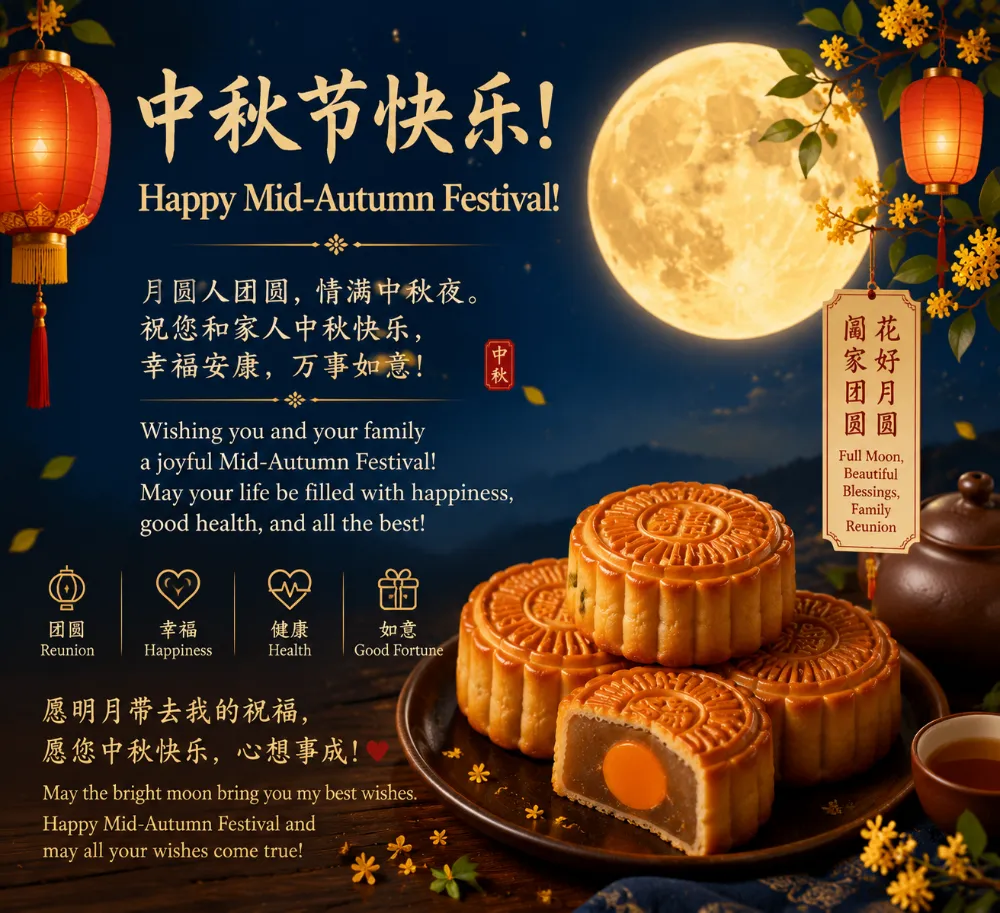
Every year around this time, I get the same message from a friend who’s dating someone Chinese for the first time: “Her family invited me for Mid-Autumn Festival dinner. What do I even say?” It’s a fair question, and it comes up more than you’d think — not just for people dating into a Chinese family, but for coworkers with Chinese clients, teachers with students from Chinese-speaking households, and honestly, anyone who’s ever stared at a blank text box trying to figure out how to wish happy Mid-Autumn Festival to someone without sounding like they copy-pasted it from a search result (which, let’s be honest, a lot of greetings online clearly are).
This guide is meant to fix that. Below you’ll find ten greetings and messages you can actually use, ranging from simple and casual to more traditional lines borrowed from centuries-old Chinese poetry, along with guidance on which one fits which relationship, when to send it, and a few cultural landmines worth knowing about before you hit send. The Mid-Autumn Festival, sometimes called the Moon Festival or Mooncake Festival, falls on September 25 in 2026, and it’s the second most significant holiday in the Chinese calendar after Lunar New Year, so getting the greeting right actually matters more than most people assume going in.
What surprised me most when I first started paying attention to this stuff wasn’t the vocabulary — it was how much the “right” greeting depends on context that has nothing to do with language ability. A perfectly fluent Mandarin speaker can still send an awkward greeting if they use a phrase meant for elders when texting a peer, or skip the personal touch a family member expects. So this isn’t just a phrasebook. It’s meant to help you actually pick the right message for the right person, and understand why it works, rather than just handing you a list to copy blindly.
Quick Navigation
- What Is the Mid-Autumn Festival, and Why Do Greetings Matter?
- How to Wish Happy Mid-Autumn Festival the Right Way
- 10 Mid-Autumn Festival Greetings & Messages
- How to Personalize Your Greeting
- The Legend Behind the Moon
- Greetings in Cantonese, Vietnamese, Korean, and Japanese
- Longer Card and Gift Messages
- Greetings for a Few More Relationships
- Mooncake Gifting Etiquette
- Social Media Captions
- How Digital Habits Have Changed Mid-Autumn Greetings
- Do’s and Don’ts
- Frequently Asked Questions
What Is the Mid-Autumn Festival, and Why Do Greetings Matter?
Before getting into specific wording, a bit of background makes every greeting choice later in this guide easier to understand.
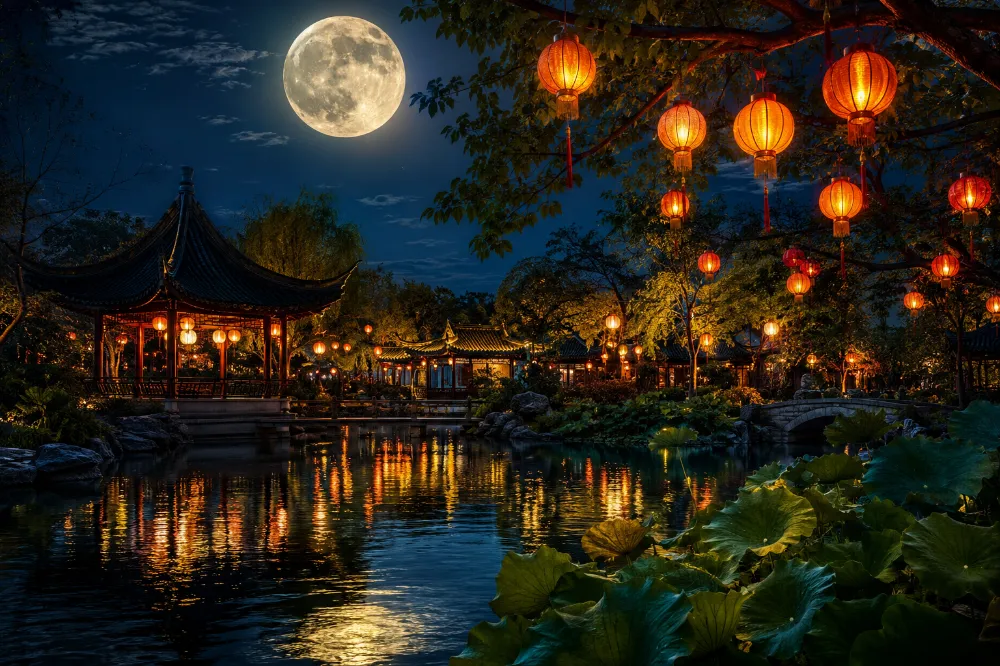
The Mid-Autumn Festival (中秋节, Zhōngqiū Jié) falls on the 15th day of the eighth month of the Chinese lunar calendar, when the moon is traditionally at its fullest and brightest of the year. It’s a harvest festival with roots going back roughly 3,000 years, and at its core, it’s about family reunion — the roundness of the full moon is meant to mirror the wholeness of a family gathered together. People eat mooncakes, light lanterns, and, in many households, spend the evening outside looking at the moon. The holiday centers on the legend of Chang’e, the moon goddess in Chinese mythology, which we’ll come back to a bit later in this guide.
Here’s why greetings carry more weight than they might at first glance: in a culture where the holiday is fundamentally about reunion and togetherness, sending someone a thoughtful message when you can’t physically be there is a way of saying “you’re still part of my circle, even from a distance.” That’s especially true for family members living apart, friends who’ve moved abroad, or business relationships where a little warmth goes a long way. A generic “Happy Mid-Autumn Festival!” text isn’t wrong, exactly, but it also doesn’t carry the same weight as something that shows you understand what the day actually means.
It also helps to know that the holiday isn’t just about the moon itself, but what the moon represents. Because a full moon looks whole and unbroken, it’s become a natural symbol for a family being complete — everyone home, everyone together, nothing missing. That’s also why so many traditional greetings lean on imagery of reunion, roundness, and completeness rather than more generic “happy holidays” language. Once you understand that underlying symbolism, a lot of the classical phrases used in greetings (the ones covered later in this guide) start to make a lot more sense, since nearly all of them circle back to the same core idea: coming together, even when that’s not literally possible.
How to Wish Happy Mid-Autumn Festival the Right Way
Before jumping into the list of greetings, it helps to understand a few basics about how to wish happy Mid-Autumn Festival in a way that actually lands well, because tone and timing matter almost as much as the words themselves. This section covers the groundwork; if you’d rather skip straight to ready-to-use lines, the ten greetings further down are written so you can copy, adapt, and send them right away.
Who You’re Greeting Changes What You Say
Chinese greeting culture is fairly relationship-sensitive, more so than a lot of Western holiday greetings tend to be. A message to your grandmother, a message to your boss, and a message to your partner are not interchangeable, even if the underlying sentiment (family, reunion, good fortune) stays the same. Elders generally appreciate greetings that reference health, longevity, and family harmony. Business contacts respond better to shorter, more formal wishes focused on prosperity and continued partnership. Close friends and partners have the most room for playfulness, including jokes about mooncakes or the moon itself.
Timing: When to Send Your Greeting
Ideally, greetings go out on the day of the festival itself or the evening before, since the holiday is closely tied to the appearance of the full moon that night. Sending a message a week early can feel premature, and sending one a few days late can come across as an afterthought. If you’re mailing a physical card or a mooncake gift box, plan for it to arrive a few days ahead so the recipient has it in hand before or on the day itself.
Common Mistakes to Avoid
A few things trip people up. First, mixing up Mid-Autumn Festival with Lunar New Year — they’re different holidays with different customs, and confusing the two in a greeting is an easy way to signal you didn’t put much thought into it. Second, over-translating idioms literally; some of the classical Chinese phrases used in greetings (more on these below) lose their poetic weight when translated word-for-word, so it’s often better to include both the original and a natural English rendering rather than a stiff literal one. Third, forgetting that not every recipient wants a lengthy, flowery message — read the relationship and match the length and formality accordingly.
A less obvious mistake worth mentioning: assuming everyone in a Chinese or Chinese-diaspora family celebrates the holiday the same way. Some families treat it as a major event with a full reunion dinner and moon-viewing; others treat it more casually, closer to how many Western families treat a minor holiday. If you’re not sure how someone’s family observes the day, a flexible greeting that doesn’t assume a big celebration (“however you’re spending tonight, hope it’s a good one”) avoids any awkward mismatch between your message and their actual plans.
10 Mid-Autumn Festival Greetings & Messages You Can Use Right Now
Here are ten greetings covering a range of relationships and tones, from simple and universal to more traditional and poetic. Feel free to mix and match phrases from different entries — that’s genuinely how a lot of real greetings get written anyway.
1. The Simple, Universal Greeting
“Wishing you a Happy Mid-Autumn Festival, filled with joy, good health, and sweet mooncakes!”
This is the safest option when you’re not sure how formal to be, or when you’re sending a message to someone outside your close circle, like a neighbor, acquaintance, or someone you met once at a work event. It’s warm without being overly personal, and it references the mooncake tradition without needing further explanation.
2. The Classic Chinese Idiom: Flowers and the Full Moon
花好月圆人团圆 (Huā hǎo yuè yuán rén tuányuán) — “May the flowers bloom, the moon be full, and your family be reunited.”
This is one of the most commonly used traditional greetings, and it works well in a card or a message to family members, especially older relatives who will recognize and appreciate the phrase in its original form. If you’re not confident writing Chinese characters, it’s completely acceptable to send the English translation alone, or to pair it with the pinyin.
3. The Poetic Option: Su Shi’s Famous Line
但愿人长久,千里共婵娟 (Dàn yuàn rén chángjiǔ, qiānlǐ gòng chányuān) — “May we all be blessed with longevity, though miles apart, we can still share the beauty of the moon together.”
This line comes from a poem written by the Song dynasty poet Su Shi over 900 years ago, and it’s arguably the most quoted piece of Mid-Autumn poetry in Chinese culture. It’s a good choice for anyone separated by distance — a family member overseas, a friend who moved cities, or a long-distance partner. Because it’s genuinely a well-known literary reference, using it (correctly) signals real cultural understanding rather than a copy-pasted platitude.
4. For Parents and Elders
“Happy Mid-Autumn Festival! Wishing you good health, a long life, and a table full of family around you tonight. I’m thinking of you even though I can’t be there this year.”
Greetings to parents and grandparents typically emphasize health and longevity over anything playful. If you genuinely can’t be present for the family dinner, saying so directly (rather than pretending distance doesn’t matter) tends to be appreciated more than a generic wish.
5. For a Romantic Partner
“Under the same full moon tonight, I’m wishing you all the sweetness of the season — and saving you the best mooncake. Happy Mid-Autumn Festival, my love.”
Mid-Autumn Festival carries a slightly romantic undertone in some contexts, partly because the Chang’e legend is fundamentally a love story about a couple separated by fate. A message to a partner can lean into that imagery a bit more than a message to, say, a colleague.
6. For Close Friends (Casual Tone)
“Happy Moon Cake Day! Hope your night is full of good food, better company, and zero awkward relatives asking about your love life. 🥮🌕”
Between close friends, there’s a lot more room for humor. A lot of younger Chinese speakers use “Moon Cake Day” casually in English conversation, and a lighthearted message like this reads as friendly rather than dismissive of the holiday’s meaning, as long as the relationship supports that tone.
7. For Colleagues and Business Contacts
“Wishing you and your team a Happy Mid-Autumn Festival. May the season bring you continued success, good fortune, and time to enjoy with your loved ones.”
Business greetings tend to stay a notch more formal, focusing on prosperity and partnership rather than personal or family themes. This version works well in an email signature line, a company newsletter, or a short note attached to a corporate mooncake gift box — a very common practice in Chinese business culture during this season.
8. For Children
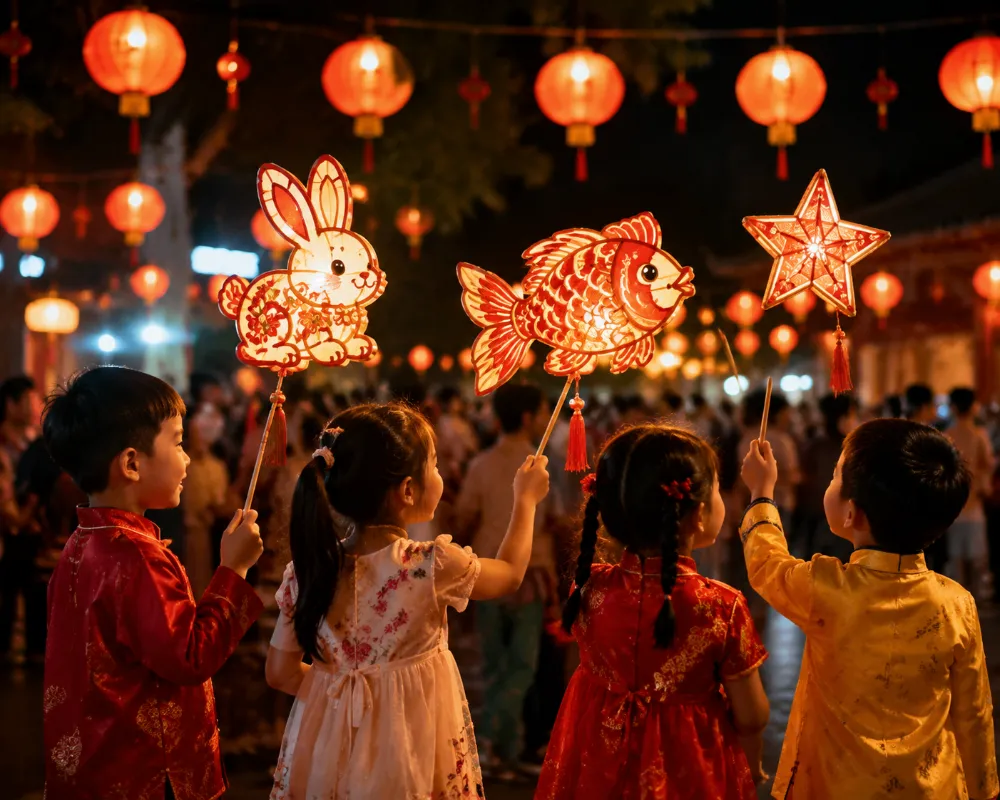
“Happy Mid-Autumn Festival! I hope you get to eat lots of mooncakes, see a big bright moon, and maybe even hear the story of the Moon Lady tonight!”
A greeting aimed at kids works well when it references the Chang’e legend (sometimes softened into “the Moon Lady” or “the Moon Fairy” in children’s storytelling) and keeps the tone playful rather than formal.
9. The Short Text or Chat Message
“Happy Mid-Autumn Festival 🌕🥮 hope your night’s a good one!”
Not every greeting needs to be a paragraph. For quick messages over text, WeChat, or WhatsApp, something short with a couple of relevant emoji (the moon and a mooncake are the most recognizable) covers the basics without feeling like a formal card.
10. The Gift Tag or Mooncake Box Message
“A small box of mooncakes, a big wish for your happiness — Happy Mid-Autumn Festival!”
If you’re attaching a note to a physical mooncake gift, keep it short enough to fit on a tag or small card. This one works because it directly references the gift itself rather than reading like a generic holiday line that could apply to any occasion.
How to Personalize Your Mid-Autumn Festival Greeting
Any of the ten greetings above work fine as-is, but a few small additions can make a message feel less like a template and more like something written specifically for the person receiving it.
Reference something specific. Mention a memory from a past Mid-Autumn Festival you shared, a specific mooncake flavor the person loves, or an inside joke about the holiday. Even one added sentence changes the tone from generic to personal.
Acknowledge distance if it applies. If you’re sending the greeting because you can’t be physically present, saying so directly (rather than ignoring it) tends to land better. Something as simple as “wish I could be there for dinner tonight” adds real warmth.
Match the language to the relationship. Including a Chinese phrase or pinyin alongside the English translation shows extra effort, particularly for older relatives or in more formal business contexts, but isn’t necessary for casual messages between friends who primarily speak English together.
Add a small cultural detail. Mentioning the full moon, mooncakes, lanterns, or the idea of family reunion ties the greeting back to what the holiday is actually about, rather than reading as a generic “happy holidays” swapped in for the occasion.
Consider the format, not just the words. A handwritten card feels different from a text message, even with identical wording, and a voice message or short video clip can carry warmth that text alone sometimes can’t. For close family, especially elders who may not be as comfortable with text-based communication, a phone call or voice message alongside (or instead of) a written greeting is often the better choice.
Don’t be afraid of imperfection. If you’re not a native Chinese speaker attempting a phrase in Mandarin or Cantonese, a slightly imperfect pronunciation or tone in a voice message is almost always received warmly — the effort itself communicates something a perfectly worded English message can’t.
Mid-Autumn Festival Greetings in Other Languages
The Mid-Autumn Festival is celebrated well beyond Mandarin-speaking communities, and if you’re greeting someone from a different regional or linguistic background, a version in their own language (or dialect) tends to mean more than the English equivalent.
Cantonese
中秋節快樂 (Jūng-chāu jit faai lohk) — commonly used across Hong Kong, Macau, and Cantonese-speaking communities. The written characters are the same as Mandarin, so a text message works either way; the pronunciation is what differs.
Vietnamese
The Vietnamese equivalent of the holiday is called Tết Trung Thu, and a fitting greeting is “Chúc mừng Tết Trung Thu” — roughly, “Happy Mid-Autumn Festival.” In Vietnam, the holiday leans more heavily toward being a children’s festival, so greetings aimed at kids and family gatherings are especially common.
Korean
Korea celebrates a related but distinct harvest holiday called Chuseok, and the standard greeting is “추석 잘 보내세요” (Chuseok jal bonaeseyo), meaning “Have a good Chuseok.” Note that Chuseok customs differ somewhat from the Chinese Mid-Autumn Festival, even though both fall around the same lunar date, so it’s worth using the Chuseok-specific greeting rather than a direct Mid-Autumn Festival translation for Korean friends and colleagues.
Japanese
Japan’s version, Tsukimi (月見, meaning “moon-viewing”), is more understated than the Chinese celebration and doesn’t traditionally involve exchanging greetings the same way. If you want to acknowledge it anyway, “良いお月見を” (Yoi otsukimi wo), meaning “enjoy the moon-viewing,” is a reasonable and low-key option.
Longer Card and Gift Messages
If you’re writing something for a printed card, an email, or a longer message rather than a quick text, here are a few extended versions built around the same themes covered above.
For family: “As the moon grows full tonight, I find myself thinking of all the Mid-Autumn Festivals we’ve spent together, and missing the ones we haven’t. Wishing our whole family health, happiness, and the kind of togetherness this season is all about — even from a distance. Happy Mid-Autumn Festival, and save me a piece of mooncake for next time.”
For a close friend abroad: “It’s Mid-Autumn Festival again, which means it’s officially time to eat too many mooncakes and pretend I don’t miss you constantly. Hope your moon looks just as bright wherever you are tonight. Happy Mid-Autumn Festival, friend — talk soon.”
For a business partner: “On behalf of our entire team, we’d like to wish you a warm and prosperous Mid-Autumn Festival. We’re grateful for the partnership we’ve built this year and look forward to continued success together. May this season of reunion bring you joy, good health, and time with the people who matter most.”
For a teacher or mentor: “Happy Mid-Autumn Festival! Thank you for everything you’ve taught me this year. I hope your celebration is filled with good food, good company, and a beautifully full moon.”
Mooncake Gifting Etiquette: Pairing the Gift With the Greeting
Since so many Mid-Autumn greetings are delivered alongside an actual mooncake gift, it’s worth spending a little time on the gift-giving side of things, because getting this part wrong can undercut even a well-written message.
In Chinese business culture especially, exchanging mooncake gift boxes during this season is extremely common, roughly comparable to how Western offices might exchange small gifts around the December holidays. If you’re sending a mooncake box to a business contact, the accompanying note should stay on the more formal end of the spectrum — think closer to greeting #7 above than #6. It’s also worth noting that mooncake gifting has, over the years, occasionally drawn scrutiny in mainland China for being used as a vehicle for excessive corporate gifting, so simpler, more modest gestures paired with a sincere note are generally viewed more favorably than anything that looks overly extravagant.
For family and close friends, the etiquette is more relaxed, but a few habits are worth knowing. Mooncakes are traditionally cut into small wedges and shared among everyone present, rather than each person eating a whole one individually, so a gift box is meant to be a shared experience rather than a personal treat. If you’re gifting mooncakes to someone you won’t see in person, including a written note is considered more meaningful than sending the box with no message at all — the note is, in a real sense, doing the job that the shared-eating tradition would normally do.
One more practical note: mooncakes are rich, calorie-dense, and not to everyone’s taste (the traditional salted egg yolk and lotus paste combination, in particular, can be an acquired taste for newcomers). If you’re gifting mooncakes to someone unfamiliar with them, a short line explaining the tradition alongside your greeting — something like “these are mooncakes, the traditional treat for this holiday, best enjoyed with tea” — adds context that turns a potentially confusing gift into a small cultural introduction.
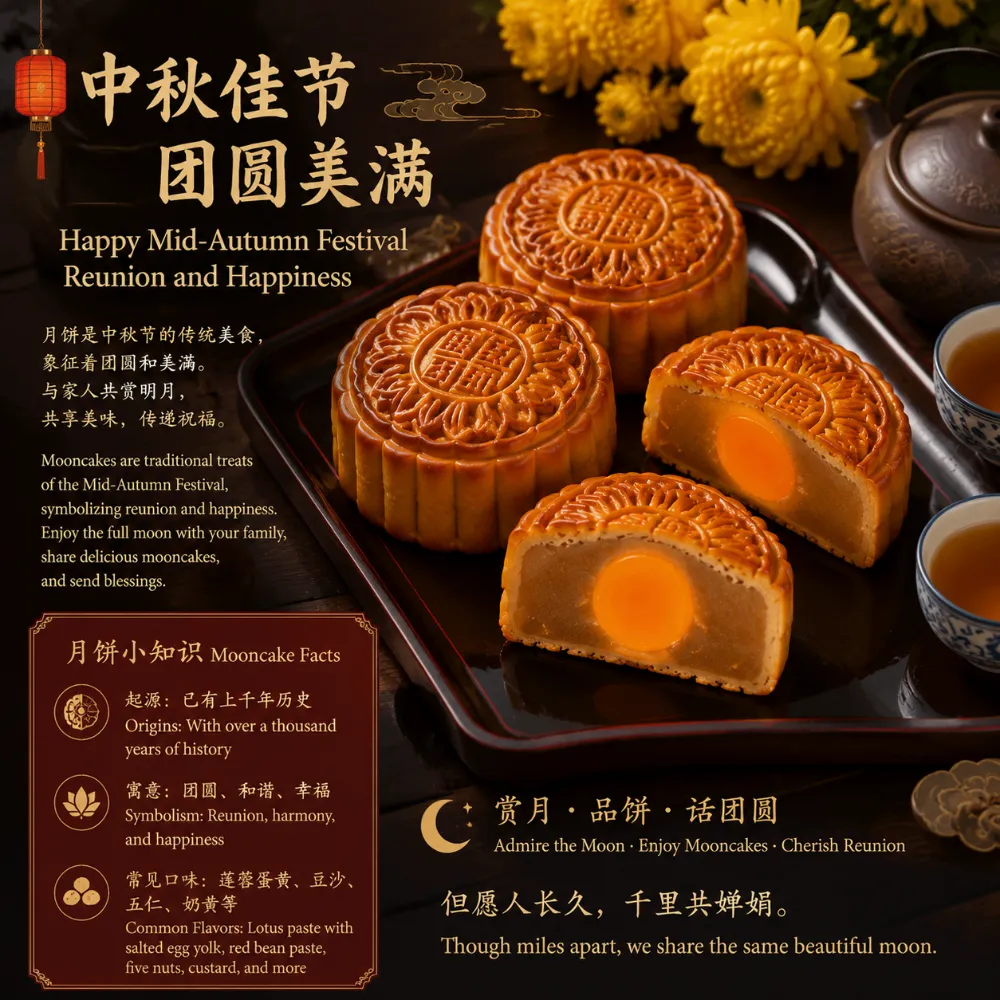
It’s also worth knowing that mooncake flavors vary quite a bit by region, and mentioning a specific variety in your greeting can add a nice personal touch if you know the recipient’s preference. Cantonese-style mooncakes tend to favor lotus seed paste with salted egg yolks, Suzhou-style versions lean flaky and savory, and in recent years, more modern flavors like matcha, chocolate, or ice cream mooncakes have become popular gifts, especially among younger recipients. A note that says “picked you the durian one since I know you’re the only person I know who actually likes it” does far more for a greeting than any generic phrase ever could.
Short Captions for Social Media Posts
If you’re posting a Mid-Autumn Festival photo — a family dinner, a mooncake spread, or just a good shot of the full moon — a caption doesn’t need to be long. Here are a few options depending on the tone you’re going for.
- Simple and warm: “Happy Mid-Autumn Festival to everyone celebrating tonight 🌕🥮”
- Slightly poetic: “Same moon, different cities. Missing everyone tonight. 🌕”
- Food-focused: “Mooncake count so far: too many. Zero regrets. Happy Mid-Autumn Festival!”
- Family-oriented: “Grateful for another year of gathering under this moon with the people I love most.”
A quick tip for hashtags, if your platform of choice supports them: #MidAutumnFestival, #MooncakeFestival, and #MoonFestival are the most widely searched and used, and sticking to one or two rather than stacking five or six tends to read as more genuine and less like a marketing post. If you’re posting publicly rather than to close friends, keeping the caption short also tends to perform better, since longer captions on public posts are more often skipped over than read in full, especially on platforms where the photo itself is doing most of the work.
The Legend Behind the Moon: Why Chang’e Matters to Your Greeting
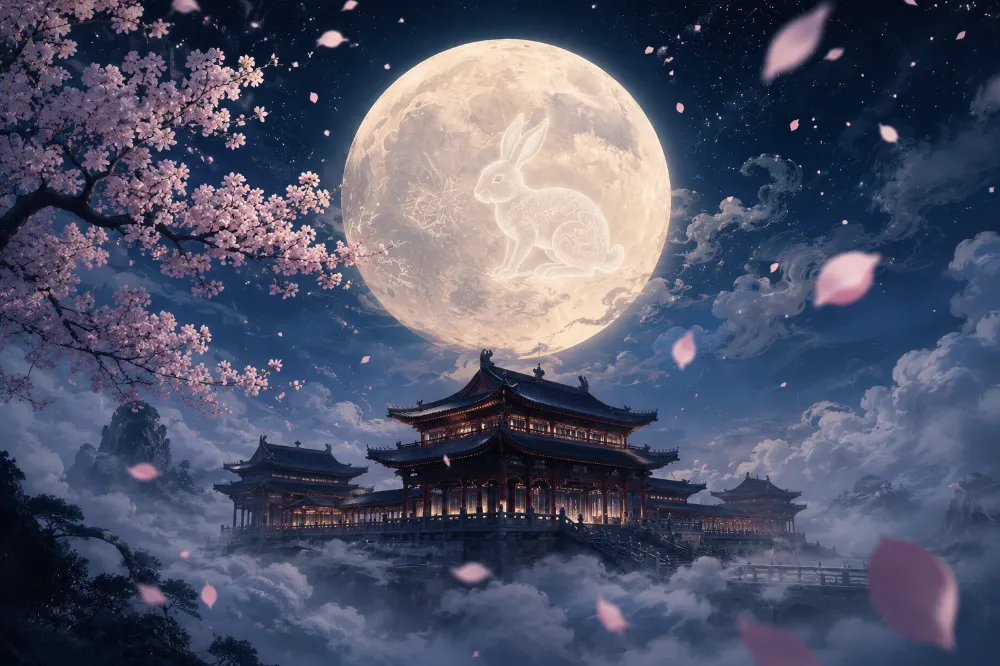
A lot of Mid-Autumn greetings — especially the more poetic ones — only make full sense once you know the story they’re quietly referencing. The most common version goes roughly like this: long ago, ten suns rose in the sky at once, scorching the earth. A skilled archer named Houyi shot down nine of them, saving humanity, and was rewarded with an elixir of immortality. Houyi didn’t want to become immortal and leave his wife, Chang’e, behind, so he kept the elixir hidden rather than drinking it. When a disciple tried to steal it from her, Chang’e swallowed the elixir herself to keep it out of the wrong hands, and floated up to the moon, where she has remained ever since, separated from her husband.
That story of separation, and of looking up at the same moon while apart, is exactly why Mid-Autumn greetings so often lean on themes of distance and longing, even when the actual message being sent is lighthearted. Su Shi’s poem, quoted earlier in this guide, is a direct response to that same emotional thread — the idea that even when people can’t physically be together, they can still share the same moon on the same night. Once you understand that, a phrase like “sharing the moon together though miles apart” stops sounding like a stock holiday phrase and starts reading as a genuine callback to one of the oldest and most recognizable stories in Chinese culture.
This is also why Mid-Autumn Festival greetings tend to resonate especially strongly with people who are living away from family — expats, international students, or anyone who moved cities or countries for work. The legend isn’t really about the moon itself; it’s about longing for someone you can’t currently be with, which is a feeling that translates across just about any culture, even for people who’ve never heard the Chang’e story before.
Greetings for a Few More Relationships
The ten greetings covered earlier handle the most common situations, but a few relationships come up often enough to be worth addressing separately.
For siblings: “Happy Mid-Autumn Festival! Wish we could split a mooncake in person this year, but I’ll settle for a video call and you telling me which flavor you got stuck eating.” Sibling greetings tend to work best with a bit of teasing built in, especially if that reflects your actual relationship.
For a landlord or neighbor: “Wishing you a peaceful and Happy Mid-Autumn Festival, and thank you for being such a great neighbor this year.” Keep this one brief and polite — it’s a nice gesture, not an invitation for a longer exchange.
For a teacher, outside of a formal note: “Happy Mid-Autumn Festival! Hope you get to enjoy the holiday and take a well-earned break.” Short, respectful, and appropriate even if you don’t know the teacher especially well personally.
For an online community or group chat: “Happy Mid-Autumn Festival to everyone here! However you’re celebrating tonight, hope it’s full of good food and good company.” Group greetings work best when they’re inclusive enough to apply to everyone in the chat, regardless of how each person personally observes the holiday.
Do’s and Don’ts When Sending Mid-Autumn Greetings
- Do tailor the tone to your relationship — formal for business, warm for family, playful for close friends.
- Do send your greeting on the day of the festival or the evening before, when possible.
- Do include a small personal detail if you have one — it goes a long way toward making the message feel genuine.
- Don’t confuse Mid-Autumn Festival with Lunar New Year in your wording; they’re separate holidays with different traditions.
- Don’t assume every recipient wants Chinese characters included — check whether it fits the relationship and the person’s own comfort with the language first.
- Don’t send a mooncake gift without a note; the note is often considered as meaningful as the gift itself in Chinese gifting culture.
- Don’t over-explain the holiday to someone who clearly already knows it well — a short, sincere message usually beats a long cultural lecture.
How Digital Habits Have Changed Mid-Autumn Greetings
It’s worth acknowledging that most Mid-Autumn greetings today aren’t handwritten cards — they’re texts, WeChat messages, or short voice notes, and the format has shaped the etiquette a little over the past decade or so.
On WeChat, it’s become fairly common to pair a written greeting with a small “red envelope” (hongbao) sent digitally, even though red envelopes are traditionally more associated with Lunar New Year. This isn’t a strict rule, but among younger family members and close friends, a small digital gift alongside a message is increasingly normal, especially for people who can’t be physically present for a shared meal. If you’re on WeChat with Chinese family or friends, sending a modest digital red envelope with your greeting is a nice, low-pressure way to participate in the gift-giving side of the holiday even from a distance, though it’s worth checking with someone familiar with the specific family’s customs before assuming this is expected.
Group chats have also changed how greetings circulate. It’s common for one person to send a greeting to a family group chat rather than individually messaging each relative, and for others to respond with their own short wishes in the same thread. If you’re new to a family’s group chat, it’s usually safe to follow the tone already being used by others rather than sending something dramatically more formal or more casual than what’s already there.
Video calls have also become a meaningful substitute for greetings when families are spread across different countries or time zones. A short video call on the day itself, even just for a few minutes to say the greeting out loud and see each other’s faces, is often valued more than a longer written message sent asynchronously. If your schedule allows it, combining a written greeting with even a brief live moment — a call, a voice message, or a video clip — tends to be the most meaningful option of all, more than the specific wording of the greeting itself.
Frequently Asked Questions
What is the correct way to say “Happy Mid-Autumn Festival” in Chinese?
The standard Mandarin greeting is 中秋节快乐 (Zhōngqiū jié kuàilè), which translates literally to “Happy Mid-Autumn Festival.” It’s appropriate for both spoken and written greetings across nearly any relationship or context.
When is the Mid-Autumn Festival in 2026?
The Mid-Autumn Festival falls on Friday, September 25, 2026, corresponding to the 15th day of the eighth month of the Chinese lunar calendar.
Is it okay to send a Mid-Autumn Festival greeting to someone who isn’t Chinese?
Yes, as long as it’s done respectfully and with genuine interest rather than as a token gesture. Many people from Vietnamese, Korean, and other East and Southeast Asian backgrounds celebrate related harvest festivals, and a thoughtful greeting is generally well received across cultures that mark the occasion.
Should I give a gift along with my greeting?
It’s common, though not required. Mooncakes are the traditional gift, and giving a box to family, close friends, or business contacts alongside a written greeting is a widely practiced custom, especially in professional settings.
What’s the difference between Mid-Autumn Festival and Lunar New Year greetings?
Mid-Autumn Festival greetings focus on themes of reunion, the full moon, and gratitude for the harvest, while Lunar New Year greetings center on luck, prosperity, and a fresh start for the coming year. The vocabulary and traditional phrases used for each holiday are distinct, so it’s worth using the correct one.
How do I respond when someone wishes me Happy Mid-Autumn Festival?
A simple “Thank you, happy Mid-Autumn Festival to you too!” is always appropriate. If the greeting came from a family member or close friend, you can add a personal touch, like wishing them a good reunion dinner or mentioning the mooncakes you plan to eat.
Can I send the same Mid-Autumn greeting to multiple people?
You can, particularly for broader group messages like a company-wide email or a social media post, but for close family and friends, a message with even one personalized line tends to be noticeably more appreciated than an identical mass-sent greeting.
This guide draws on common greeting customs observed across Chinese, Vietnamese, Korean, and Japanese Mid-Autumn and harvest-moon celebrations, along with widely referenced classical Chinese poetry used in traditional greetings, including the Su Shi verse featured earlier in this article. Customs can vary meaningfully by region, generation, and individual family, so treat the categories here as a starting point rather than a strict rulebook — the person you’re greeting, and the relationship you actually have with them, should always take priority over any general guideline, and no single article, including this one, can fully substitute for knowing the specific people you’re writing to. When in doubt, a sincere and simple message, sent on time and with a little bit of thought behind it, will always be well received, no matter how many opinions exist online about how to wish happy Mid-Autumn Festival the “correct” way.