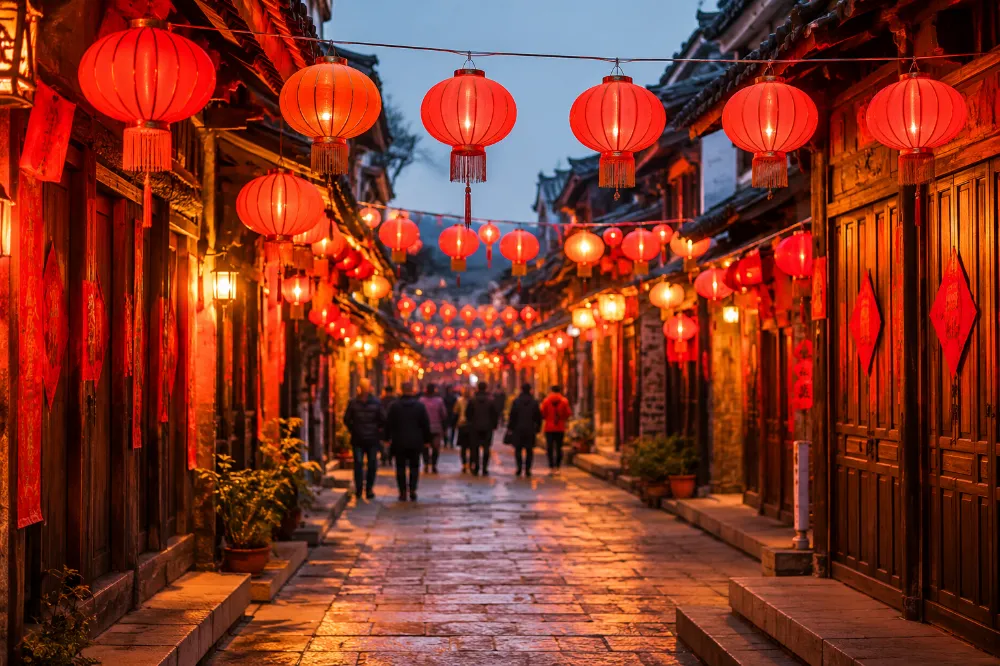
The traditions and customs of China don’t sit neatly in a museum. Walk through the old quarters of any Chinese city on the eve of the Lunar New Year, and you’ll encounter living versions of practices that date back thousands of years, red paper scrolls freshly pasted on doorways, incense burning before family altars, dumplings being folded by three generations of the same family in a single kitchen. China now holds more UNESCO-recognized intangible cultural heritage listings than any other country on earth, a figure that reached 45 items in late 2025 and reflects just how dense and varied the country’s living cultural traditions actually are.
Understanding these traditions matters whether you’re planning a trip to China, studying its history, or simply trying to make sense of why this particular civilization has maintained such remarkable cultural continuity across such extraordinary spans of time. This guide covers the most significant traditions and customs of China across five major categories, from festivals and family customs to food, arts, and daily ritual.
Spring Festival and the Lunar Calendar: The Beating Heart of Chinese Tradition
No single tradition captures the full weight of Chinese cultural life quite like Spring Festival, also called the Lunar New Year or Chinese New Year. It was added to UNESCO’s Representative List of Intangible Cultural Heritage of Humanity in December 2024, a recognition the committee grounded in the festival’s breadth of rituals and the way it genuinely engages all of Chinese society rather than a single region or community. The United Nations General Assembly had already designated Spring Festival as an official UN holiday the previous year, marking its gradual recognition as something that belongs to global rather than only Chinese cultural heritage.
The festival runs for fifteen days beginning on the first day of the first lunar month, but the preparations start well before that. In the weeks leading up to New Year’s Eve, families undertake a thorough cleaning of the house, a practice meant to sweep out the old year and make room for fresh luck. Red paper scrolls printed with auspicious phrases get pasted on doorframes, the color red being historically associated with the warding off of a mythical beast called Nian, which was said to terrorize villages at the turn of the year but feared loud noise, bright lights, and red. Fireworks and firecrackers, still set off in communities across China where local regulations permit them, trace their origins directly back to this mythology.
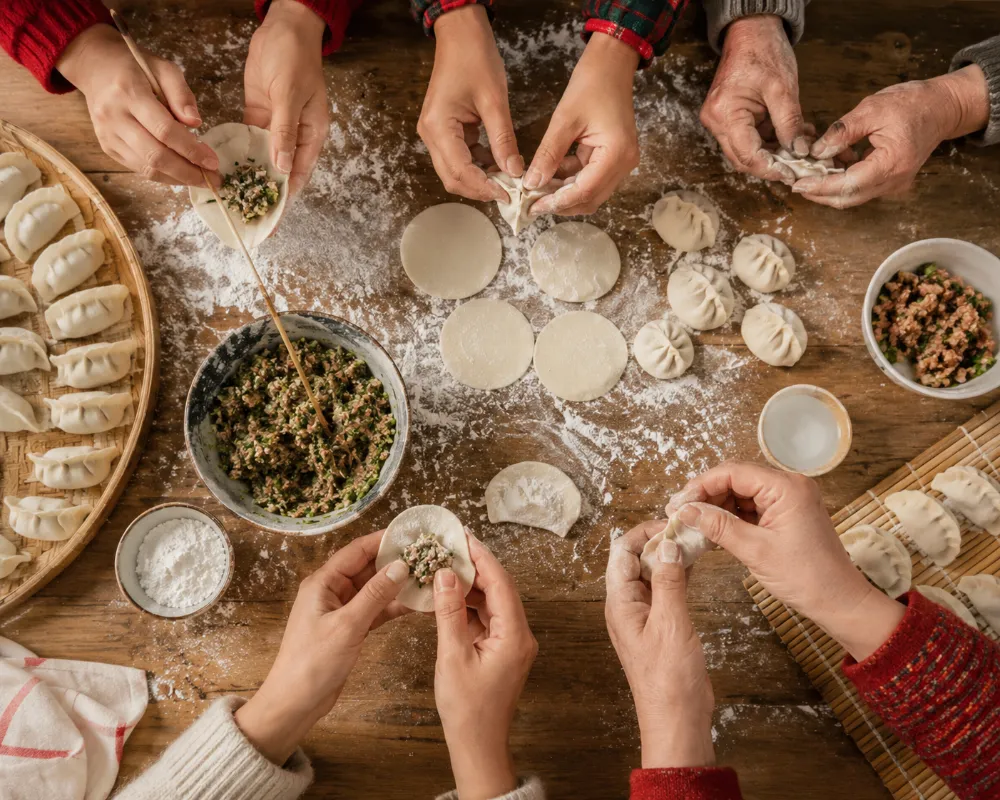
New Year’s Eve dinner is the single most important meal in the Chinese culinary calendar. Families come together for a feast that typically includes dishes chosen for their symbolic associations: fish for abundance (the Mandarin word for fish, yu, sounds like the word for surplus), dumplings shaped to resemble ancient gold ingots, spring rolls for prosperity, and rice cakes that suggest growth and improvement year over year. Which specific dishes appear on the table varies enormously by region, a reflection of the fact that China’s culinary traditions are themselves deeply regional rather than uniform. In northern China, dumplings dominate. In Guangdong, turnip cake and sticky rice dishes take center stage. In Sichuan, the selection shifts again toward the region’s characteristic flavors.
The fifteen days of the festival each carry their own customs. The second day is traditionally associated with welcoming the God of Wealth. The seventh is considered everyone’s birthday, marking the day the Goddess Nüwa is said to have created humanity from yellow earth. The fifteenth and final day, the Lantern Festival, closes the celebrations with a public display of lanterns and, in recent years, elaborate lantern shows that have developed into major tourist spectacles in their own right. Throughout the entire period, red envelopes containing cash gifts, a custom known as hongbao, pass from older generations to younger ones, a tangible expression of the wish for good fortune in the year ahead.
Other Major Festivals Worth Understanding
Chinese cultural life runs on a lunar calendar that generates a dense schedule of observances across the year, each carrying its own symbolic freight, food traditions, and historical backstory.
Dragon Boat Festival
The Dragon Boat Festival, celebrated on the fifth day of the fifth lunar month, is strongly associated with Qu Yuan, a poet and statesman of the ancient Chu state who drowned himself in the Miluo River in 278 BCE after his kingdom fell to enemy forces. According to tradition, local people raced out in boats to recover his body and threw rice dumplings into the river to prevent fish from consuming him. Both customs survive: dragon boat racing, with long boats crewed by teams of paddlers and steered by a drummer at the bow, has become an international competitive sport, while zongzi, sticky rice stuffed with various fillings and wrapped in bamboo or reed leaves, remains the festival’s signature food. Dragon Boat Festival was added to UNESCO’s intangible heritage list in 2009.
Mid-Autumn Festival
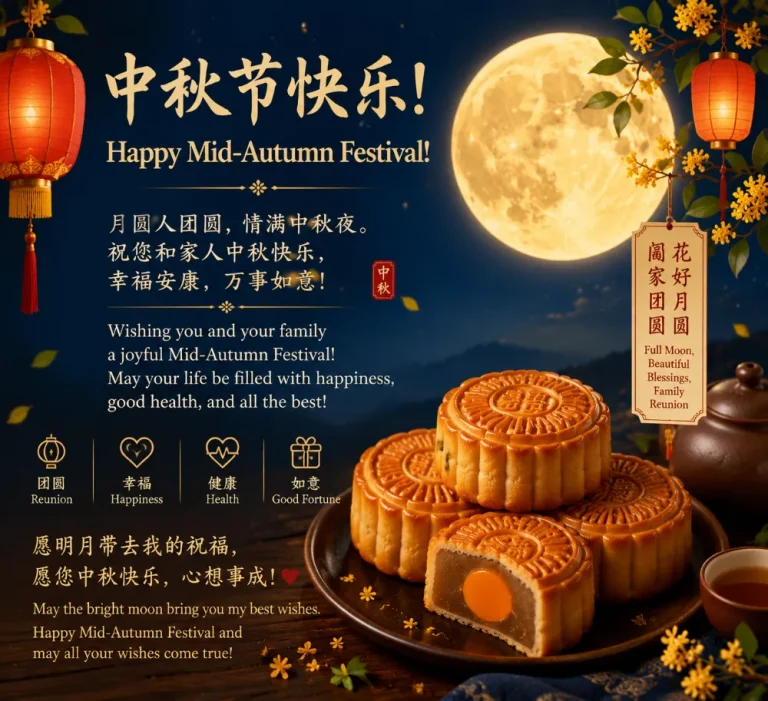
The Mid-Autumn Festival falls on the fifteenth day of the eighth lunar month, when the moon is at its fullest and brightest. The central custom is gathering with family to admire the full moon, an act loaded with symbolism around reunion and completeness given that the Chinese word for moon, yuè, carries associations with both cyclical renewal and the passing of time. Mooncakes, dense pastries filled with lotus seed paste, salted egg yolk, red bean, or increasingly creative modern fillings, are the festival’s signature food and also its most commercially significant product, with enormous quantities given as gifts in the weeks leading up to the festival. The legend most closely associated with Mid-Autumn tells the story of Chang’e, a moon goddess who drank an immortality elixir and floated to the moon, where she lives now with only a jade rabbit for company.
Qingming Festival and the Practice of Ancestor Veneration
Qingming, which falls in early April, is one of the most important dates in the Chinese cultural calendar even though it isn’t particularly festive in the conventional sense. It’s primarily a day for visiting ancestors’ graves, tidying the burial sites, burning paper offerings, and making food offerings as expressions of continued filial respect for those who have died. The practice of ancestor veneration that gives Qingming its significance isn’t limited to this single festival. It runs through Chinese cultural life year-round as one of the most fundamental expressions of Confucian values around family and continuity. Before the festival developed into the formal grave-sweeping observance it is today, it was also associated with the beginning of spring planting and with outdoor activities to welcome the warmer season.
Confucian Values as the Foundation of Social Custom
Beneath the surface of most Chinese social customs lies the infrastructure of Confucian thought, a body of philosophy that has shaped everyday behavior, family structure, and social hierarchy in China for more than two thousand years. Understanding a few core Confucian concepts goes a long way toward making sense of customs that might otherwise seem opaque.
Filial piety, known in Chinese as xiào, is the cornerstone. It encompasses the respect and care that children owe to parents and elders, a duty that doesn’t end with the parents’ death but extends through ancestor veneration into a relationship with the deceased. In practical daily life, filial piety shows up in customs around seating arrangements at meals (elders are seated in positions of honor and served first), forms of address (Chinese has an elaborate system of kinship terms that distinguish, for example, between maternal and paternal aunts, or between older and younger siblings, rather than using a single generic term), and the expectation that adult children will be available to care for aging parents rather than delegating that responsibility outside the family.
The concept of face, called miànzi, is another deeply embedded social operating principle. Maintaining one’s own face, and protecting the face of others, shapes countless small interactions in Chinese social life: why disagreements are rarely expressed as direct confrontation, why praise tends to be delivered indirectly rather than in blunt superlatives, why a Chinese host will press food on guests repeatedly even after they’ve declined, and why gifting etiquette involves a performance of reluctance before acceptance rather than an immediate and enthusiastic yes. A guest who openly refuses a dish at a Chinese dinner table risks making the host lose face, which is why gracious participation, at least in the form of tasting, carries more social weight than personal preference.
Guanxi, the web of personal relationships and reciprocal obligations that determines how much trust and assistance flows between people, is the third pillar. It functions somewhat like a social credit system built on real personal connections rather than formal credentials, and it shapes how business deals get done, how favors are asked and returned, and why being introduced through a mutual connection carries so much more weight in Chinese social culture than a cold approach.
Chinese Food Culture as Living Tradition
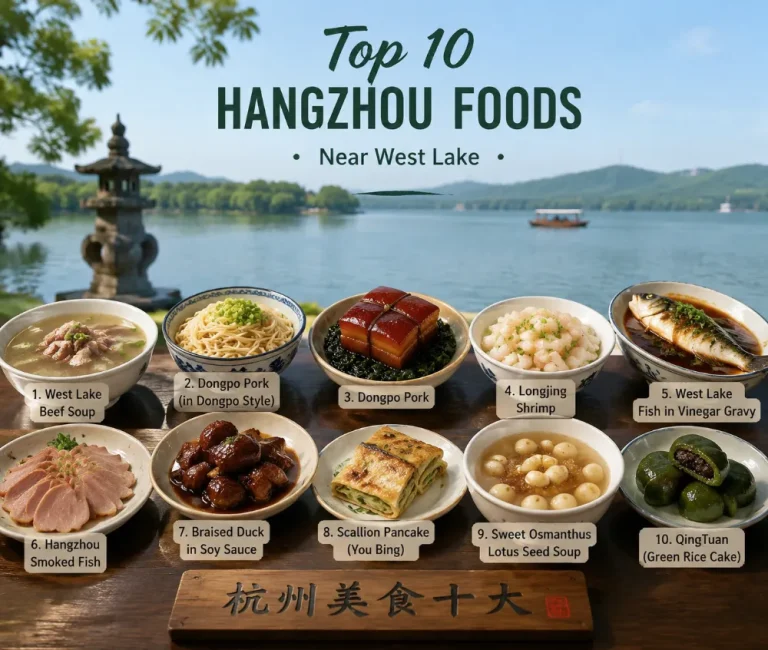
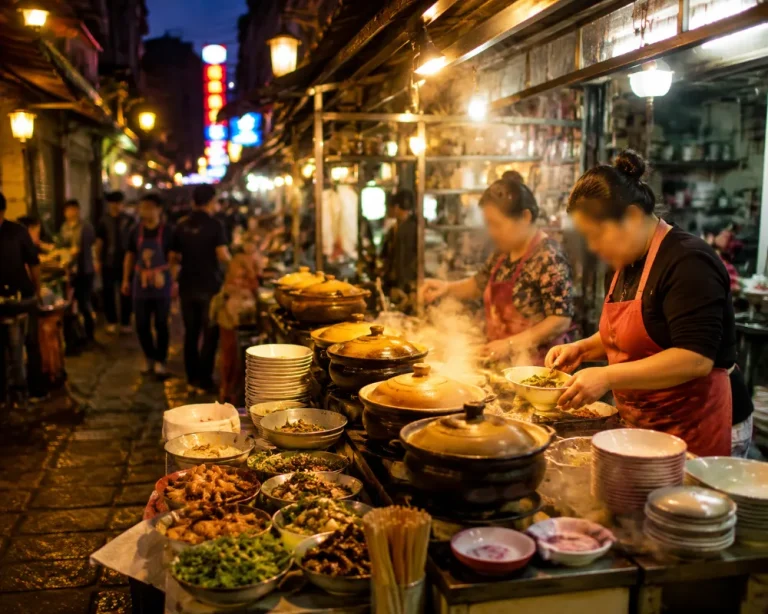
Food in China isn’t simply sustenance. It’s one of the most important expressions of cultural identity, regional distinctiveness, family love, and social connection that exists in Chinese life. UNESCO is expected to formally recognize Chinese cuisine as intangible cultural heritage, with the listing covering the knowledge and practices of the Chinese people regarding the preparation and enjoyment of food already in progress for 2026, an acknowledgment of how deeply and distinctively food tradition runs through Chinese culture.
The concept of the “Eight Great Cuisines” provides a rough map of China’s regional culinary diversity, though it’s worth knowing that even within each regional tradition, enormous variation exists between cities, towns, and individual families. Sichuan cuisine is internationally recognized for its use of the Sichuan peppercorn, which creates a distinctive numbing sensation on the tongue called mála, combined with dried chilies that add heat. Cantonese cuisine, originating in Guangdong province, emphasizes fresh ingredients and delicate preparation, with dim sum, the tradition of small dishes served during tea service, being perhaps its most globally recognized format. Shandong cuisine, considered one of the oldest of the eight traditions, influenced the development of Mandarin cooking and imperial court food through proximity to the historical capital regions. Hunan cuisine shares Sichuan’s love of heat but without the numbing component of Sichuan pepper, producing a different and arguably more directly hot flavor profile.
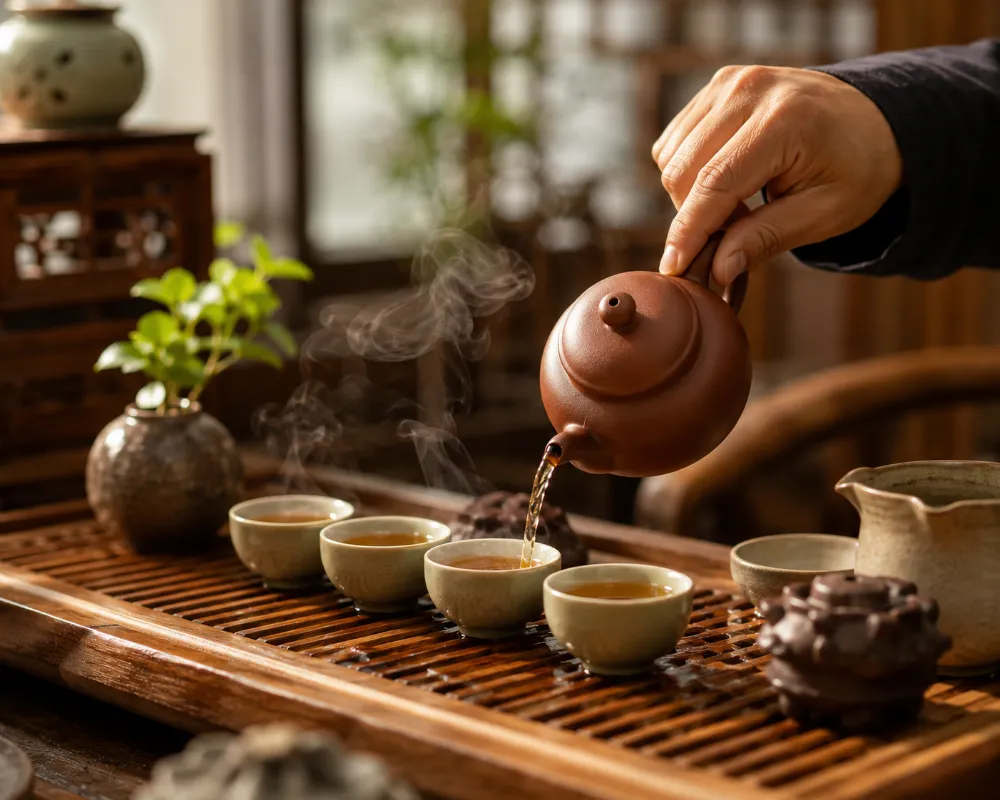
Tea culture deserves its own mention. China is the historical birthplace of tea cultivation and tea drinking, and the traditions built around it are substantial. UNESCO added traditional tea processing techniques and associated social practices to the intangible heritage list in 2022, recognizing the depth of knowledge involved in cultivating, processing, and preparing tea across China’s various tea-producing regions. A formal tea ceremony, known as Gongfu Cha, which translates roughly as “skillful tea,” originated in Fujian and Guangdong and involves an elaborate sequence of precise steps for brewing tea in small clay teapots and drinking from small cups that emphasize aroma and taste above convenience. While most Chinese people drink tea informally and continuously throughout the day, the ceremonial form represents a tradition of mindful engagement with the same plant, an aesthetic practice as much as a caffeinated habit.
Traditional Chinese Arts and Craftsmanship
China’s artistic traditions run extraordinarily deep, spanning a dozen craft forms that each carry their own history, technique, and symbolic vocabulary.
Calligraphy
Chinese calligraphy, the art of writing Chinese characters with brush and ink, is considered one of the highest art forms in Chinese aesthetic tradition, more so than painting in many historical assessments. The same Chinese character can be written in several distinct script styles, each with its own historical development and aesthetic character, from the formal regularity of standard script to the flowing connections of running script and the dramatic gestural qualities of cursive script. Learning calligraphy isn’t purely an art practice in China, it’s also widely understood as a form of mindfulness, a practice that demands focused attention and teaches the relationship between inner composure and outer expression. Many Chinese schools still include calligraphy as part of the curriculum, though the spread of keyboards and smartphones has reduced everyday exposure to handwriting in ways that mirror what’s happened in other parts of the world.
Traditional Opera
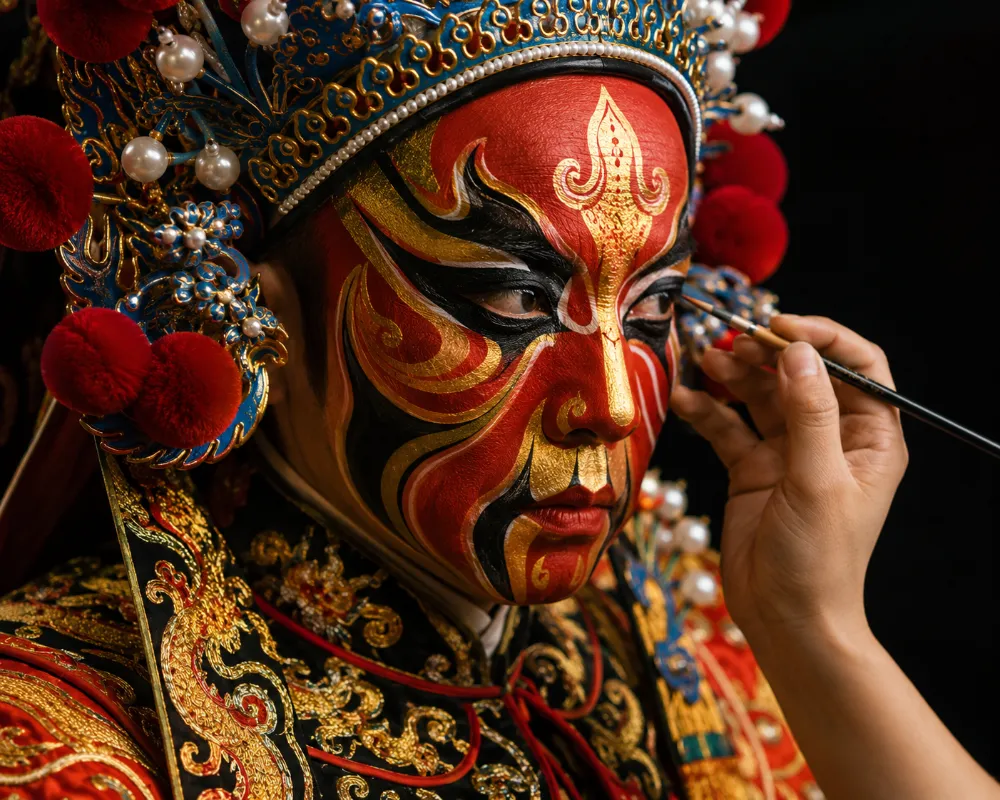
Chinese opera encompasses several hundred distinct regional forms, each with its own musical style, performance conventions, makeup traditions, and repertoire. Beijing Opera, known as Jīngjù, is the most widely recognized internationally, with its highly stylized combination of singing, speech, mime, acrobatics, and combat performed in elaborate costumes and painted face makeup. The face paintings themselves constitute a symbolic vocabulary: red typically signals loyalty and courage, white often represents treachery or cunning, and black can indicate a straightforward, rough-tempered character. Kunqu Opera, recognized by UNESCO as one of the earliest forms of traditional Chinese opera dating back to the Ming dynasty, uses a more lyrical musical form and is considered one of the most refined expressions of classical Chinese aesthetic values. UNESCO added Kunqu to its heritage lists in 2001, making it one of China’s first recognized intangible cultural heritage items globally.
Traditional Crafts and Silk
China’s history with silk stretches back to antiquity, and the craft of silk production, including sericulture (the cultivation of silkworms), weaving, and embroidery, is itself UNESCO-listed. Nanjing Yunjin brocade, one of the most technically demanding forms of Chinese silk weaving, requires a special large loom operated by two weavers working in precise coordination, and a single centimeter of fabric can take a full day to complete. Regional embroidery traditions, including the famous styles associated with Suzhou, Guangdong, Hunan, and Sichuan, each developed distinct color palettes, stitch patterns, and subject matter over centuries. Paper cutting, another UNESCO-listed craft, involves cutting intricate designs from red or colored paper that are then used as window decorations, gifts, and festival adornments.
Traditional Medicine and Wellness Practices
Traditional Chinese medicine represents one of the world’s oldest and most internally coherent systems of medical thought, built around concepts like qi (vital energy), the balance of yin and yang, and the relationship between the body and natural cycles. Acupuncture and moxibustion, among the best-known practices within this system internationally, are UNESCO-listed. The system encompasses herbal medicine, dietary therapy, physical exercises like tai chi and qigong, and diagnostic practices including pulse reading and tongue examination, each understood as different tools for restoring and maintaining the body’s internal balance rather than treating isolated symptoms.
Tai chi, in particular, has traveled far beyond its Chinese origins to become a globally practiced movement form, but understanding it as a cultural tradition rather than just a fitness practice helps explain the philosophical layer underneath the physical movements. Tai chi, or Taijiquan in full, is rooted in Taoist concepts of yielding rather than forcing, flowing rather than resisting, qualities that extend beyond the physical practice into a broader orientation toward navigating life. It was added to UNESCO’s intangible heritage list in 2020, recognizing both its cultural significance and the breadth of its global practice.
Gift Giving, Hospitality, and Everyday Social Customs
Chinese hospitality customs can catch first-time visitors off guard precisely because the underlying logic differs from what many Westerners expect. When a Chinese host insists on ordering far more food than anyone could possibly eat, refuses to let guests pay despite a show of fighting over the bill, and adds more food to your plate before you’ve finished what’s already there, none of this is inefficiency or stubbornness. It’s a performance of generosity and care that follows specific social scripts, and understanding those scripts changes the experience considerably.
Gift giving follows its own set of rules that are worth knowing in advance of any significant social visit. Even numbers are generally preferred over odd ones for gifts, with the exception of four, which is considered unlucky because its pronunciation sounds similar to the word for death in both Mandarin and Cantonese. Clocks are avoided as gifts because the phrase “giving a clock” sounds like “attending someone’s funeral” in Mandarin. Shoes suggest you want the recipient to walk away from you. Gifts are typically not opened immediately in front of the giver in many Chinese social contexts, a contrast with Western gift-opening conventions that can occasionally cause confusion, though this norm varies considerably by region, generation, and the specific social context.
The color red shows up throughout Chinese social life as a symbol of good luck and celebration, which is why it dominates wedding decorations, New Year gifts, and most festive contexts. White is the traditional color of mourning and is generally avoided in celebratory contexts, while gold carries associations with wealth and prosperity that make it another staple of festive decoration and gift packaging.
Traditional Architecture and Feng Shui
Chinese traditional architecture isn’t simply a building style: it’s an expression of cosmological beliefs about the relationship between built spaces and natural forces, refined over centuries into a set of design principles that shaped everything from village layouts to imperial palace complexes. The traditional Chinese courtyard house, known as siheyuan, organizes living space around a central open courtyard, with the principal hall placed to face south in order to maximize winter sunlight and minimize harsh northern wind, a logic that simultaneously reflects practical climate adaptation and symbolic orientation toward warmth and brightness.
Feng shui, the practice of arranging built environments in ways that harmonize with the flow of natural energy, grew from these same design intuitions into a systematic body of practice that continues to influence architecture and interior design decisions in China and in many Chinese communities worldwide. At its most basic level, feng shui thinking shapes everything from which direction a front door faces to how furniture should be positioned in a room, with the goal of creating spaces where energy flows freely and accumulates positively rather than stagnating or draining away.
The Hanfu Revival: Tradition Becoming Contemporary
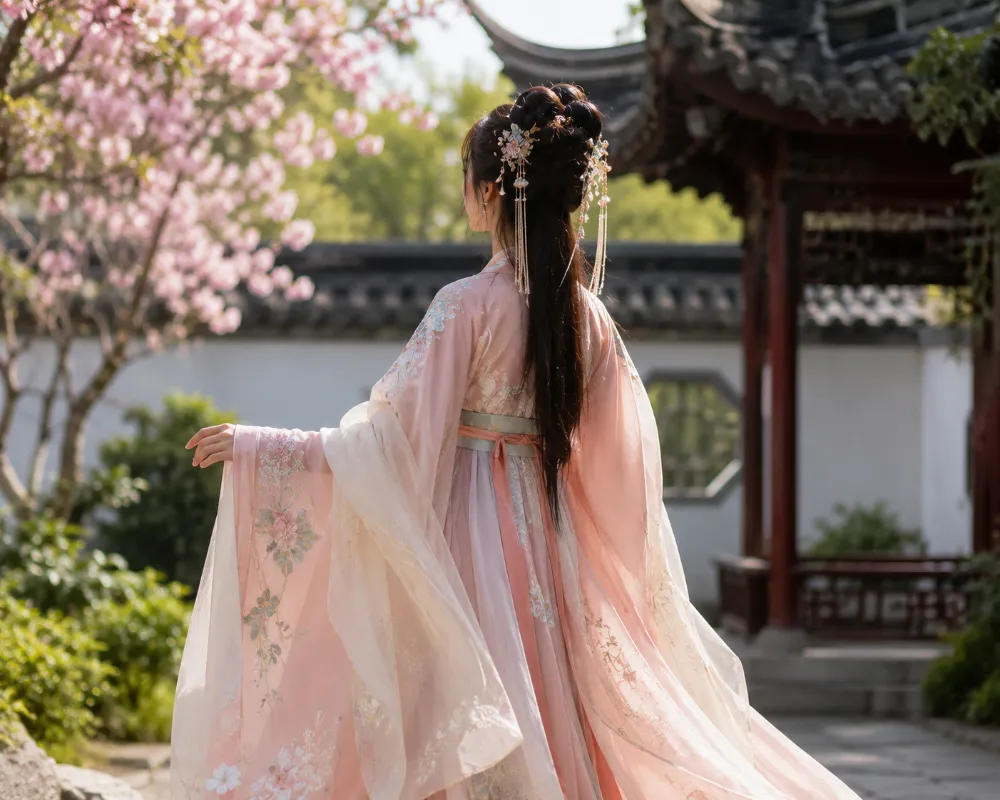
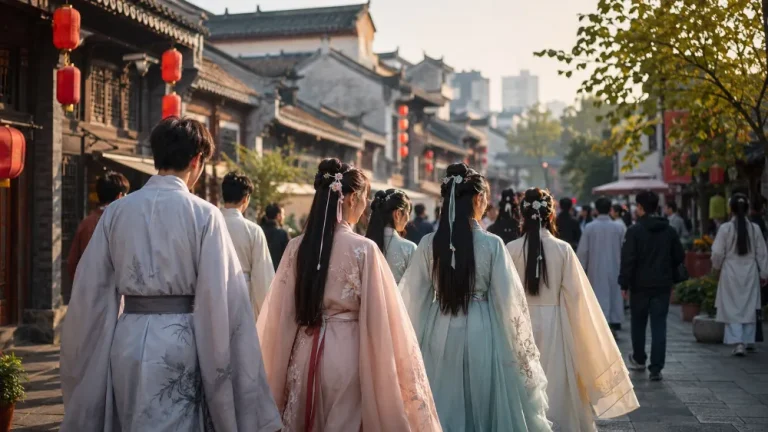
One of the most visible signs that Chinese traditional culture is in active revival rather than passive preservation is the extraordinary growth of the hanfu movement. Traditional clothes worn in China, particularly the layered, flowing robes historically worn by the Han Chinese people before the Qing dynasty suppressed the tradition in the seventeenth century, have become a significant cultural and commercial phenomenon, with the domestic market for hanfu now estimated at over 20 billion yuan. Young people wear historically researched reconstructions of Tang, Han, and Ming dynasty garments to heritage sites, cultural festivals, and increasingly in daily urban life, treating the revival of historical dress as both a personal aesthetic choice and a statement about cultural identity.
This connects to a broader “guochao” (national tide) movement that has made traditional aesthetics newly fashionable across multiple domains, from fashion and cosmetics to food, music, and architecture. UNESCO’s recognition of various Chinese intangible heritage forms has accelerated this trend, giving cultural institutions and local governments new reasons to invest in heritage tourism experiences and new ways to frame traditional practices as sources of national pride rather than relics of an pre-modern past.
Traditions Across China’s 56 Ethnic Groups
Any account of the traditions and customs of China that focuses exclusively on Han Chinese culture leaves out an enormous and genuinely distinct part of the picture. China officially recognizes 56 ethnic groups, and each maintains cultural traditions, languages, dress, music, and ritual practices that are meaningfully different from Han culture and from each other. The Miao people of Guizhou are known for elaborate silver jewelry and intricately embroidered festival clothing. Tibetan culture has its own deep religious tradition rooted in Tibetan Buddhism, expressed through thangka paintings, butter sculpture, and monastic festival performances like the Cham dance. The Mongolian long song, Ûrtiin Duu, which can sustain a single syllable across an extraordinary melodic range, is UNESCO-listed alongside the traditional horsemanship and culture of the Inner Mongolian grasslands. The Uyghur Muqam of Xinjiang, a comprehensive form combining music, poetry, and dance, is another UNESCO recognition that reflects the distinct cultural depth of one of China’s largest ethnic minority communities.
China’s ranking at the top of UNESCO’s intangible heritage list partly reflects the breadth of this ethnic cultural diversity: the 45 listed items aren’t all Han Chinese traditions but draw from multiple ethnic groups and regions across the country, a fact that deserves more attention in any account that treats Chinese culture as a single monolithic tradition.
Frequently Asked Questions
What are the most important traditions and customs of China?
The most significant traditions include Spring Festival and the Lunar New Year calendar, ancestor veneration and Qingming grave-sweeping, the Confucian social values of filial piety and face, tea culture, Chinese calligraphy, and the festival cycle that includes Dragon Boat Festival and Mid-Autumn Festival. Food customs, gift-giving etiquette, and traditional arts like opera and silk weaving are also central to Chinese cultural life.
How many UNESCO intangible cultural heritage items does China have?
China reached 45 UNESCO-listed intangible cultural heritage items in late 2025, the highest number of any country in the world. The most recently added major listing was Spring Festival in December 2024, with Chinese cuisine knowledge and practices expected to be added in 2026.
What is the significance of the color red in Chinese culture?
Red carries associations with good luck, celebration, prosperity, and warding off evil in Chinese cultural tradition. Its use in weddings, New Year decorations, and gift wrapping traces back to the mythology around the Spring Festival beast Nian, which feared the color red. White, by contrast, is the traditional color of mourning in Chinese culture, rather than black as in many Western contexts.
What is guanxi and why does it matter in Chinese social life?
Guanxi refers to the web of personal relationships and mutual obligations that shapes how trust, assistance, and opportunity flow between people in Chinese social and business culture. Building and maintaining guanxi involves reciprocal acts of generosity, introductions, and favors over time, and a well-developed guanxi network is often more practically useful in Chinese contexts than formal qualifications or credentials alone.
What is the hanfu revival and what does it represent?
The hanfu revival is a cultural movement among young Chinese people to research and wear historically accurate versions of the garments worn by Han Chinese people before the Qing dynasty suppressed those clothing traditions in the seventeenth century. Beyond its fashion dimension, the movement represents a broader assertion of traditional cultural identity and connects to the “guochao” trend of making classical Chinese aesthetics newly relevant and fashionable in contemporary life.