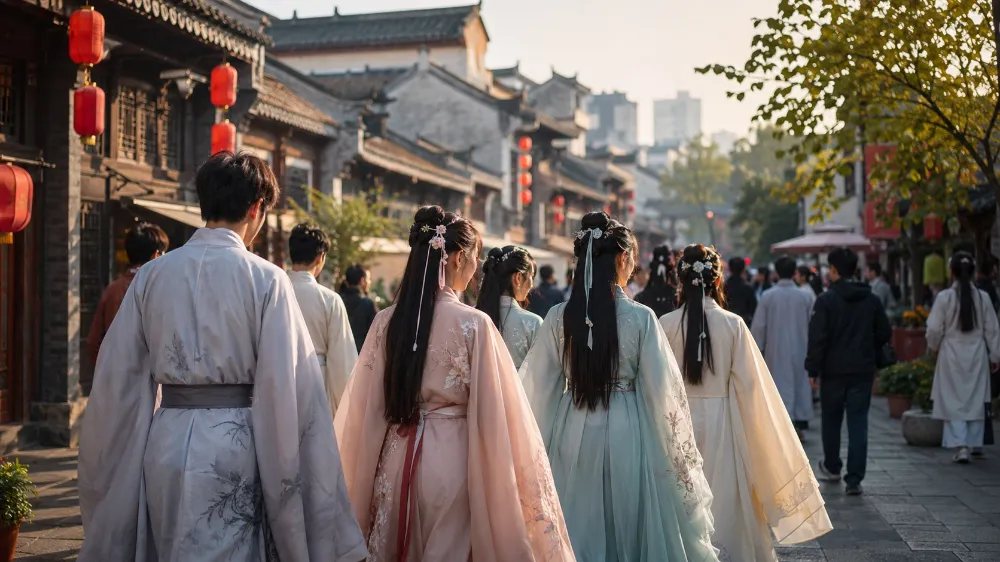
Walk through the historic quarters of Xi’an, Chengdu, or Hangzhou on any given weekend, and you’ll likely spot young people drifting between souvenir shops in flowing silk robes with wide sleeves trailing behind them. They’re not actors on a film set. They’re part of a cultural wave that has turned traditional clothes worn in China into one of the country’s most visible youth movements, and increasingly, a global fashion talking point. Understanding what these garments actually are, where they came from, and why they’re suddenly everywhere again takes a bit of unpacking, because “traditional Chinese clothing” isn’t one single style. It’s a layered, regionally diverse, dynastically shifting wardrobe spanning thousands of years, and most articles online flatten it down to a single image of a qipao or a vague mention of silk robes without explaining what’s actually going on.
This guide breaks down the major categories of traditional clothes worn in China, what separates them from each other, how they’re worn today, and why an entire generation of young Chinese consumers has turned historical dress into a billion-dollar industry rather than a museum relic.
Hanfu: The Foundation of Traditional Chinese Dress
If there’s one term doing the heaviest lifting in conversations about Chinese traditional clothing right now, it’s hanfu. The word literally translates to “Han clothing,” referring to the attire historically worn by the Han Chinese people, who make up the largest ethnic group in China, for roughly 3,000 years before the Qing dynasty came to power in 1644.
That last detail matters more than it might seem. When the Manchu-led Qing dynasty took control, one of its early political moves was mandating that Han subjects adopt Manchu-style dress as a visible symbol of submission to the new rulers. Within a generation, clothing conventions that had developed continuously across more than two thousand years of Chinese history were effectively suppressed. This is the historical wound that the modern hanfu movement is, in many ways, trying to address.
How the Modern Hanfu Movement Actually Started
The contemporary revival traces back to a surprisingly specific moment: November 2003, when a man named Wang Letian walked through the streets of Zhengzhou wearing a homemade shenyi, a type of reconstructed Han dynasty robe. Photographs of him circulated online and caught the attention of a Singaporean-Chinese journalist, who wrote about it for a Singapore newspaper. The images rippled through early Chinese internet forums, and from there, a dedicated community formed around researching historical garments using archaeological records, classical paintings, and surviving museum artifacts, since no living tradition of hanfu production actually existed anymore to learn from directly.
For roughly its first decade, the movement stayed fairly marginal. Wearing hanfu in public drew curiosity and the occasional bit of ridicule, and enthusiasts were largely self-taught, piecing together construction methods from scratch. The shift toward mainstream acceptance happened gradually, driven by a combination of factors that reinforced each other: the explosion of elaborately costumed Chinese historical dramas on streaming platforms normalized the aesthetic for hundreds of millions of viewers, the rise of Xiaohongshu as a lifestyle content platform gave hanfu enthusiasts an effective way to share visual content widely, and a broader cultural environment increasingly emphasizing traditional Chinese heritage gave the whole movement institutional legitimacy it hadn’t had in its early, scrappier years.
From Niche Hobby to Multi-Billion Yuan Industry
The scale of what’s happened since is genuinely striking. By 2020, hanfu had become a recognized retail category complete with its own supply chain, dedicated designers, and products spanning every price point imaginable. As of 2025, the hanfu market in mainland China is worth over 20 billion yuan, supported by more than 7,000 businesses. One county alone, Caoxian in Shandong province, has become a major manufacturing hub, gathering over 2,000 upstream and downstream enterprises and creating jobs for nearly 100,000 people, with more than 600 of those companies holding their own original designs.
The consumer data backs up just how mainstream this has become. Industry estimates placed the number of hanfu consumers in China at over one hundred million by the mid-2020s, though what counts as genuine “participation” varies depending on who’s measuring. One market research survey of consumers aged 18 to 30 in major Chinese cities found that 38 percent had worn hanfu in the previous six months, double the proportion recorded just a year earlier. That’s not a niche subculture anymore; that’s a meaningful slice of an entire generation choosing historical dress as part of how they present themselves, at least occasionally.
The Three Major Hanfu Silhouettes Worth Knowing
Hanfu isn’t a single look, and recognizing the basic structural differences helps when you’re actually trying to identify what someone is wearing, rather than just registering “flowing robe” and moving on.
Quju and zhiju styles, associated primarily with the Han dynasty era, tend to feature wrapped, layered construction with cross-collars, where the front panels of the garment fold across the body and tie at the side rather than buttoning. A distinctive detail from this period: rules around how to wear, fold, and tie these garments were followed meticulously to project an image of grace and modesty, and many contemporary hanfu followers still take these construction principles seriously rather than treating them as decorative.
Tang dynasty styles shifted toward a noticeably more relaxed, voluminous silhouette, with wider sleeves and looser draping that reflected the cosmopolitan, comparatively liberal culture of that era. Tang-style hanfu tends to be visually softer and more colorful than the more structured Han-era looks.
Ming dynasty styles introduced more structured layering and, notably, the first appearance of certain warming garments designed for the unusually cold climate of that period’s “Little Ice Age” conditions. Ming-era hanfu often reads as more architecturally precise, with cleaner lines than the looser Tang aesthetic.
A few smaller historical details add genuine texture to understanding these garments: curled-up shoe toes, common in several periods, weren’t purely decorative but were designed to help wearers avoid stepping on their own long skirts while walking. Sashes were sometimes worn low and loose specifically to create the illusion of a wider waist, since fuller figures were associated with wealth during the Qin and Han dynasties. And clothing color itself functioned as a social signal: ordinary people were generally restricted to lighter, less saturated colors, while richer dyes and certain hues were reserved for higher social classes.
Qipao and Cheongsam: The Garment Most Outsiders Already Recognize
If hanfu is the deep cultural rabbit hole, the qipao (also widely known by its Cantonese name, cheongsam) is the traditional Chinese garment most people outside China already have some mental image of, even if they couldn’t name it. The fitted, often silk, often high-collared dress with a side slit has become genuinely iconic in global fashion, showing up everywhere from red carpet events to film costuming, but its actual history is considerably more layered than its reputation as a simple “elegant Chinese dress” suggests.
Unlike hanfu, the qipao isn’t pre-Qing at all. It actually evolved from Manchu women’s robes during the Qing dynasty and underwent its most significant transformation during the 1920s and 1930s in Shanghai, where it was reshaped by Western tailoring influences into the fitted, body-conscious silhouette most people recognize today. That Shanghai-era version, with its emphasis on a tailored waist and visible silhouette, was itself a fairly radical departure from the looser, more concealing robes that had preceded it, and reflected the rapidly modernizing, cosmopolitan culture of Republican-era Shanghai.
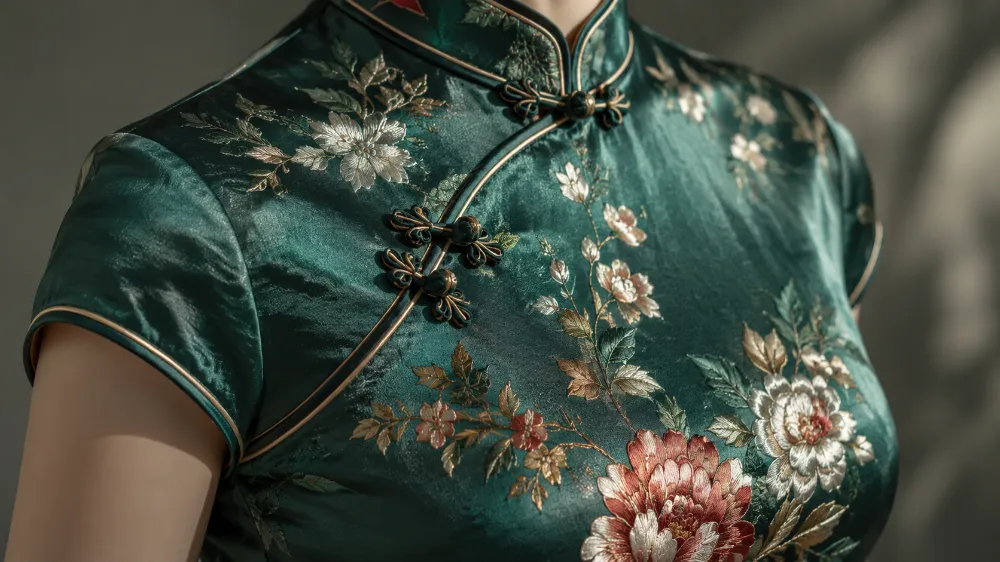
Today, the qipao occupies a different cultural space than hanfu. While hanfu carries the weight of ancient heritage revival and is worn largely by younger, hobbyist enthusiasts for cultural and aesthetic expression, the qipao remains more associated with formal occasions: weddings, Lunar New Year celebrations, and significant family gatherings, where an older, more universally recognized symbol of Chinese elegance is wanted rather than a dynastically specific historical reconstruction.
The Tang Suit and Other Modern Adaptations
Beyond hanfu and the qipao, there’s a category of traditional-adjacent clothing that’s more accurately described as modernized or hybrid: garments that borrow visual cues from historical Chinese dress without attempting historical accuracy. The Tang suit (despite the name, not actually from the Tang dynasty, but rather a Qing-influenced jacket popularized in the 20th century) is a common example, typically worn by men at formal events, featuring a mandarin collar, frog button closures, and often understated, dark fabric with subtle embroidery or pattern work.
This category also includes what’s sometimes called “New Chinese Style” clothing, a contemporary fashion movement that takes design elements from historical garments, cross-collars, certain sleeve shapes, traditional button knots, and reinterprets them into everyday-wearable pieces that don’t require the layering complexity or formality of full hanfu. This middle ground has become genuinely popular precisely because it lets people incorporate traditional Chinese aesthetics into daily life without committing to a full historical costume.
Ethnic Minority Clothing: The Diversity Often Left Out of the Conversation
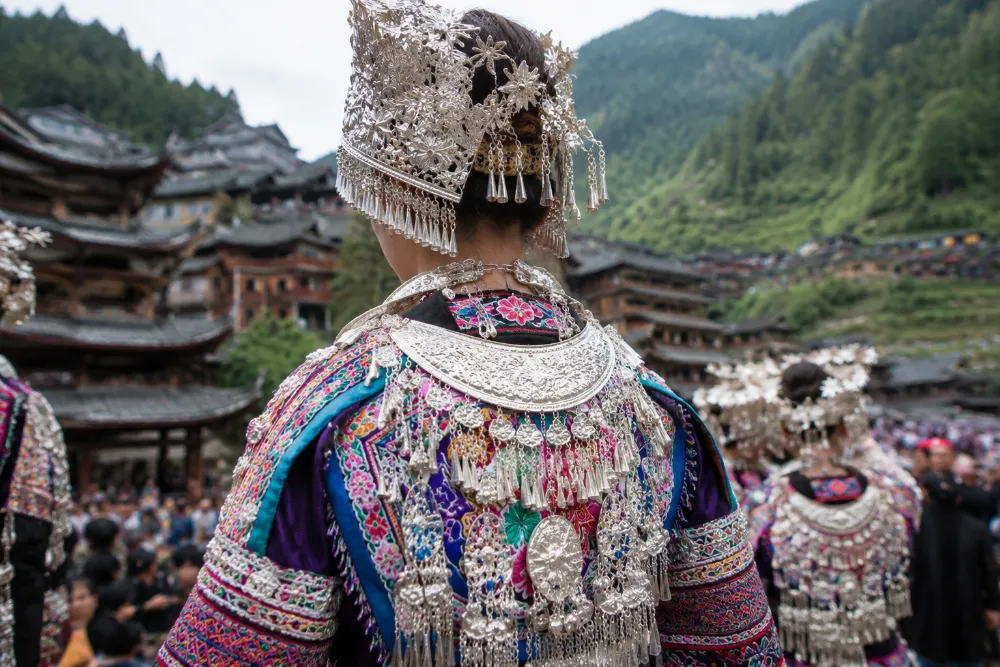
Most discussions of traditional Chinese clothing focus almost entirely on Han Chinese dress, which makes sense given that the Han make up the vast majority of China’s population, but it leaves out a genuinely important piece of the picture. China officially recognizes 55 ethnic minority groups, and each maintains clothing traditions that are visually and culturally distinct from hanfu, in some cases with histories just as old and just as historically suppressed.
Some of the more visually distinctive examples include the heavily embroidered, silver-jewelry-adorned festival clothing of the Miao people, particularly associated with celebrations in Guizhou province, the elaborately layered robes worn in Tibetan regions, distinctly patterned woven textiles among the Yi people in Yunnan and Sichuan, and the colorful, geometric embroidery traditions of the Dai people near the Myanmar border. These garments are typically seen during regional festivals, weddings, and cultural tourism contexts rather than as everyday wear, similar to how hanfu functions for many of its wearers, but they represent threads of Chinese textile history that deserve recognition alongside the more widely discussed Han traditions.
It’s worth noting that this is also a point of genuine debate within the hanfu movement itself. Because hanfu is explicitly defined as Han Chinese dress, some critics have raised questions about how its revival relates to, or potentially overshadows, the clothing traditions of these other ethnic groups, whose garments have in some cases faced similarly difficult histories. Supporters of the movement generally argue that reviving any historically suppressed cultural tradition is a legitimate act of heritage recovery on its own terms, regardless of ethnicity, while critics worry about the framing tipping toward a narrower form of cultural nationalism. It’s a genuinely unresolved conversation, and one worth knowing about if you’re trying to understand the full picture rather than just the marketing version.
Why This Revival Is Happening Now
It’s worth pausing on the “why now” question, because the timing isn’t random. Several forces converged at roughly the same moment to push traditional dress from a fringe hobby into something resembling a mainstream identity statement for young Chinese consumers.
Social media platforms, particularly short-video apps and lifestyle platforms popular with younger users, gave hanfu enthusiasts a visual medium perfectly suited to showcasing elaborate, photogenic clothing. A flowing silk robe with embroidered sleeves is, frankly, built for video content in a way that ordinary streetwear simply isn’t. At the same time, the explosive popularity of Chinese historical and costume dramas meant audiences in the hundreds of millions were regularly exposed to period clothing on screen, gradually shifting it from “something actors wear” to “something I could actually wear.”
There’s also a deeper identity component that researchers studying the movement keep returning to. For many young participants, wearing hanfu isn’t purely about aesthetics; it functions as an expression of cultural confidence and a quiet pushback against what some describe as homogenized, Western-dominated fashion norms. One organizer of hanfu-themed events in Beijing described how, just over a decade ago, the style was an obscure subculture that drew odd looks in public, while today similar events routinely draw thousands of participants without raising an eyebrow. That shift in public reception, from curiosity and occasional mockery to genuine social acceptance, is itself a marker of how far the movement has traveled.
The phenomenon has also crossed borders. Chinese student communities at universities including Cambridge and Durham have organized hanfu-themed events tied to festivals like the Lantern Festival, and overseas Chinese communities from North America to Southeast Asia have embraced hanfu partly as a way of staying connected to cultural heritage while living abroad, where, as some researchers note, a sense of cultural identity often intensifies precisely because of physical distance from home.
How Hanfu Is Actually Worn Today: Historical Purity vs. Everyday Adaptation
One genuinely interesting tension within the modern movement is the ongoing disagreement over what level of historical accuracy actually matters. Some enthusiasts insist on strict period-accurate construction methods, fabric choices, and styling, treating any deviation as a dilution of the tradition. Others argue that the entire point of a living revival is adaptation: that hanfu should evolve to fit contemporary life rather than being frozen as a museum piece, since the alternative is a tradition that exists only in re-enactment rather than in daily use.
In practice, this plays out as a fairly wide spectrum of how people actually wear traditional clothing day to day. At one end, dedicated communities organize full historical recreation events, sometimes at locations like the Forbidden City or other heritage sites, where strict accuracy is the entire point of the gathering. At the other end, far more casual wearers might pick up a simplified, commercially produced hanfu-inspired piece, designed more for comfort and photogenic appeal than historical correctness, and wear it for a single afternoon of photos in a historic district before returning to ordinary clothing.
Many younger wearers fall somewhere in between, genuinely interested in the history behind specific garments but unbothered by adapting silhouettes, fabrics, or styling choices to suit modern life, modern body types, and modern comfort expectations. As one Beijing-based hanfu community organizer put it, more young people now wear updated styles because they believe the best way to actually preserve a tradition is to adapt it so it keeps being used, rather than keeping it so historically rigid that nobody outside a dedicated subculture ever wears it.
Where You’re Most Likely to See Traditional Chinese Clothing in Person
If you’re planning a trip to China and want to actually see this firsthand rather than just reading about it, certain cities and districts have become genuine hotspots for hanfu culture specifically because of their historical significance.
Xi’an, as the former capital of multiple dynasties including the Tang, has become something close to a spiritual home for the hanfu movement, with historic districts where encountering groups in full period dress on any given weekend is now thoroughly unremarkable. The city’s annual Hanfu Cultural Festival draws thousands of attendees in full historical dress, turning entire sections of the city into something resembling a living period exhibit for a weekend.
Chengdu and Luoyang carry similar reputations, each tied to specific dynastic histories that give local hanfu communities a sense of place-based authenticity. Many cities with significant historical architecture now have rental shops specifically catering to tourists who want to wear hanfu while photographing themselves in front of palace walls, ancient city gates, or traditional gardens, turning what started as a dedicated subculture’s hobby into an accessible tourist activity that requires no prior knowledge or investment in the culture beyond an afternoon and a rental fee.
Hanfu vs. Kimono vs. Hanbok: A Common Point of Confusion
Because hanfu, the Japanese kimono, and the Korean hanbok share some surface-level visual similarities, wrapped or layered silhouettes, wide or structured sleeves, distinctive collar treatments, they’re frequently confused or lumped together by people unfamiliar with East Asian textile history. They are, in fact, entirely distinct traditions with their own historical development, construction logic, and cultural meaning, even though there was historical cross-cultural exchange and influence between these regions over the centuries.
One detail that genuinely distinguishes hanfu structurally is its emphasis on cross-collar construction, where panels wrap and tie rather than button, along with its much wider range of dynastically distinct silhouettes spanning thousands of years of continuous, if interrupted, development. Some industry observers have suggested that hanfu could eventually achieve the kind of instant global recognizability that the kimono and hanbok already enjoy, though it’s currently earlier in that process of international visual recognition than either of those traditions.
The Economic Scale: Just How Big Has This Gotten?
The numbers behind this revival are worth dwelling on because they illustrate just how far hanfu has moved from subculture to genuine industry. Beyond the more than 20 billion yuan domestic market figure and the over 7,000 businesses now operating in the space, global market analysts have begun tracking hanfu as an international product category in its own right, with one estimate placing the global hanfu market size at over 2 billion US dollars, with continued growth projected over the coming decade as international interest builds alongside the domestic Chinese market.
This commercial scale has changed the texture of the hanfu retail experience too. Rather than functioning like fast fashion, much of the hanfu economy still prioritizes craftsmanship and storytelling over rapid, disposable production. Independent labels frequently offer made-to-order pieces inspired by specific dynastic periods or even particular works of Chinese literature, and retail experiences in cities like Chengdu have evolved to include staff trained to explain each garment’s historical context, curated music matched to the relevant era, and dedicated in-store photography areas designed for the social sharing that drives so much of the trend’s visibility in the first place.
What This Means If You’re Curious About Trying Traditional Chinese Clothing Yourself
Whether you’re of Chinese heritage looking to reconnect with cultural roots, or simply someone who finds the aesthetic and history genuinely compelling, there’s no single “correct” way to approach traditional Chinese clothing today, and that’s arguably one of the healthier aspects of how the modern movement has developed. Tourist-oriented rental experiences in historic Chinese cities offer a low-commitment way to experience the aesthetic for an afternoon. More dedicated enthusiasts can connect with hanfu communities, both within China and increasingly through overseas Chinese cultural societies at universities and in major cities worldwide, where genuine knowledge about construction, history, and appropriate styling gets shared freely among people who are, by most accounts, enthusiastic about welcoming newcomers regardless of their background.
What started in 2003 as one man’s photographs circulating through a handful of internet forums has, over roughly two decades, become something genuinely difficult to categorize neatly: a fashion trend, a cultural identity movement, a multi-billion-yuan manufacturing industry, and a tourism draw, all layered on top of each other. Understanding traditional clothes worn in China today means holding all of those layers at once, rather than reducing centuries of regional and dynastic diversity down to a single recognizable silhouette.
Frequently Asked Questions
What is the difference between hanfu and a qipao?
Hanfu refers to the traditional clothing worn by Han Chinese people before the Qing dynasty, spanning roughly 3,000 years and multiple dynastic styles. The qipao, by contrast, developed during the Qing dynasty from Manchu women’s robes and was significantly reshaped into its modern fitted silhouette in 1920s and 1930s Shanghai. They come from different historical periods and serve different cultural purposes today.
Is hanfu only worn by Han Chinese people?
While hanfu is specifically defined as Han Chinese dress, the modern revival movement has attracted enthusiasts of various backgrounds both within China and internationally, including non-Chinese fans drawn to its craftsmanship and history. That said, the ethnic specificity of hanfu remains a genuine point of discussion within the broader conversation about Chinese cultural identity.
Where can I see traditional Chinese clothing being worn in everyday life?
Historic districts in cities like Xi’an, Chengdu, and Luoyang are particularly known for hanfu culture, partly due to their dynastic historical significance. Tourist rental shops near major heritage sites also make it easy to wear hanfu for photos, even without prior involvement in the broader cultural movement.
How big is the hanfu industry today?
The domestic Chinese hanfu market was valued at over 20 billion yuan as of 2025, supported by more than 7,000 businesses, with one manufacturing hub in Shandong province alone employing nearly 100,000 people. Global market estimates place the international hanfu market in the billions of US dollars, with continued growth expected.
Do ethnic minorities in China have their own traditional clothing too?
Yes. China officially recognizes 55 ethnic minority groups, each with distinct clothing traditions separate from Han Chinese hanfu, including the embroidered festival wear of the Miao people, layered Tibetan robes, and the woven textile traditions of the Yi and Dai peoples, among many others.