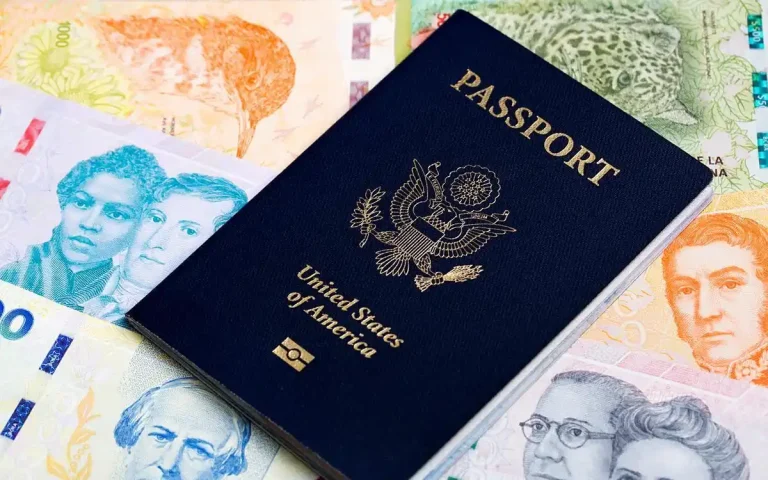

If you’re trying to work out what to prepare before visiting Xiamen, you’ve probably already noticed that most generic “China travel tips” articles don’t quite fit this city. Xiamen isn’t Beijing, and it isn’t Shanghai either. It’s a coastal city in Fujian province with its own rhythm, its own humid sea-breeze climate, and a few quirks that catch first-time visitors off guard. This guide walks through everything worth sorting out before you fly in, from entry requirements to the small app-based habits that make daily life in China noticeably smoother once you’re actually on the ground.
Start With the Paperwork: Visa and Entry Rules for Xiamen
This is the part people tend to put off, and it’s the one that can actually derail a trip if left too late. China’s entry rules have loosened considerably over the past couple of years, but they’re not uniform across every nationality, so it’s worth checking exactly where you stand rather than assuming the rules you read about last year still apply.
As of 2026, mainland China runs a unilateral visa-free programme covering passport holders from roughly 50 countries, allowing a stay of up to 30 days for tourism, business, family visits, or transit. The United Kingdom and Canada were added to this list on 17 February 2026, joining most of the European Union, Australia, New Zealand, Japan, South Korea, and a growing list of others. If your passport is on that list, you can simply book your flight and go, no embassy visit required.
The notable exceptions are US and Indian passport holders, who still need to apply for a standard tourist visa in advance, typically the 10-year multiple-entry L visa that most American travellers end up with once they’ve gone through the process once. If a full visa application isn’t something you want to deal with for a short trip, Xiamen actually offers an alternative that a lot of travellers don’t realise exists.
The Xiamen-Specific Visa-Free Transit Option
Xiamen is one of mainland China’s three special economic zones (alongside Shenzhen and Zhuhai) where short-stay arrangements have historically been more flexible than in the rest of the country. There’s also a 240-hour (10-day) visa-free transit policy available at major ports including Xiamen, designed specifically for travellers who are passing through China en route to a third country. This is genuinely useful if your itinerary already has Xiamen sitting between two other international flights, but it comes with a catch worth flagging clearly: this is a transit allowance, not a general tourism visa. The 240 hours count from midnight on the day after you arrive, not from your actual landing time, and you’re expected to be heading onward to another country, not flying home the way you came.
If your passport isn’t on the 30-day visa-free list and you’re not using the transit route, Xiamen’s special economic zone status also allows for a short-term arrival visa specifically for staying within the city itself. It’s a narrower option, limited to a few days and confined to the Xiamen area, but it exists as a fallback for travellers who get caught out without a visa arranged in advance.
Whichever category applies to you, double-check it against your specific passport before booking anything. Visa rules in China have a habit of shifting every few months, and a blog post from even a year ago can already be outdated. The safest move is checking directly with the National Immigration Administration’s official page or a licensed travel agency that handles Chinese visas regularly.
Passport and Registration Basics People Forget
A few practical points that rarely make it into the headline visa news but matter just as much on the ground:
- Your passport should have at least six months of validity remaining from your date of entry. Border officers in China are strict about this, and there’s no workaround at the airport.
- Within 24 hours of arrival, foreign visitors are required to register their accommodation address with the local Public Security Bureau. If you’re staying in a hotel, this happens automatically when you check in and hand over your passport. If you’re staying somewhere private, such as a rented apartment or with friends, you’ll need to handle this registration yourself.
- Not every small guesthouse or budget hotel in China is licensed to accept foreign passport holders. Before you commit to a booking through a third-party platform, it’s worth confirming the property explicitly states it accepts international guests, particularly if it’s a smaller, independently run place rather than an international chain.
Get Your Payment Apps Sorted Before You Land, Not After
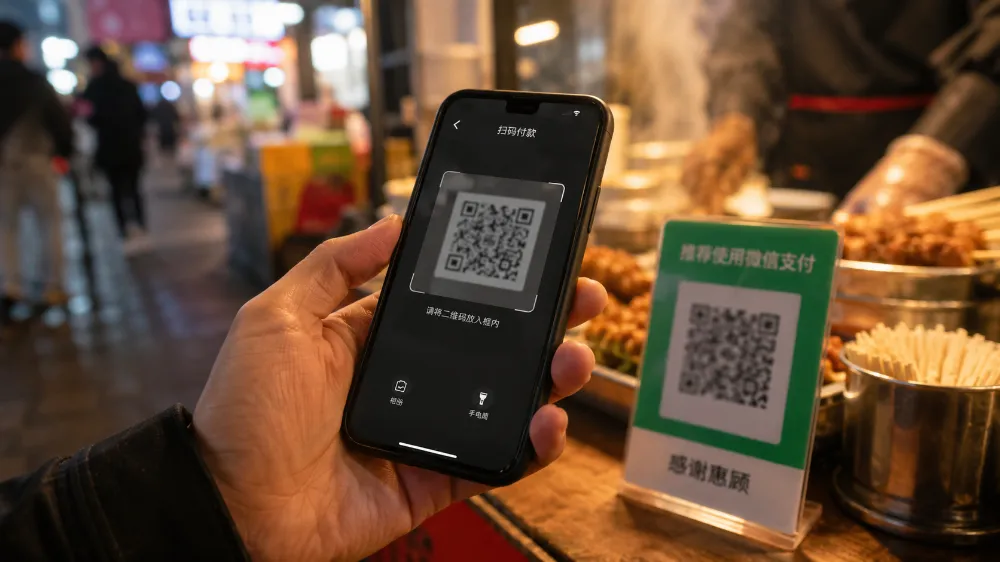
This is probably the single most underestimated item on any China packing list, and it deserves more attention than most travel guides give it. China’s daily commerce runs overwhelmingly on two mobile payment platforms, Alipay and WeChat Pay, and the gap between “having cash and cards” and “having a working mobile wallet” is bigger here than almost anywhere else you might have travelled.
The good news is that both apps now accept foreign cards without requiring a Chinese bank account. You don’t need a Chinese bank account or a Chinese phone number to use Alipay — you just need a valid passport, an international Visa or Mastercard, and a working phone number from your home country. Setup genuinely takes well under an hour if everything goes smoothly, which is exactly why it’s worth doing from your sofa at home rather than fumbling with it for the first time at a noodle stall in Xiamen with a queue forming behind you.
That said, the verification process has gotten noticeably stricter over the past year. Since late 2025, both Alipay and WeChat Pay have implemented tighter verification protocols for foreign card binding, and some travellers have reported their card-linking attempts getting flagged for extra review. A few things help avoid this: call your home bank before you fly and explicitly tell them you’ll be making payments in China through Alipay or WeChat (mentioning “Tenpay,” WeChat’s payment processor, by name can help your bank recognise the transaction type), and make sure international purchases are enabled on your card’s travel settings.
Practical setup tips that make the process noticeably smoother:
- Download Alipay first — most travellers find its English interface and tourist-oriented features easier to navigate than WeChat Pay’s setup flow.
- When you scan your passport for verification, do it near a window with natural light rather than under overhead lighting or with flash. Glare on the passport photo page is one of the most common reasons verification gets rejected and bounced into a slower manual review.
- Install WeChat Pay as a backup once Alipay is working. Some smaller vendors and local mini-programs lean on WeChat specifically, so having both apps covers more situations than relying on just one.
- Carry a modest amount of cash (RMB) regardless of how well your apps are working. Older neighbourhoods, some markets, and the odd taxi driver still prefer cash, and a backup never hurts.
One more detail worth knowing: international cards linked to these apps typically carry daily and annual spending caps designed for tourist-level spending rather than large purchases, so this setup is built for day-to-day travel expenses, not for moving large sums of money.
Connectivity: SIM Cards, eSIMs, and the VPN Question
Staying connected in Xiamen is straightforward in principle, but there’s one wrinkle that catches a lot of visitors off guard: several apps and services that are second nature elsewhere, including Google services, Gmail, WhatsApp, and most Western social media platforms, are not accessible inside mainland China without a VPN.
If you rely on Google Maps for navigation, need Gmail for work, or want to stay in touch with people back home through WhatsApp, set up a VPN on your phone before you arrive. Trying to download a VPN app once you’re already inside the country’s network is a frustrating chicken-and-egg problem, since the very stores and sites that would let you find one are often the ones being blocked. Choose a reputable provider, install it, and test that it actually connects before your flight leaves.
For connectivity itself, you have a few options once you land at Xiamen Gaoqi International Airport: a local SIM card, an eSIM purchased in advance, or international roaming through your home carrier. eSIMs have become the more convenient option for short trips since they can be activated digitally before you even board your flight, skipping the airport SIM counter altogether. Whichever you choose, make sure data roaming is switched on, since some of the verification steps for Alipay and WeChat Pay actually rely on having an active data connection rather than just Wi-Fi.
Packing for Xiamen’s Climate: What the Weather Actually Demands

Xiamen sits on China’s southeastern coast in Fujian province, and its climate is subtropical, meaning warm, humid summers and comparatively mild winters by Chinese standards. What you pack should depend heavily on when exactly you’re visiting, since the city’s weather swings more than its reputation as a “pleasant coastal destination” might suggest.
Summer (June to September)
This stretch brings heat, humidity, and a real chance of typhoons, particularly between July and September. Lightweight, breathable clothing is essential, and you’ll want sun protection that goes beyond a regular cap; the coastal UV index here gets intense. Pack a compact umbrella or light rain jacket regardless of the forecast, since tropical weather systems can shift quickly, and keep an eye on local weather alerts if a typhoon warning is issued during your stay, as ferry services to Gulangyu Island and other outdoor activities sometimes get suspended for safety.
Spring and Autumn (March to May, October to November)
These are widely considered the most comfortable months to visit, with milder temperatures and less rainfall. A light jacket for the evenings, comfortable walking shoes, and standard layers should cover most of what you need. This is also peak season for wandering Gulangyu Island’s colonial-era streets or cycling along the coastal roads, so comfortable footwear matters more than fashion here.
Winter (December to February)
Xiamen’s winters are mild compared to most of China, but “mild” still means cool, damp days, especially with the sea breeze. A medium-weight jacket, a scarf, and something to layer underneath should be enough; you won’t need the heavy winter gear that cities further north demand.
Across every season, a few packing basics apply regardless of timing: comfortable walking shoes are non-negotiable if Gulangyu Island, Xiamen University, or the old town are anywhere on your itinerary, since much of the charm in this city is genuinely best experienced on foot. A reusable water bottle is worth bringing too, since bottled water adds up quickly and refill stations are increasingly common in hotels and major attractions.
Money Matters Beyond the Apps: Cash, Cards, and Currency Exchange
Even with Alipay and WeChat Pay set up, it’s worth understanding the broader cash landscape so you’re not caught short. China’s currency is the Renminbi (RMB or CNY), and while mobile payments dominate day-to-day transactions, certain situations still call for physical cash or a card.
International credit cards tend to work reliably at international hotel chains, larger department stores, and businesses that cater heavily to tourists, but acceptance drops noticeably at small restaurants, street vendors, and local markets, where mobile QR payments are simply the default and cash is the only fallback. It’s sensible to exchange a reasonable amount of currency before you arrive, or withdraw RMB from an ATM once you land, just to have a buffer for situations where neither your card nor your phone gets accepted.
It’s also worth telling your bank in advance that you’ll be travelling to China. Unexpected international transactions, even small ones, can trigger fraud alerts that freeze your card at exactly the wrong moment, and a quick heads-up to your bank before departure avoids that entirely.
Health, Insurance, and the Small Stuff That Adds Up
Travel insurance that explicitly covers China is worth arranging before departure rather than treating it as optional. Hospitals catering to international visitors do exist in Xiamen, but having insurance that covers emergency treatment, medication, and potential evacuation gives genuine peace of mind, particularly if your trip includes more adventurous activities like hiking or cycling around the island.
If you take prescription medication, bring enough for your entire trip plus a few extra days as a buffer, and carry it in its original packaging alongside a copy of the prescription or a doctor’s note. Some medications that are perfectly normal in other countries are restricted or require documentation in China, so it’s worth checking your specific medications against China’s customs regulations before you pack them.
A basic first-aid kit, any regular toiletries you’re particular about, and sunscreen (genuinely harder to find in the SPF strength many Western travellers are used to) round out the practical health essentials. Pharmacies are widely available in Xiamen, but navigating one without speaking Mandarin can be its own small adventure, so it’s easier to bring what you already know works.
Apps Worth Downloading Before You Land
Beyond Alipay, WeChat Pay, and a VPN, a handful of other apps make daily logistics in Xiamen considerably smoother:
- A translation app with offline capability and camera-based text scanning. Menus, signage, and product labels in Xiamen are predominantly in Mandarin, and being able to point your camera at a menu and get an instant translation removes a surprising amount of daily friction.
- DiDi, China’s dominant ride-hailing app, which functions much like Uber and now has an English-language interface for international users. It’s the easiest way to get around the city without needing to communicate an address verbally to a taxi driver.
- A maps app that actually works in China, since Google Maps requires a VPN connection to function reliably here. Many travellers run a VPN specifically to keep Google Maps usable, while also keeping a China-based maps app as backup for offline situations.
- WeChat itself, separate from its payment function, since it’s also the default communication tool many local guides, hotels, and tour operators use to coordinate with guests.
A Few Cultural and Practical Habits Worth Knowing in Advance
None of these are dramatic, but knowing them ahead of time smooths out small moments of confusion:
Tipping isn’t customary in mainland China, including Xiamen, so there’s no need to calculate a percentage at restaurants the way you might elsewhere. Bargaining, on the other hand, is fairly normal in markets and smaller independent shops, though it’s far less expected in malls, chain stores, or anywhere prices are clearly displayed.
Queuing conventions can feel looser than what some travellers are used to, particularly at busy attractions or transport hubs. It’s not aggressive, just a different cultural norm around personal space and waiting, and it’s easier to navigate once you expect it rather than feel caught off guard by it.
Tap water in Xiamen, as in most of mainland China, isn’t typically considered drinkable straight from the tap by locals, who almost universally boil water or rely on bottled and filtered options. Hotels generally provide either bottled water or an electric kettle for boiling, so this is easy to work around once you know to expect it.
Putting Together a Simple Pre-Departure Checklist
To pull together everything covered above, here’s a condensed summary of what to prepare before visiting Xiamen, covering everything genuinely worth handling before you board your flight:
- Confirm your visa-free eligibility or apply for the correct visa well ahead of your travel dates
- Check your passport has at least six months of remaining validity
- Download and verify Alipay (and ideally WeChat Pay) before departure, with your bank notified in advance
- Set up and test a VPN if you rely on Google services, Gmail, or WhatsApp
- Arrange a SIM card, eSIM, or international roaming plan for connectivity from the moment you land
- Pack according to the season, with particular attention to rain protection in summer and layers in winter
- Sort travel insurance that explicitly covers China, plus any prescription medication with documentation
- Exchange or withdraw a reasonable amount of RMB cash as a backup to mobile payments
- Download a translation app, DiDi, and a reliable maps solution
- Confirm your accommodation accepts foreign passport holders, especially for smaller or independently run properties

Getting these pieces sorted before you leave home means your first day in Xiamen can actually be spent looking around rather than troubleshooting a payment app in a queue or hunting for a SIM card kiosk with a dead phone battery. Once the logistics are out of the way, the more enjoyable part of planning takes over, which is figuring out exactly where to spend your time once you’re there. If you haven’t worked through that part yet, our complete guide to Xiamen’s top tourist attractions is a good next stop, covering everything from Gulangyu Island’s colonial streets to the coastal routes and historic temples that make this city worth the preparation in the first place.
Frequently Asked Questions
What’s the most important thing to prepare before visiting Xiamen?
Sorting out your visa eligibility and getting Alipay or WeChat Pay linked to an international card before departure are the two items that save the most stress once you’ve actually landed. Everything else on this checklist, from packing to connectivity, is easier to fix on the fly than those two.
Do I need a visa to visit Xiamen?
It depends on your passport. As of 2026, citizens of roughly 50 countries, including the UK, most of the EU, Canada, Australia, and Japan, can enter visa-free for stays of up to 30 days. US and Indian passport holders generally still need to apply for a standard tourist visa in advance, though Xiamen’s status as a special economic zone does offer some limited short-stay alternatives.
Can I use my credit card everywhere in Xiamen?
Not reliably. International cards tend to work fine at hotels, larger stores, and tourist-facing businesses, but most everyday spending in China runs through Alipay or WeChat Pay. Setting up at least one of these apps before you travel will save a lot of friction.
Will I need a VPN in Xiamen?
If you use Google services, Gmail, WhatsApp, or most Western social media, yes. These platforms aren’t accessible inside mainland China without one, and it’s far easier to install and test a VPN before you leave home than to try once you’ve already landed.
What’s the best time of year to visit, packing-wise?
Spring and autumn generally offer the most comfortable conditions and the easiest packing list. Summer requires rain protection and sun preparation due to humidity and occasional typhoons, while winter just calls for a medium-weight jacket rather than heavy cold-weather gear.
Do hotels in Xiamen accept foreign guests?
Major international chains always do, but smaller or independently run guesthouses aren’t always licensed to register foreign passport holders. It’s worth confirming this explicitly before booking, particularly through third-party platforms.