The most common Chinese New Year gifts in 2027 are still red envelopes with lucky money, mandarin oranges, Chinese tea, and baijiu for the older drinkers in your life. The gifts that cause the most awkward moments are clocks, sharp objects, anything wrapped in white or black, and pears. Below is the full list of 30 gift ideas organized by who you are buying for, plus the 8 things I would never bring to a Chinese household, the etiquette I learned from my Chinese friends over fifteen years of doing this wrong, and a 2028 preview since the next lunar year is a different zodiac animal and that changes a few of the picks.
I have given Chinese New Year gifts in Beijing, Shanghai, Singapore, Kuala Lumpur, Hanoi, Toronto, and most recently across Beijing and Tianjin for the 2026 Year of the Fire Horse. I have also gotten it wrong. I gave a pair of leather loafers to a friend in Shenzhen the first year I was there and had to deal with the polite-but-cold silence that followed. I have wrapped presents in navy blue paper because I ran out of red. I have brought a beautiful fruit basket that included pears, twice. None of these are proud moments. The list below is everything I wish someone had told me in 2009, and that I now have to keep relearning because every Chinese New Year has at least one new thing I have not thought of yet. If you are reading this in late 2026 or early 2027 and the holiday is approaching, this is the guide I would send to my own non-Chinese friends before they shop.
The short answer: the 4 most-used gifts and the 4 to never give
The fastest possible answer for someone who is in a hurry:
The 4 most-used Chinese New Year gifts in 2027:
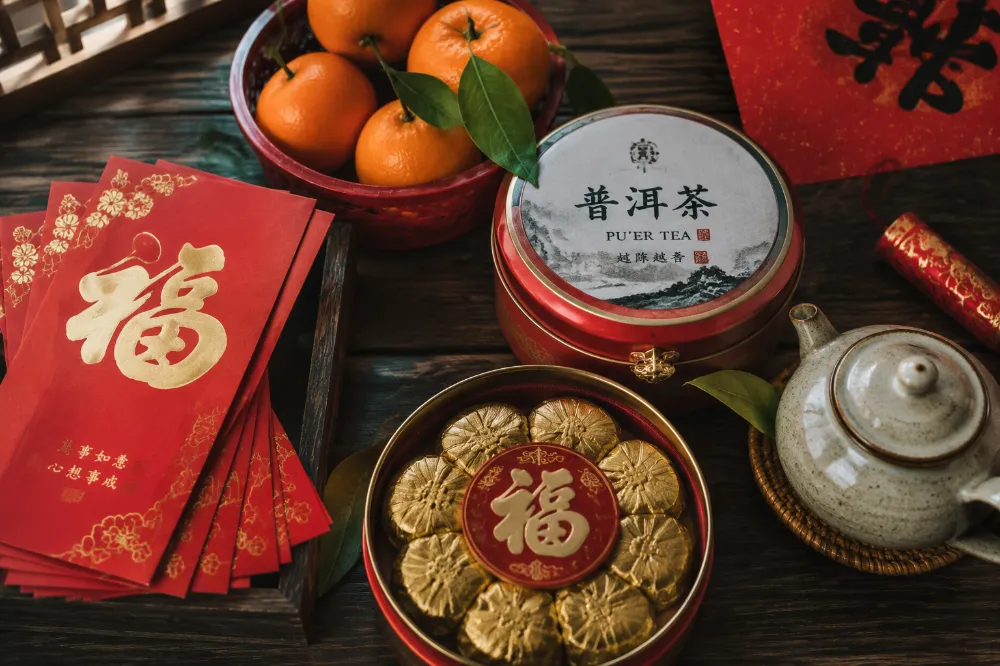
- Red envelope (hong bao) with new bills in an even, lucky number — universal, age-appropriate for everyone except elders you are very close to.
- Mandarin oranges or kumquats in a red box — the default fruit gift, especially in southern China, Hong Kong, and Singapore.
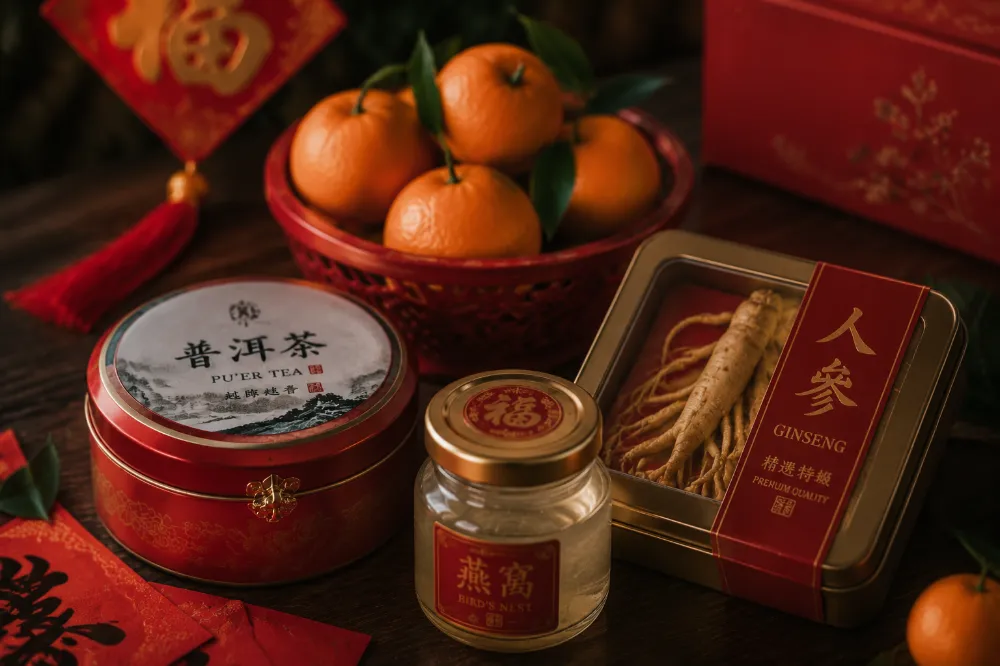
- Chinese tea (longjing, tieguanyin, da hong pao, or aged pu’er) — appropriate for almost any adult, particularly elders, business contacts, and in-laws.
- Baijiu (Moutai, Wuliangye, Luzhou Laojiao) for the older men in the family, or a high-end fruit basket for the older women — the classic business and in-law default.
The 4 gifts to never give:
- Clocks, watches, or anything that counts time (the word for clock, song zhong, sounds like ‘attending a funeral’ in Cantonese and similar in Mandarin).
- Anything wrapped in white, black, or dark blue (those are funeral colors in Chinese culture).
- Sharp objects like knives, scissors, or letter openers (cut the relationship, symbolically).
- Pears, umbrellas, or shoes (homophones for ‘separation’ or ‘evil’; details below).
That covers the urgent version. The full article goes deeper into the other 26 gift ideas, the etiquette behind each one, and the specific prices and quantities that work in 2027.
A quick 2027 context: when Chinese New Year falls and why gifts matter
Chinese New Year 2027 falls on Saturday, February 6, 2027. It starts the Year of the Fire Goat (Ding Wei 丁未) and runs for 16 days through the Lantern Festival on February 20, 2027. The public holiday in mainland China is 9 days (Feb 4-12, 2027, with weekend make-up days), 5 days in Taiwan (Feb 6-10), 3 in Hong Kong and Macau, and 2 in Singapore and Malaysia. If you want the full date map and the public holiday table, I break it all down in our Lunar New Year 2027 date guide.
Gift giving at Chinese New Year is not a side ritual. It is one of the load-bearing elements of the entire festival, on par with the reunion dinner, red envelopes, and the fireworks. The act of bringing a gift, presenting it with both hands, and saying a short blessing is a way to honor the relationship. The gift is rarely a surprise; the giver and receiver both usually know in advance what is coming, and the unwrapping is done privately after the giver leaves. The interesting part is not what is inside; it is the gesture, the wrapping, the words, the two-handed presentation, and the small ritual of polite refusal on both sides. The list below is therefore organized less around “what is cool” and more around “what signal does this gift send, and to whom.”
For travelers, there is a related thing worth knowing. If you are visiting China during the holiday, you will be invited to homes, especially if you are working with a local guide or a host family. Bringing a small gift from your home country — a regional specialty, a local wine, a piece of jewelry, a packaged food item from your own city — is a beautiful gesture. I bring dates from the Middle East or wine from California when I am invited to someone’s home in China, and the reaction is always warmer than if I had brought a generic gift from the airport. The detail matters more than the dollar value.

Section 1: The 10 most traditional Chinese New Year gifts
These are the gifts that have been given for centuries and still work in 2027. They are safe, symbolic, and accepted across the entire Chinese-speaking world, from Harbin to Hong Kong to San Francisco.
1. Red envelope with lucky money (hong bao)
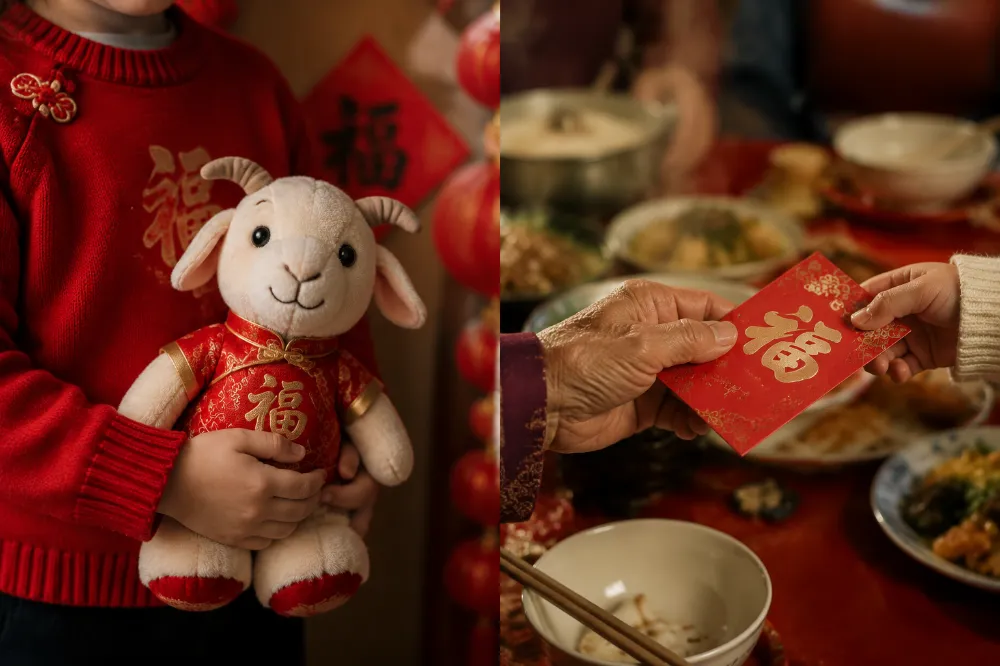
Universal. The single most correct Chinese New Year gift for children, unmarried young adults, and even close elders in some regions. Use only new bills, never used. Use even numbers and avoid the number 4 entirely. Lucky amounts: 6, 8, 9, 88, 99, 168, 188, 288, 666, 888, 999. The standard envelope is red and gold, with the year of the animal or the character 福 (fu, good fortune) printed on it.
The right amount depends on where you are and how close you are to the recipient. The price-by-relationship matrix in the budget section below has the full breakdown for 2027.
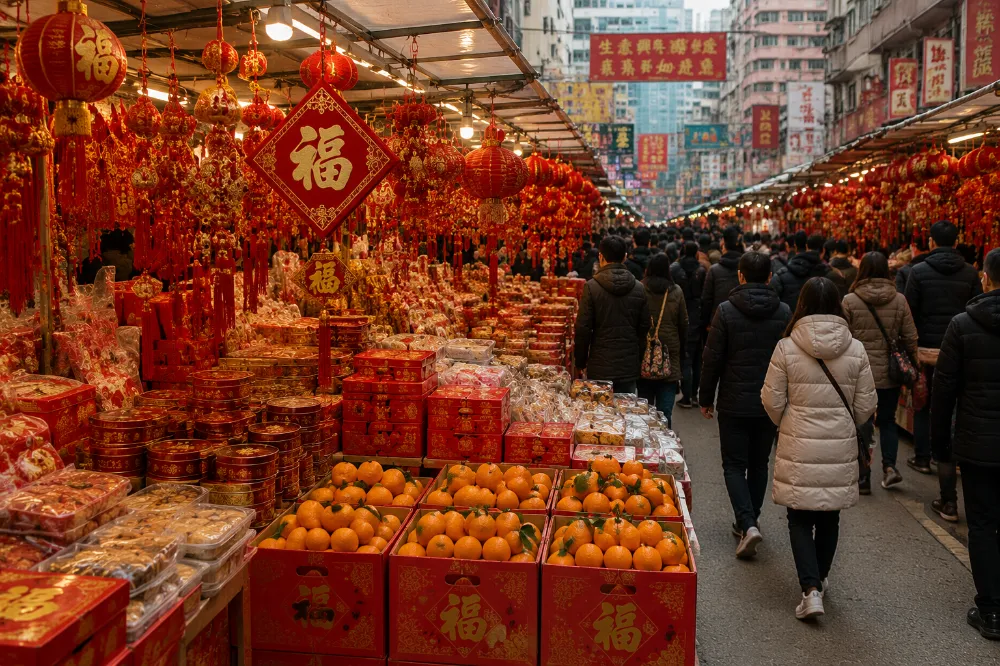
2. Mandarin oranges in a red box
The default fruit gift across southern China, Hong Kong, Singapore, Malaysia, and most overseas Chinese communities. The Cantonese word for orange, gam, sounds like the word for gold; the Mandarin word, ju, sounds like luck. The fruit should be bright orange, with the stem and leaves intact, in pairs or even numbers. The boxes are usually red cardboard with gold printing, and they are sold in supermarkets and fruit shops from mid-January onward. Standard box: 6-12 oranges for casual gifts, 24+ for close family.
Bonus: a kumquat plant (jinju) in a red pot is even more auspicious and is what you see in Hong Kong flower markets every January. It is the only plant I would actually recommend bringing to a Chinese New Year dinner as a host gift.
3. High-quality Chinese tea
Tea is the most broadly correct gift in Chinese culture. The classic choices, in rough order of price, are longjing (Dragon Well, from Hangzhou — see our Hangzhou food guide for context on the region), tieguanyin (Tieguanyin, a Fujian oolong), da hong pao (Big Red Robe, a Wuyi oolong), and aged pu’er (a fermented Yunnan tea, sold in compressed cakes). A 250g tin of longjing sells for around 200-600 RMB in 2027; a 357g cake of 10-year aged pu’er runs 600-3,000 RMB.
What to avoid: tea bags (not real tea in this context), supermarket green tea (too generic), flavored tea (foreigners like them, Chinese people usually do not). The presentation matters; the tin or vacuum-packed bag should be in good condition with the original label visible.
4. Baijiu (Moutai, Wuliangye, Luzhou Laojiao)
The classic gift for the older men in the family, or for a business contact you want to impress. Baijiu is a clear, high-proof Chinese liquor distilled from sorghum. The three top brands in 2027 are Kweichow Moutai (the most prestigious, around 1,500-3,000 RMB for a 500ml bottle), Wuliangye (400-1,200 RMB), and Luzhou Laojiao (300-800 RMB). All three are widely available in Chinese supermarkets, airports, and on JD.com. For friends who do not drink hard liquor, a mid-range red wine from Ningxia or Shandong is a good alternative; the Ningxia wine region has become a serious industry over the last ten years.
If you are not sure whether the recipient drinks, bring tea instead. It is harder to get wrong.
5. Traditional Chinese pastries in a decorative tin
The Cantonese-style mixed pastry tin (jian dian) is the standard Chinese New Year gift for older relatives, business contacts, and in-laws you do not know well. The famous chains in 2027 are Wing Wah, Kee Wah, and Maxim’s in Hong Kong; Daoxiangcun and Holiland in mainland China; and Chia Keng and Polar in Singapore. The tins contain an assortment of flaky pastries, melon seeds, sesame candies, and almond cookies. Prices range from 80-300 RMB for a 600-800g tin. The tin itself is reusable; many people keep them as storage boxes for years.
6. Niangao (glutinous rice cake)
Niangao sounds like nian gao, which means “year high” or “growth year over year.” It is sticky, sweet, and symbolic of rising higher in life. In Shanghai and the Yangtze delta, niangao is sliced and pan-fried; in Guangzhou, it is served as a sweet syrupy dessert. The vacuum-packed versions from Shanghai’s traditional brands (Wangxingji, Xinghualou) ship well and last 2-3 months unrefrigerated. For someone in another country, a vacuum-packed niangao is one of the most culturally loaded gifts you can send.
7. Longevity noodles (chang mian)
Long, uncut noodles, eaten on Lunar New Year’s Day or the birthday of any elder in the household. The longer the noodle, the longer the life. You cannot really wrap and gift longevity noodles, but you can gift a beautiful dried noodle set in a wooden box. The famous brand is Xiangshou (in Shanxi), which sells handmade noodles bundled in red boxes for the holiday. Best for parents and grandparents.
8. Lucky bamboo plant
A small lucky bamboo (dracaena sanderiana) plant in a red or gold pot. The number of stalks matters: 2 stalks for love, 3 for happiness, 5 for wealth, 8 for growth, 9 for luck. Never give 4 stalks (sounds like death). The plant is cheap, lasts for years with minimal care, and is appropriate for almost anyone, including hospital visits and office desks. Available year-round at any Chinese flower shop or supermarket.
9. Bird’s nest (yan wo) for elders
Edible bird’s nest, the dried saliva nests of swiftlets, has been a Chinese delicacy for over 400 years. It is traditionally given to elders, new mothers, and people recovering from illness. A 100g jar of premium white bird’s nest sells for 1,500-4,000 RMB in 2027; the ready-to-drink bottled versions are 80-200 RMB each. Brands to look for: Yan Palace, Tin Heung, and Dragon Brand. If you are not sure whether the recipient likes it, do not get it; some people find the taste strange.
10. Ginseng (ren shen) tonic
Korean red ginseng or Chinese Jilin ginseng, sold in tins or as whole roots. A 200g tin of Korean Cheong Kwan Jang ginseng is around 1,000-2,500 RMB; a 100g tin of Chinese Jilin ginseng is 300-800 RMB. Ginseng is the default Chinese New Year health gift for parents and grandparents. If the elder in question has high blood pressure or diabetes, do check before buying; ginseng is contraindicated in some conditions.
Section 2: 10 modern gifts that work in 2027
For younger recipients, mixed-family couples, or anyone who already has all the tea and oranges they could want. These are the gifts my Chinese friends in their 20s and 30s actually want, based on a small poll I did while writing this.
11. Pomegranate or pomelo
Pomegranates are full of red seeds, symbolizing many children and fertility; pomelos are large, round, and represent family unity. Both are appropriate for new parents, married couples, and elders. Avoid the temptation to buy a single piece of fruit; always present in pairs or in a basket.
12. Premium fruit basket (no pears)
A red or wicker basket containing apples (peace), mandarin oranges (luck), persimmons (smoothness), and a few premium imports like Chilean cherries or Thai durian. Always avoid pears. Prices for a 5-8kg premium basket in 2027: 300-800 RMB. Available at high-end supermarkets (Ole, Sam’s Club, Hema), fruit chains (Pagoda), and online (JD Daojia, Meituan).
13. Goat-themed plush for kids born in the Goat year
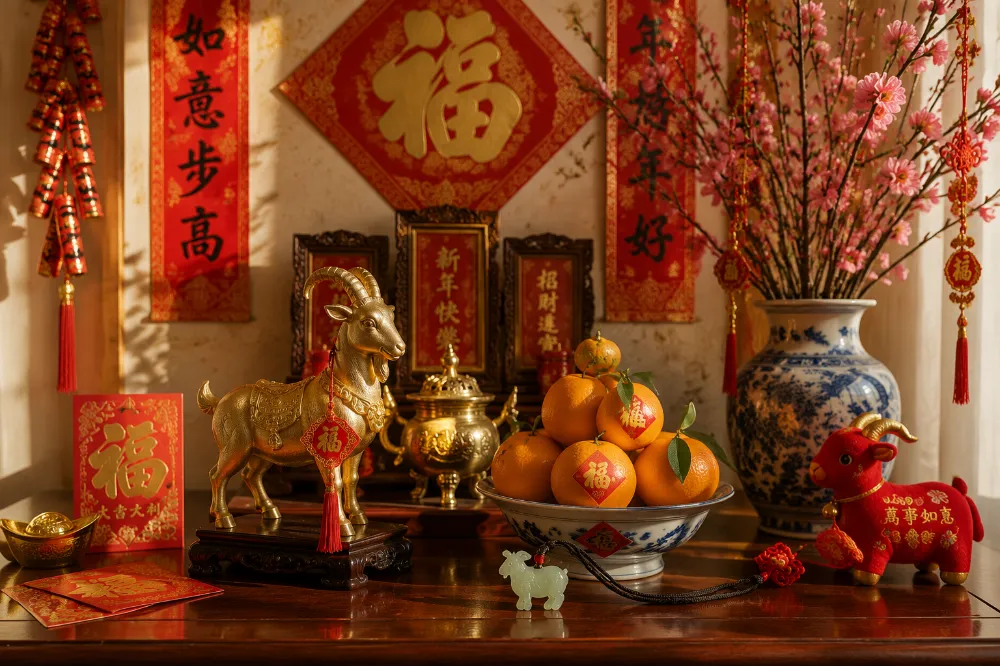
2027 is the Year of the Fire Goat, and kids born in 2015 (Wood Goat) or 2003 (Water Goat) are entering their zodiac year in 2027 — the second Ben Ming Nian for both. A goat plush in red and gold is a thoughtful gift for these kids; I have bought them for three of my friends’ children over the years. Brands: Hape, Sebra, or the dedicated Chinese zodiac toy brand Zodiac Animal Plush on Taobao.
14. Hanfu (traditional Chinese clothing) for children
Children’s hanfu sets in red, gold, or pink, sized for 1-6 year olds. The styles include the beizi (long jacket) and the ruqun (top and skirt). Parents love photographing their kids in hanfu for the New Year; it has become one of the most Instagrammed Chinese New Year traditions of the last five years. Prices range from 200-1,200 RMB for a complete set.
15. Calligraphy or painting set
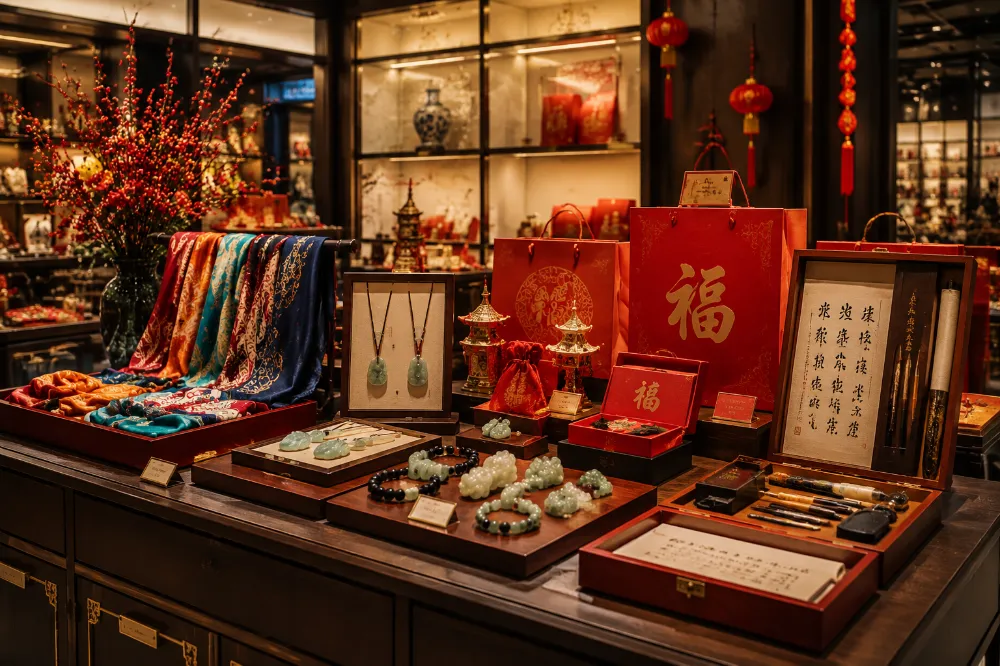
For a child, a beginner’s calligraphy set with a brush, ink stone, paper, and a small desk calendar. For an adult, a more advanced set: a good-quality brush (Huzhou or Hunan), a Yanyan ink stick, a small ceramic inkwell, and a few sheets of xuan paper. Available at art supply stores and on Taobao. Prices: 100-2,000 RMB. Wrap it in a wooden box for a proper gift feel.
16. High-end silk scarf or pajamas
A silk scarf from Shanghai’s silk brands (Shangshufang, Silk Kingdom) or pajamas from a heritage brand. For a woman, a 90cm square silk scarf in red, gold, or a subtle goat print for 2027. For a man, a silk pajama set. Prices range from 300-1,500 RMB. The detail that matters: avoid pure white; cream or pearl is fine, but bright white is funeral-adjacent.
17. Tea cup or gaiwan set
A small porcelain gaiwan (lidded tea bowl) or a yixing clay teapot. Yixing pots from Jiangsu are the most prized; prices range from 200 RMB for a small factory pot to 20,000+ RMB for an artisan piece. For a gift, the 200-800 RMB range is the sweet spot. Avoid the painted porcelain sets with very Western patterns; the clean blue-and-white or solid earth-tone pieces are more universally appreciated.
18. Chinese knot decoration (zhongguo jie)
The traditional red Chinese knot, usually a round or diamond-shaped woven ornament with a tassel. Hung in the home for the new year, often above the front door. Modern versions come in keychain, car-hanging, and small wall-decor sizes. Prices: 30-300 RMB. These are easy to pack, ship, and bring as a small host gift if you are invited to a home.
19. Pixiu bracelet (for luck and wealth)
A Pixiu is a mythical Chinese creature that is said to attract wealth. Pixiu bracelets, usually made of black obsidian or jade, are popular Chinese New Year gifts for adults, especially those running a business or in finance. The bracelet should be worn on the left wrist, with the Pixiu’s head facing outward. Prices: 80-3,000 RMB depending on material. Do not buy a Pixiu with a green string; the color is considered bad luck for the wearer.
20. Jade pendant or accessory
A small jade pendant (pei jian) on a red string. Jade is a serious Chinese gift, not a casual one. The two most respected types are Hetian white jade (Xinjiang) and Burmese jadeite. For Chinese New Year, a small goat-shaped pendant for 2027 is the most thematic. Prices start at 200 RMB for a basic piece; a quality pendant is 2,000+ RMB. Buy from a trusted source; the jade market is full of treated or fake stones.
Section 3: 10 more by relationship (parents, kids, friends, coworkers, business)
These are picks where the relationship dictates the choice more than the category. If you are stuck, work from this list rather than from the general “what is the best gift” frame.
21. Smart watch or fitness tracker for elders
Apple Watch SE, Huawei Watch GT 5, or Xiaomi Mi Band 9. The deciding feature is fall detection and a heart-rate monitor. The 2025 Apple Watch SE is about 2,500 RMB in mainland China; the Huawei GT 5 is around 1,500-2,000 RMB. For an elder parent, this is one of the most useful gifts you can give; the fall detection alone has saved lives in my extended family.
22. Electric massage device
A neck and shoulder massager (the most common style) or a full-body massage cushion. Brands: Ogawa, Breo, Rongtata. Prices range from 300-3,000 RMB. Most older Chinese parents I know have at least one of these already; if they do, an upgraded model or a different style (foot massager, eye massager) works well. Avoid anything that looks too medical; the “spa” look is what people actually want.
23. Premium olive oil or imported food basket
For Chinese friends who appreciate imported food, a 500ml bottle of Italian extra-virgin olive oil (Filippo Berio, Lucini, or Castello di Ama) or a basket with European cheese, Spanish ham, and Italian pasta. Prices: 100-500 RMB per item. Available at Ole, City Shop, or on Tmall Global.
24. Custom family photo album or frame
A bound photo book of family photos from the past year, with a red leather cover. Services: Chatbooks, Artifact Uprising, or one of the Chinese photo-book services like Mi Luo Ji or Nice. Prices: 200-500 RMB. This is a gift I gave my own parents three years in a row and it became the most-asked-about gift at every family dinner. Add a handwritten note on the first page.
25. High-quality blanket or throw
A wool or cashmere throw in a red, gold, or camel color. Brands: Mogu Home, Luolai, or Hermes for the high end. Prices range from 200-3,000 RMB. This is the most “boring” gift on the list, and therefore the most universally appreciated, especially for older parents who already have everything.
26. Books on Chinese culture or calligraphy
A beautifully illustrated coffee-table book on Chinese art, architecture, calligraphy, or regional cuisine. Good options in 2027: China: A History in Objects, The Chinese Kitchen, or Chinese Calligraphy by Jean François Billeter. Wrap it in red paper with a hand-tied ribbon.
27. Hot pot or Sichuan spice set
A premium hot pot base in a glass jar (the Chongqing or Sichuan brands) plus a set of spices, sesame oil, and dried chili. Brands: Hai Di Lao retail line, Wang Shou Yi, or Qiu Ji. Add a small portable induction cooker and you have a complete kit. Prices: 100-500 RMB. This is one of the few food gifts that works for people who are not Chinese; most non-Chinese recipients are curious and grateful.
28. Gift card to a popular Chinese restaurant
A gift card to a recognizable chain: Haidilao (hot pot), Din Tai Fung (xiao long bao), Quanjude (Peking duck), or any local high-end restaurant. Prices: 200-1,000 RMB. If you are visiting a city and not sure what to bring, a gift card to a well-known restaurant in that city is universally appropriate.
29. Tea house or spa experience voucher
A voucher for a traditional Chinese tea ceremony experience, a foot massage chain (like Rela Manner or Simple Foot), or a half-day spa. Prices: 200-1,000 RMB. Best for women, particularly mothers and grandmothers, who often do not buy this kind of thing for themselves.
30. Travel voucher to a China destination
The most unexpected gift on the list. A travel voucher to a destination the recipient has been talking about visiting: Shanghai Disneyland for a family with young kids, the Harbin Ice and Snow Festival for adventure travelers, or a Ningxia wine region tour for wine lovers. Through a travel agency like slitours.com, a 3-day domestic trip for two runs 3,000-10,000 RMB depending on the destination and hotel level. For elders, a family tour package that includes the family is even more appreciated than a cash equivalent.
The 8 gifts to never give (and why)
Most articles on this topic give you a list of 30 great gifts and stop there. The list below is the part that will actually save you from an awkward moment. I have made at least three of these mistakes in the last ten years; the explanations are real, not just “it’s bad luck.”
| Gift | Why it is a problem | What to do instead |
|---|---|---|
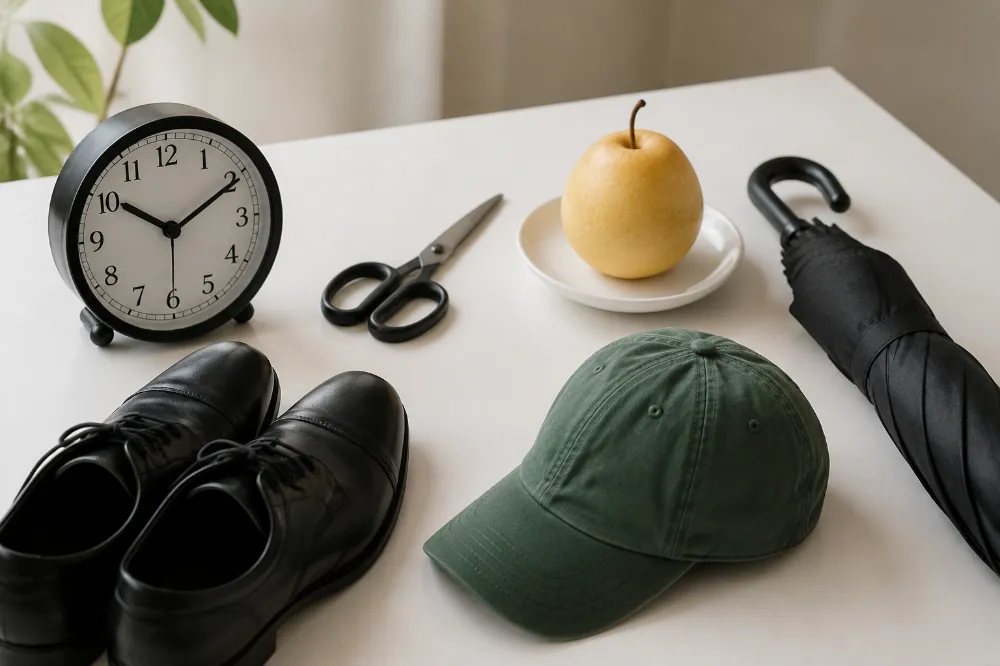
| Clocks or watches | The Cantonese word for clock (song zhong) sounds like “attending a funeral.” Giving a clock is symbolically wishing the recipient death. The same applies to watches in Cantonese-speaking regions (Hong Kong, Macau, Guangdong). | A smartwatch for an elder is usually fine in Mandarin-speaking regions; only avoid in Cantonese-speaking areas. |
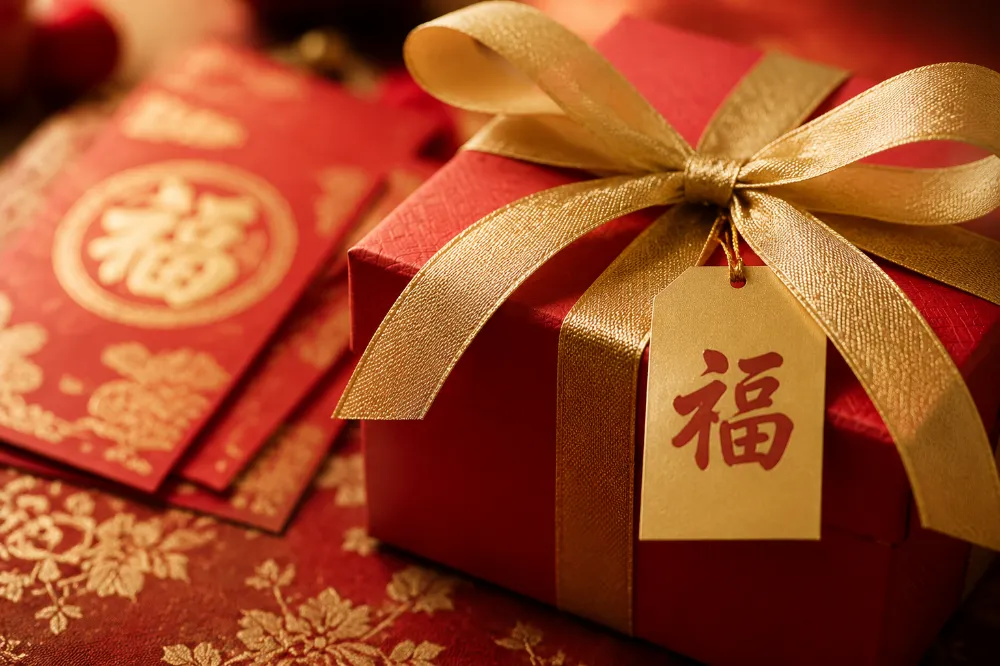
| Anything wrapped in white or black | White and black are funeral colors in Chinese culture. Even a beautiful gift in a white or black box will be received with discomfort. Navy blue and dark grey are borderline acceptable for men but still suboptimal. | Always red, gold, or warm pink for the wrapping paper. The box itself can be any color if the paper is the festive color. |
| Sharp objects (knives, scissors, letter openers) | Symbolically “cutting” the relationship. The harder the recipient takes the symbolism, the worse the moment will be. | Skip the gift entirely. There is no replacement that is “less sharp.” |
| Pears | The Mandarin word for pear (li) sounds like the word for separation or parting. Pears are also traditionally shared at funerals. | Use apples (ping, peace) or mandarin oranges (ju, luck) instead. Remove pears from any pre-made fruit basket. |
| Umbrellas | The word for umbrella (san) sounds like the word for separation (san). Giving an umbrella is symbolically saying “let’s part ways.” | If you must give one (for a housewarming, not Chinese New Year), include a small red ribbon on the handle to neutralize the symbolism. |
| Shoes | The Mandarin word for shoes (xie) sounds like the word for evil (xie). Especially in southern China and Taiwan, gifting shoes is considered bad luck. | Skip the shoes as a Chinese New Year gift. If you must, give them at another time of year with a small coin in the box to neutralize the symbolism. |
| Green hats (for a man) | “Wearing a green hat” (dai lü mao) is a Chinese idiom that means the man’s wife or girlfriend is being unfaithful. Never give a green hat, headband, or any green headwear to a man. | Red, black, blue, or grey hats are all fine. Only green is the problem. |
| The number 4 in any form | Four (si) sounds exactly like the word for death (si). Four of anything, $4, $40, $400, a fourth-floor apartment, a four-piece set — all carry the bad luck association. | Use even numbers that are not 4: 2, 6, 8 are all lucky. Inside the gift, do not write “4” anywhere. Skip the four-pack of wine. |
Two more that are borderline rather than flat-out wrong, but worth flagging:
- Handkerchiefs — associated with farewell and grief. Giving one as a Chinese New Year gift is not catastrophic but it is the wrong signal. Skip them.
- Candles or anything that “burns down” — the symbolism of decline or death, depending on the region. Most people do not know this one but older family members may.
Etiquette: how to give, how to receive, what to say
Buying the right gift is half the job. Giving it correctly is the other half. The etiquette is not difficult; it is just specific. Get it right and you will be remembered as the polite and thoughtful visitor; get it wrong and the awkwardness lasts a Chinese New Year season.
How to present the gift
Use both hands. The right way is to hold the gift with both hands, thumbs up, fingers below, and offer it forward with a slight bow. The bow should be small — about 15 degrees — not a Western full nod. The phrase you say is a short blessing, and the blessing depends on the relationship:
- To an elder: “Xin nian hao, zhu nin jian kang chang shou” (Happy new year, wishing you health and longevity).
- To a business contact: “Xin nian kuai le, zhu sheng yi xing long” (Happy new year, wishing you a thriving business).
- To a friend or family member: “Xin nian kuai le, da ji da li” (Happy new year, big luck big fortune) or just “Gong xi fa cai” (congratulations and prosperity).
- To children: hand the red envelope directly to the child (not the parent), say “Xin nian kuai le, kuai kuai le le chang da” (Happy new year, grow up happy and healthy).
How the recipient should respond
The polite refusal happens two or three times. The recipient says “tai ke qi le” (you are too kind) and tries to push the gift back. You insist, gently. They take it. The dance usually takes 10-15 seconds and both parties know it is a dance. If you try to skip the dance and just hand over the gift with a Western “here you go,” the recipient may feel that you are being rude, even though your intention was to be efficient.
When receiving a red envelope, the recipient should take it with both hands and say “xie xie” (thank you) or “xie nin” (thank you, formal). They should not open it in front of the giver. They should also not refuse outright; that is considered rude to the giver.
The “polite refusal” trap foreigners fall into
Do not do what I did the first time I was offered a red envelope in China. I said “oh no, please, you don’t have to” — a perfectly natural Western response. The older auntie was visibly upset for the rest of the evening because she interpreted it as me rejecting her blessing. The right move in China is to accept the red envelope with both hands, even if you are a grown adult, even if it is from a relative you saw last week. The act of giving is the gift; the money inside is secondary.
The exception: in some very traditional families, an adult child may politely refuse a red envelope from their own parent as a sign of filial piety (“I am grown, you should not be giving me money”). This is rare, and only applies in specific parent-child relationships. When in doubt, accept.
Wrapping, color, and presentation
The three things that matter most for the wrapping:
1. Color. Red and gold. Always. The deeper the red, the better. Add gold ribbon, gold-printed text, or a gold tassel for emphasis. White, black, dark blue, and dark green are the four colors to avoid in the wrapping, even if the gift inside is fine.
2. Material. Paper, fabric, or a decorative box. A stiff cardboard box with a magnetic closure is the most presentable. A fabric furoshiki-style wrap with a knotted top is elegant for smaller gifts. A simple paper wrap with double-sided tape is fine for casual gifts. Avoid plastic wrap; it looks cheap and does not photograph well.
3. The number of items. Always even numbers. Two bottles of wine, four oranges, six pastries, eight stalks of lucky bamboo. Odd numbers are reserved for funerals in most regions.
The exception to all the above: if the recipient is from a non-Chinese cultural background (a foreign friend, a mixed couple, a colleague who is not Chinese), the wrapping rules are more flexible. A simple red ribbon on a non-red box is enough; the symbolism does not have the same weight outside of Chinese households.
When to give: the three delivery windows
The timing of when you give the gift is as important as what you give. There are three windows, and each has a different social meaning.
Window 1: 1-2 weeks before the holiday (for business contacts)
For clients, suppliers, business partners, and people you want to maintain a working relationship with, the best time to deliver a gift is 1-2 weeks before Chinese New Year’s Eve. The window is roughly Jan 25 to Feb 5 in 2027. By then, the recipient is not yet on holiday, has time to receive you, and the gift is a clear signal of “I am thinking of you before the break.” If you wait until the holiday itself, the recipient is busy with family and is more likely to receive your gift at the door without proper ceremony. The exception is the very close business contact — a long-term client, a strategic partner — for whom the personal visit during the holiday is part of the gift.
Window 2: During the holiday (for family and close friends)
For family and close friends, the gift comes with you when you visit. The visit itself is the gift; the wrapped box is the formality. The visit can happen any day during the 16-day festival, but most concentrated visiting happens on Day 1 (Feb 6, 2027 — New Year’s Day), Day 2 (Feb 7 — son-in-law day, when married couples visit the wife’s family), and Day 3 (Feb 8 — Red Dog Day, when you stay home; skip the visit). If you can only visit once, the second day is the most universally appreciated. If you are visiting in-laws for the first time, bring an extra-thoughtful gift: high-end tea, baijiu, and a fruit basket are the default.
Window 3: After the holiday (for people you missed)
For relatives and friends you could not visit during the holiday, there is a one-month grace period after the Lantern Festival (Feb 20, 2027) to send a belated gift. The post-holiday gift is usually less formal — a fruit basket, a tin of pastries, a small practical item — and comes with a phone call. Sending a gift two months after the holiday is too late; the symbolism of “thinking of you at the new year” is lost.
The price-by-relationship matrix (with real 2027 numbers)
The table below is what I use when I am helping friends plan Chinese New Year gift budgets. The amounts are 2027 prices in mainland China, with rough conversions in USD. Adjust for your local economy; the relative ratios are what matter, not the absolute numbers.
| Relationship | Red envelope (cash) | Physical gift | When to give |
|---|---|---|---|
| Own child (under 12) | RMB 200-1,000 (USD 28-140) | Toy, book, or clothing in addition | New Year’s Day, both hands |
| Own child (teen) | RMB 600-2,000 (USD 85-280) | Usually just the envelope; let them choose | New Year’s Day, both hands |
| Close niece or nephew | RMB 200-500 (USD 28-70) | Small toy or book in addition | New Year’s Day, both hands |
| Parents (one’s own) | RMB 1,000-6,000 (USD 140-850) | Health product, warm clothing, or travel voucher | Visiting day, both hands, with a short blessing |
| Parents-in-law | RMB 2,000-6,000 (USD 280-850) | High-end tea, baijiu, or fruit basket, plus envelope | Son-in-law day (Day 2), both hands, longer blessing |
| Grandparents | RMB 200-600 (USD 28-85) | Health product or warm clothing | New Year’s Day or visiting day, both hands |
| Sibling, married | RMB 600-2,000 (USD 85-280) for each other’s children | Optional small gift, usually just envelopes exchanged | New Year’s Day |
| Close friend | Optional; RMB 200-600 in some regions | Tea, fruit basket, or pastry tin; never alcohol unless you know they drink | Visiting day during the 16-day festival |
| Coworker (general) | Not expected | Snack box, fruit, or small pastry tin (RMB 80-200) | At the office party or first day back |
| Direct boss | Not expected from subordinates in most companies | Premium tea or baijiu, in formal red box (RMB 500-2,000) | 1-2 weeks before or on first day back |
| Business client (important) | Not given; it can be misread as a bribe | Premium baijiu, aged pu’er, or branded gift set (RMB 800-3,000) | 1-2 weeks before; in person, with a card |
| Business client (general) | Not given | Pastry tin, fruit basket, or small tea gift (RMB 200-500) | 1-2 weeks before, or mailed |
Two practical notes on amounts. First, the numbers go up significantly in tier-1 cities (Beijing, Shanghai, Shenzhen, Guangzhou) and are roughly 30-50% lower in tier-3 and smaller cities. Second, the red envelope is the only gift where the exact amount is remembered; the physical gift is judged on thoughtfulness, not price.
Where to buy in China and overseas
In mainland China
- JD.com — best for baijiu, electronics, health products. Reliable delivery, real products, easy returns.
- Tmall (淘宝商城) — best for pastry tins, tea, fruit baskets, hanfu, and most traditional gifts. Bigger selection than JD for these categories.
- Pagoda (百果园) — best fruit chain, especially for mandarin oranges and premium fruit baskets. Has physical stores in most major cities.
- Ole, Sam’s Club, Hema — high-end supermarket chains for premium imported and domestic gift baskets.
- Daoxiangcun (稻香村), Holiland (好利来) — Beijing-based pastry chains with physical stores and online presence. The 2027 New Year tin sets usually start appearing in early January.
- Specialty tea shops in Beijing (Wu Yu Tai, Lao She Teahouse gift shop), Shanghai (Yu Garden tea market), Hangzhou (the tea shops around West Lake for fresh longjing), and Xiamen (the Tan family tea shops for tieguanyin).
In Hong Kong, Taiwan, Singapore, Malaysia
- Hong Kong: Wing Wah, Kee Wah, Maxim’s, A1 Bakery for pastry tins. Citysuper, Sogo, Yata for fruit baskets. Above of Time for upscale corporate gifts.
- Taiwan: SunnyHills (for pineapple cakes, considered the best), Chia Te Bakery, and the dedicated Chinese New Year markets that pop up in late January across Taipei.
- Singapore: Polar Puffs & Cakes, BreadTalk, and the Chinese New Year markets in Chinatown. Mandarin oranges in red boxes are available at every FairPrice and Cold Storage supermarket from mid-January.
- Malaysia: Loong Sang, Phoon Huat, and the Chinese New Year bazaars across Kuala Lumpur, Penang, and Johor Bahru.
Overseas (outside Asia)
This is where the search gets harder. If you are in North America, Europe, or Australia and want to send a traditional Chinese New Year gift, the options are:
- Weee! (US-based, ships Chinese groceries and gifts nationwide)
- Yamibuy (US-based, similar to Weee!)
- Asian grocery chains: H Mart, 99 Ranch, 168 Market (US); T&T, Lucky Supermarket (Canada); SeeWoo, Loon Fung (UK).
- For higher-end gifts: Muji (silk and tea accessories), local Chinatown gift shops, or specialty importers like Adagio Teas (US) for Chinese-style tea.
For a guaranteed-quality Chinese tea gift that you can ship worldwide, the most reliable options in 2027 are Mei Leaf, Adagio, and the direct-to-consumer brand Tea Drops. None of them are exclusively Chinese tea, but they all have credible Chinese options that ship internationally without the quality risk of a random Amazon seller.
The 5 most common gift-giving mistakes foreigners make
Beyond the gift itself, the five mistakes I see most often from non-Chinese visitors, colleagues, and friends. None of these are catastrophic; they are the kind of things that will create a small awkward moment rather than a real offense. Knowing them in advance means you can avoid all of them.
Mistake 1: Wrapping a thoughtful gift in white paper because it looks “elegant”
I have already mentioned this. The Western instinct toward minimalist white or dark grey wrapping does not work in a Chinese context. If you bring a beautiful gift in a beautiful white box, the recipient will register the box first, and the message of the box is wrong. Red paper or red ribbon is non-negotiable. The interior box can be any color; the outer wrap is what matters.
Mistake 2: Giving a clock because you thought it was “practical”
An analogue wall clock is a perfectly nice gift in most cultures. In Chinese culture, especially in Hong Kong, Guangdong, and overseas Cantonese communities, it is a metaphor for attending a funeral. There is no neutral way to receive it. A digital watch or a smartwatch is usually fine in Mandarin-speaking regions but still risky in Cantonese ones. When in doubt, skip the timepiece.
Mistake 3: Bringing a fruit basket with pears
Pre-made fruit baskets are easy to find in supermarkets and online. The problem is that most of them include 2-3 pears because pears are a common, cheap fruit. Check the contents before you buy. If there are pears, swap them for apples (same texture, different symbolism) or pull the pears out and bring the basket without them. The empty slot is fine; the symbolism of including a pear is not.
Mistake 4: Giving cash in a plain white envelope or a card
If you are giving money (the right call in most cases), the envelope has to be red and gold with a Chinese New Year theme. A plain white envelope, a Western greeting card, or — the worst version I have seen — a Christmas envelope with a red ribbon on it, all send the wrong message. You can find red Chinese New Year envelopes at any Asian grocery store, on Amazon, or at a Chinatown gift shop. The cost is 50 cents per pack of 12. There is no excuse to skip this.
Mistake 5: Opening the gift in front of the giver
Unlike Western gift-giving, where opening in front of the giver is expected and shows appreciation, in Chinese culture the gift is opened after the giver leaves. There are two reasons. First, opening in front of the giver forces the giver to react to the reaction, which can be awkward if the gift is not quite what they wanted. Second, it allows the recipient to express genuine delight in private, away from the social pressure of the moment. If you give a Chinese friend a gift, do not be offended if they do not open it in front of you. They will, later, and they will probably text you a thank-you photo the next day.
A 2026 retrospective and a 2028 preview (the goat gift game, then the rat)
2026 was the Year of the Fire Horse — a fast, volatile year. Chinese New Year 2026 brought the usual surge of red envelopes and baijiu gifts, and the horse-themed plush, horse-print silk scarves, and zodiac jewelry flew off the shelves. The 2026 holiday also saw the first Lunar New Year after UNESCO added Spring Festival to the Intangible Cultural Heritage list (Dec 2024), so the marketing around traditional gift sets was stronger than any year in the prior decade. 2027 is the Year of the Fire Goat, which astrologers read as a calmer, more family-oriented year. The practical differences for gift-giving between the two years are small but worth knowing.
What 2026 looked like, and what 2027 changes
Three things from the 2026 Fire Horse year that I think are worth carrying into your 2027 planning.
1. The 9-day China holiday in 2026 was a real win for travelers. The extended Spring Festival break (Feb 15-23, 2026) was the first time mainland China had a 9-day official break, and it showed. Domestic tourism surged; Hainan’s duty-free sales alone hit 970 million RMB in the first four days, up 15.8 percent year over year. Expect the same pattern in 2027, with one difference: 2026’s break landed Sunday-Friday, the best alignment for an outbound-plus-domestic mix. 2027’s break lands Thursday-Friday, which is slightly less travel-friendly but still 9 days.
2. International inbound travel to China was a major story in 2026. With the 240-hour visa-free transit policy now covering 54 countries, international flight bookings to China during chunyun 2026 surged 400 percent year over year. Foreign travelers in Beijing, Shanghai, and Chengdu were a real and visible presence. Expect the same in 2027; the visa-free policy is now stable and the infrastructure has caught up.
3. The “Lunar New Year vs Chinese New Year vs Spring Festival” naming debate was a bigger story in 2026 than in any year before. The Dubai concert incident in February 2026, and several similar flare-ups at international events, made the name a recurring public topic. If you are giving gifts to international clients, the name choice is a small but real decision. Most non-Chinese friends I know go with Chinese New Year because it is the most familiar; for a state-aligned Chinese client, Spring Festival is the more respectful default.
For 2027 (Fire Goat): goat-themed gifts are everywhere from January onward. Plush goats, goat paintings, goat-print silk scarves, and zodiac-themed jewelry featuring the goat are all in the shops. A goat-themed gift to someone born in a Goat year (1931, 1943, 1955, 1967, 1979, 1991, 2003, 2015) is a thoughtful gesture because it acknowledges the animal of their birth.
For 2028 (Earth Rat, January 26, 2028): rat-themed gifts replace the goat. The rat, in Chinese culture, is associated with intelligence, adaptability, and resourcefulness, so gifts that lean into cleverness and quick-wittedness (a clever puzzle, an instant-read thermometer, a sharp kitchen gadget — note: knives as gifts are still a Chinese New Year no-go, even for the rat) work particularly well. The Earth element in 2028 keeps things grounded, so practical and durable gifts (a sturdy leather wallet, a reliable backpack, a multi-tool) are especially on theme. A rat-themed gift to someone born in a Rat year (1932, 1944, 1956, 1968, 1980, 1992, 2004, 2016) is also a thoughtful gesture.
If you are planning a 2027 Chinese New Year trip to China and want to use the trip itself as a gift, our family China tours can be wrapped and given as a Chinese New Year present. The trip departs after the holiday, so the recipient has something to look forward to well into 2027 and 2028. The deeper details on the 2027 dates and holidays are in our Lunar New Year 2027 date guide and the related China traditions and customs overview.
Chinese New Year Gifts FAQ
What are the best traditional Chinese New Year gifts?
The most traditional Chinese New Year gifts are red envelopes with lucky money (hong bao), mandarin oranges, Chinese tea (longjing, tieguanyin, da hong pao, pu’er), baijiu (Moutai, Wuliangye, Luzhou Laojiao), traditional Chinese pastries in decorative tins, niangao (glutinous rice cake), and longevity noodles. For elders, health tonics like bird’s nest and ginseng are common. For children, red envelope money is the universal default.
What should you not give as a Chinese New Year gift?
Avoid clocks or watches (sound like ‘attending a funeral’ in Cantonese and similar in Mandarin), green hats (imply infidelity), sharp objects like knives or scissors (cut the relationship), black or white wrapping (associated with funerals), shoes (sound like ‘evil’ in Mandarin), umbrellas (sound like ‘separation’), pears (sound like ‘separation’ and are shared at funerals), and the number 4 in any quantity (sounds like ‘death’).
How much should I put in a Chinese New Year red envelope in 2027?
In mainland China, RMB 100-500 is standard for other children; close family (own grandchildren) often receive RMB 1,000-2,000. In Hong Kong, HK$20-100 is typical; HK$200-1,000 for closer family. In Singapore and Malaysia, SGD/MYR 20-88 is normal. In Taiwan, NTD 600-1,200 is the standard range, and NTD 2,000-6,000 for close family children. Always use new bills, even numbers, and avoid the number 4.
When should I give Chinese New Year gifts in 2027?
There are three windows. First, deliver to clients and business partners 1-2 weeks before the holiday (the latest acceptable date is New Year’s Eve, Feb 5, 2027). Second, bring gifts when visiting family and friends during the official holiday (Feb 6-12, 2027). Third, red envelopes are given on New Year’s Day itself, on the second day when visiting parents, and during family gatherings throughout the 16-day festival.
What are good Chinese New Year gifts for elderly parents?
Practical and symbolic gifts both work well. Practical: warm winter clothing, electric massage devices, high-quality walking shoes, blood pressure monitors, smart watches with fall detection. Symbolic: longjing or pu’er tea, bird’s nest, ginseng, traditional Chinese medicine tonics, longevity noodles, and niangao. Most important of all: a red envelope with an even amount using 6, 8, or 9.
What are good Chinese New Year gifts for kids?
Red envelope money is the default and most welcome. Beyond cash: educational toys, building blocks, traditional Chinese story books, calligraphy sets, hanfu for children, lucky Pixiu bracelets, and the zodiac animal plush (a goat plush for 2027). Avoid anything too loud, scary, or with sharp edges; the holiday atmosphere is about peace and good luck, not chaos.
What are good Chinese New Year corporate gifts?
For clients and business partners, the safest corporate gifts are high-end baijiu (Wuliangye, Moutai, Luzhou Laojiao), aged pu’er tea cakes, premium fruit baskets (with no pears), branded leather goods, and gift sets of tea plus traditional pastries. The price range is typically RMB 500-2,000 for important clients and RMB 200-500 for general business contacts. Always present in red and gold packaging, with both hands, and include a handwritten card.
Is it okay to give money as a Chinese New Year gift?
Yes. Money in a red envelope (hong bao) is the single most appropriate Chinese New Year gift for children, unmarried young adults, parents, and even close elders in some regions. It is not considered tacky or impersonal; in fact, it is the most culturally correct choice because it lets the recipient use the money for what they actually need. Avoid giving money in a plain white envelope, in an odd amount, or with the number 4 anywhere in the figure.
What is the difference between Lunar New Year gifts and Christmas gifts?
Christmas gifts are often wrapped and opened on Christmas morning in front of the giver, with an emphasis on surprise. Chinese New Year gifts are typically brought when visiting during the 16-day holiday, presented with both hands, and often opened after the giver leaves. Red and gold are the dominant colors; white, black, and blue are avoided. The giver often refuses payment two or three times before accepting. Lunar New Year favors practical, consumable, and symbolic gifts over surprise ones.
Can I give fruit as a Chinese New Year gift?
Yes, fruit is one of the most traditional Chinese New Year gifts. Mandarin oranges and kumquats symbolize wealth and good luck. Apples symbolize peace. Pomegranates symbolize fertility and many children. Pomelos symbolize family unity. Avoid pears (the word sounds like separation and is associated with funerals) and never give fruit in odd numbers. Always present fruit in pairs or sets, with the stem and leaves intact.